
Venezuela is navigating a complex economic transition as the government of Delcy Rodríguez seeks to balance fiscal stability with the urgent need for wage relief. Central to this effort is the anticipation of a “responsible” minimum wage increase scheduled for May 1, a move intended to provide relief to workers without triggering the hyperinflationary spirals that have historically plagued the nation’s economy.
Economic analyst Luis Vicente León, president of the consulting firm Datanálisis, suggests that the upcoming May 1 adjustment may result in a mixed outcome. The tension lies between the government’s desire to maintain a “responsible” increment and the reality of a workforce struggling with eroded purchasing power. This internal economic pressure is coinciding with a broader strategic shift in Venezuela’s international relations, particularly with the United States.
Under the administration of U.S. President Donald Trump, there has been a marked focus on the economic-energy axis. Since January 2026, high-level U.S. Officials—including Energy Secretary Chris Wright, Interior Secretary Doug Burgum and CIA Director John Ratcliffe—have visited Caracas to coordinate on energy production and diplomatic ties. This openness is designed to increase oil production under a regulated U.S. Framework, which may provide the fiscal breathing room necessary for the government to manage domestic salary increases.
However, the path to stability remains fraught. While the U.S. Has issued a series of licenses—specifically licenses 46, 46A, 47, 48, 49, 50, and 52—to allow for commercialization and production contracts with Petróleos de Venezuela S.A. (Pdvsa), a total removal of sanctions is unlikely in the short term according to Luis Vicente León. These sanctions serve as a mechanism of pressure to ensure the opening of the Venezuelan economy follows specific U.S. Guidelines.
The Strategy Behind the “Responsible” Wage Increase
The term “responsible increase,” frequently cited by Delcy Rodríguez, reflects a cautious approach to monetary policy. In a climate where sudden spikes in the money supply can lead to rapid price increases, the government is attempting to decouple wage growth from inflationary triggers. This strategy is part of a larger effort to move away from previous economic models and establish a more sustainable financial architecture.
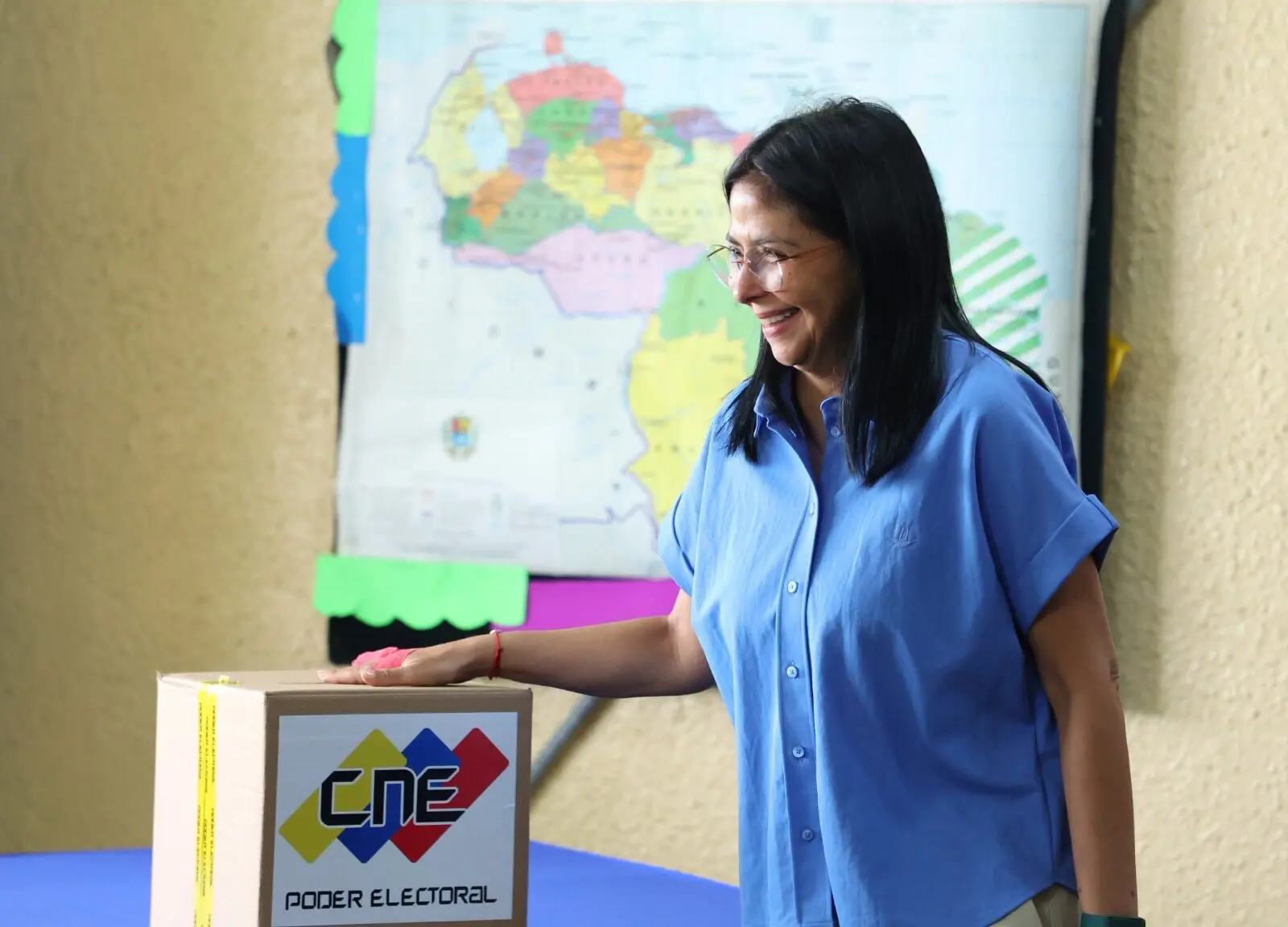
For the workers, the expectation for May 1 is high, but analysts like León warn that a “mixed” increase often means that while the nominal figure may rise, the real value—what that money can actually buy—may remain stagnant or decline if inflation keeps pace. The goal of the government is to reach a consensus on labor materials that allows for some improvement in quality of life without destabilizing the current fragile recovery of the financial system.
This domestic labor strategy is intrinsically linked to the arrival of foreign currency. The recent influx of dollars into the local financial system, supported by the private sector and the National Assembly, has provided a temporary buffer. By allowing more dollars to circulate, the government hopes to stabilize the exchange rate, which in turn makes any minimum wage increase more effective for the finish consumer.
U.S.-Venezuela Relations: The Energy-Economic Axis
The shift in U.S. Policy since early 2026 has prioritized energy security over immediate political transition. By focusing on the “economic-energy axis,” the Trump administration has opted to manage Venezuela’s oil output through a system of regulated controls and special permits. This approach allows the U.S. To influence the global oil market while maintaining leverage over the Venezuelan government.
According to Luis Vicente León, this framework is designed to sustain economic order through institutional intermediation. The practical result of this strategy is an expected increase in Venezuelan oil production. In a conservative scenario, production is projected to rise by approximately 250,000 to 300,000 barrels of oil this year as a result of the current license architecture.
The diplomatic thawing is further evidenced by the appointment of Laura Dogu as the Chargé d’Affaires for Venezuela and the formal announcement of the restoration of diplomatic relations. These steps indicate a transition from total isolation to a pragmatic engagement, where economic cooperation serves as the primary bridge between Caracas, and Washington.
Key Components of the U.S. Licensing Framework
The “architecture of licenses” mentioned by León is the engine driving the current economic opening. These licenses (46 through 52) cover critical areas including:
- Commercialization: Allowing the legal sale of Venezuelan oil in specific markets.
- Technology: Permitting the import of necessary equipment to repair aging oil infrastructure.
- Customs: Streamlining the movement of goods and resources.
- Production: Enabling direct negotiations and contracts with Pdvsa to boost output.
By maintaining these sanctions as a “pressure mechanism,” the U.S. Ensures that the Venezuelan government remains committed to the agreed-upon economic line. This creates a paradoxical environment where the economy is opening, yet the overarching legal restrictions remain in place to ensure compliance with U.S. Interests.
Impact on the Private Sector and Local Economy
The private sector in Venezuela has reacted to this opening with cautious optimism. The arrival of more dollars into the local financial system has allowed businesses to resume operations and attract new investments, particularly in the energy sector. However, the sustainability of this growth depends heavily on the continued issuance of U.S. Licenses and the stability of the domestic political environment.
The role of Datanálisis, led by Luis Vicente León, has been pivotal in quantifying these shifts. By tracking economic data and public opinion, the firm provides a window into how these high-level diplomatic agreements translate into daily reality for Venezuelans. The “mixed” outlook for the May 1 wage increase is a reflection of this data: while the macroeconomic indicators may demonstrate growth in oil production and investment, the microeconomic reality for the average citizen remains precarious.
The government’s attempt to “bury” previous failed economic models through “responsible” measures suggests a recognition that the old methods of printing money to fund social programs are no longer viable. The new model relies on actual production and foreign investment—specifically in oil—to fund the state’s obligations to its workers.
Summary of Current Economic Indicators
| Factor | Current Status/Projection | Primary Driver |
|---|---|---|
| Oil Production | Projected increase of 250k-300k barrels/year | U.S. Licenses 46-52 |
| Diplomatic Status | Relations Restored | Appointment of Laura Dogu |
| Wage Policy | “Responsible” Increase (May 1) | Fiscal Stability Goals |
| U.S. Sanctions | Flexibilized but Permanent | U.S. Pressure Mechanism |
What Happens Next?
The immediate focus for the Venezuelan government and its citizens is the May 1 announcement. Whether the wage increase is sufficient to offset inflation or remains a nominal gesture will likely determine the social mood for the second quarter of 2026. Simultaneously, the international community will be watching to see if the current “economic-energy axis” leads to a broader political transition or if the status quo of “regulated opening” becomes the permanent state of affairs.
The next critical checkpoint will be the official announcement of the minimum wage figures on May 1, which will provide the first concrete evidence of what the government defines as a “responsible” increase. Following this, the market will look for updates on further U.S. Licenses and the actual realized growth in Pdvsa’s production levels.
World Today Journal encourages readers to share their perspectives on the intersection of global energy policy and domestic labor rights in the comments below.
Related reading