
On the evening of June 8, 2026, skywatchers in the Northern Hemisphere have the opportunity to view a rare celestial alignment as Venus and Jupiter appear in a close conjunction. The two planets will be visible in the western sky shortly after sunset, appearing within 2 degrees of each other—a distance roughly equivalent to the width of a pinkie finger held at arm’s length, according to reports from National Geographic.
This event, often described as a “cosmic kiss,” marks the closest approach of these two bright planets until late 2028. Because both Venus and Jupiter are exceptionally bright, they can be easily spotted with the naked eye, provided that local weather conditions remain clear. For those looking for a more detailed view, the planets are positioned closely enough to be seen simultaneously through a standard pair of binoculars.
Understanding the Planetary Conjunction
A conjunction occurs when two celestial bodies appear to pass close to one another from the perspective of an observer on Earth. In this instance, Venus—the brightest planet in the night sky—and Jupiter will track along the ecliptic, an imaginary diagonal line that traces the path of the sun and planets across the sky. As noted by NASA, Venus is the second planet from the sun and is frequently characterized by its thick, cloud-swaddled atmosphere and extreme surface temperatures.
Observers can use the setting sun as a navigational guide to locate the pair. While the planets are visible shortly after sunset, they do not require deep twilight conditions to be seen. The visual proximity of these two bodies is a result of their orbital paths, though they remain vast distances apart in actual space. Venus, a terrestrial planet similar in size and mass to Earth, maintains a significantly different orbital profile than the gas giant Jupiter.
Observing the Night Sky in June
The June 8 alignment is part of a broader series of astronomical events scheduled for the month. NASA’s “What’s Up” guide for June 2026 highlights several upcoming phenomena, including the Moon passing in front of Venus and the transition into the summer season. These events are part of the agency’s ongoing efforts to engage the public with space science through resources such as the “Eyes on the Solar System” simulation tool, which utilizes data from various NASA missions to provide a virtual look at planetary positions.
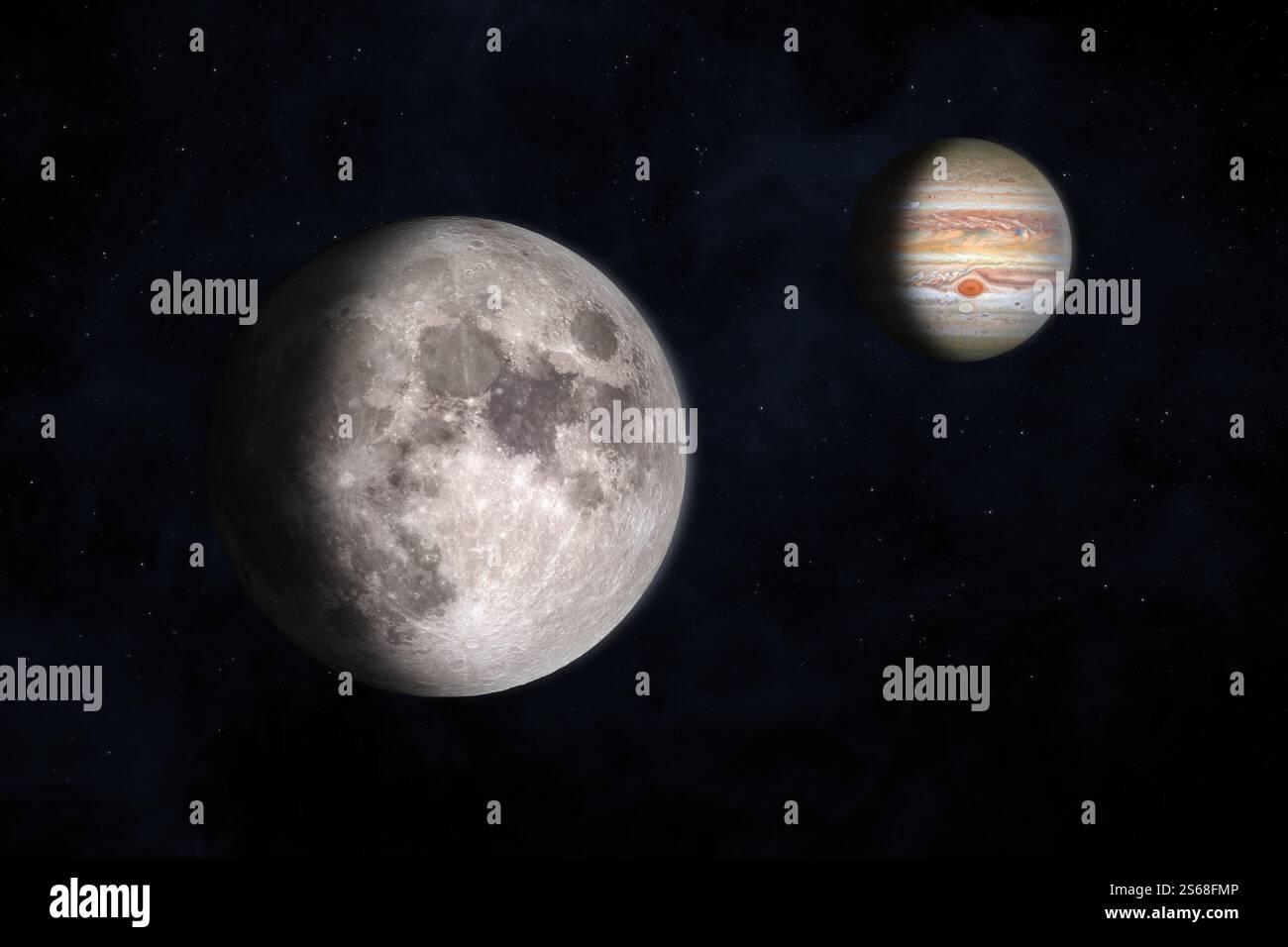
For those interested in the history of planetary exploration, NASA maintains extensive records regarding the study of Venus. The agency’s Mariner 2 spacecraft, which flew past the planet on December 14, 1962, was the first to successfully visit another planet beyond Earth. Looking ahead, NASA continues to develop new research initiatives, including the VERITAS and DAVINCI missions, aimed at gathering further data on the planet’s surface and atmosphere.
Practical Tips for Viewing
To successfully observe the conjunction, experts recommend finding a location with a clear, unobstructed view of the western horizon. As the planets will be visible shortly after the sun dips below the horizon, viewers should begin their observations as soon as the sky begins to darken. Because the alignment is visible to the naked eye, no specialized equipment is strictly necessary; however, binoculars can enhance the experience by allowing viewers to see both planets within the same field of view.
While the peak of the conjunction is observed on June 8, the planets may still appear relatively close on the following evening, June 9. Observers are encouraged to check local weather forecasts and astronomical bulletins for specific sunset times in their region to ensure the best possible viewing window. As with all celestial observations, light pollution in urban areas may affect visibility, so moving to a darker location away from city lights can often yield a clearer view of the planetary display.
As we move past this event, the next major astronomical milestones for the month include the progression of the Moon through its lunar cycle and the seasonal shift into summer. Updates on these and other celestial movements are regularly provided through official channels, including NASA’s science portal. We invite readers to share their experiences or photos of the conjunction in the comments section below.
Related reading