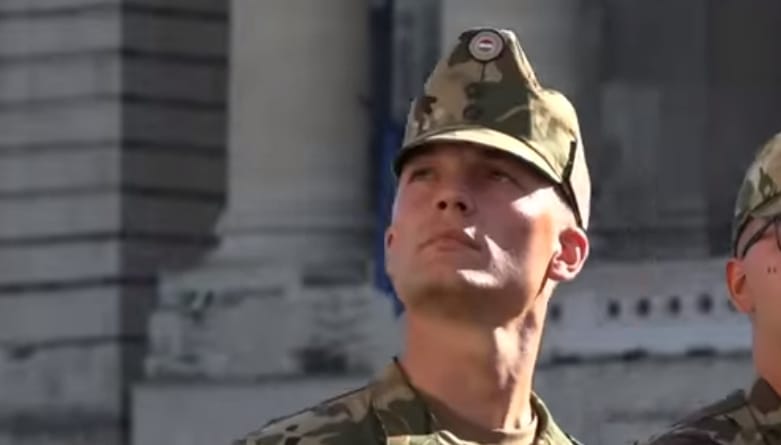
A recently surfaced video capturing a brief, tense interaction between Gáspár Orbán, the son of Hungarian Prime Minister Viktor Orbán, and opposition politician Ákos Hadházy has reignited discussions regarding the deep political polarization currently gripping Hungary. The footage, which has circulated widely across social media platforms, shows a moment of visible surprise and immediate withdrawal by Gáspár Orbán upon encountering Hadházy, a figure known for his persistent investigations into the financial dealings of the ruling elite.
The Gáspár Orbán Ákos Hadházy encounter serves as a potent symbol of the friction between the inner circle of the Fidesz-led government and the opposition figures who seek to hold them accountable. While the interaction itself was momentary, its viral nature underscores the heightened sensitivity surrounding the private lives of the Orbán family and the aggressive tactics employed by political adversaries to draw them into the public eye.
For those observing from outside Budapest, the incident may seem like a trivial social encounter. However, within the context of Hungarian politics, where the line between state interests and the Prime Minister’s family interests is frequently debated, such moments are viewed as significant. The reaction captured on film—characterized by a sudden startle and a quick retreat—has been interpreted by critics as a sign of the discomfort the ruling family feels when confronted by those who challenge their narrative of transparency.
This encounter occurs against a backdrop of systemic tension. Ákos Hadházy has built a political career on the role of a “corruption hunter,” frequently presenting evidence of alleged irregularities involving public procurement and the acquisition of luxury assets by individuals close to the Prime Minister. The dynamic between a high-profile investigator and the son of the most powerful man in the country creates a volatile chemistry that is evident in this latest video.
The Role of Ákos Hadházy in Challenging the Ruling Elite
To understand why a simple encounter would generate such a reaction, one must look at the history of Ákos Hadházy. A former member of the Hungarian Parliament, Hadházy has spent years positioning himself as a primary antagonist to the Fidesz government. His approach typically involves the meticulous gathering of documents and the use of public appearances to confront government officials with specific allegations of graft.
Hadházy’s focus has often extended beyond policy disagreements to the personal wealth of the ruling class. By targeting the financial footprints of those surrounding Viktor Orbán, Hadházy attempts to pierce the veil of privacy that the Prime Minister’s family maintains. This strategy is designed to create “public moments” of accountability, where the juxtaposition of a questioning opposition member and a startled government figure provides a visual metaphor for the broader struggle for transparency in Hungary.
The political environment in which Hadházy operates is increasingly restrictive. The European Parliament has frequently raised concerns regarding the rule of law and the shrinking space for political opposition in Hungary. In this climate, the act of physically approaching a member of the first family is not merely a social gesture but a calculated political act intended to provoke a reaction that can be broadcast to millions.
Gáspár Orbán and the Privacy of the First Family
Gáspár Orbán occupies a precarious position in the Hungarian public consciousness. As the son of Viktor Orbán, he is a figure of intense curiosity and scrutiny, yet he rarely seeks the spotlight himself. Unlike his father, who dominates the national discourse through carefully choreographed press conferences and speeches, Gáspár has largely remained in the background, avoiding official political roles while remaining a point of interest for investigative journalists.
The tension seen in the video reflects a broader struggle over the boundaries of privacy for the children of political leaders. Supporters of the Prime Minister argue that his family members are private citizens who should not be subjected to the harassment of political opponents. They view Hadházy’s attempts to engage or confront them as an intrusion and a breach of decorum.
Conversely, critics argue that when the family of a head of government is perceived to benefit from state power or preferential business deals, their privacy is secondary to the public’s right to know. The startle response captured in the footage is, for many, an admission of this vulnerability—a moment where the protective bubble of the state apparatus fails to shield the individual from the reality of political opposition.
Broader Implications for Hungarian Political Discourse
The viral nature of the Gáspár Orbán Ákos Hadházy encounter highlights the shift toward “performative politics” in Hungary. In an era where the state controls a vast majority of the traditional media landscape, opposition figures have turned to social media and short-form video to bypass censorship and reach the electorate. A ten-second clip of a startled politician can often achieve more reach and impact than a detailed policy paper on corruption.
This trend reflects a global shift in political communication, but it is intensified in Hungary due to the extreme polarization of the society. The public typically consumes such content through the lens of their existing biases: government supporters see a “victim” being harassed, while opposition supporters see a “guilty” party reacting with fear. This binary consumption of news further erodes the possibility of a shared factual reality within the country.
the incident underscores the psychological toll of the current political climate. The visible anxiety displayed in the video is a microcosm of the broader atmosphere of suspicion and confrontation that defines interactions between the ruling party and its detractors. When the simple act of walking into a room can lead to a viral “confrontation,” the social fabric of the capital becomes a battlefield of optics.
The Intersection of Family and State Power
The fascination with Gáspár Orbán’s reaction is inextricably linked to the ongoing debate over the “Orbán system.” For years, international observers and domestic critics have pointed to the rise of a new economic elite in Hungary, often composed of individuals with close personal or family ties to the Prime Minister. This phenomenon has led to accusations of cronyism and the erosion of competitive markets.
By focusing on the Prime Minister’s son, Hadházy and others are attempting to humanize the abstract concept of “state capture.” By forcing a physical interaction, they attempt to remind the public that the power held by the government is not an abstract entity, but is concentrated in a small group of individuals. The reaction of Gáspár Orbán, whether interpreted as fear, surprise, or simple annoyance, becomes a proxy for the perceived legitimacy of the government’s power.
This dynamic is particularly potent as Hungary continues to navigate its complex relationship with the European Union. With billions of euros in funding often tied to benchmarks regarding the rule of law and judicial independence, the internal stability and transparency of the Hungarian government remain under international scrutiny. While a viral video does not constitute a legal filing, it contributes to the narrative of a government that is defensive and disconnected from the challenges posed by its critics.
Key Takeaways from the Interaction
- Political Symbolism: The encounter is less about the individuals and more about the clash between the ruling elite and the investigative opposition.
- Media Strategy: The use of viral video allows opposition figures like Ákos Hadházy to bypass state-controlled media and create direct emotional connections with the public.
- Privacy vs. Accountability: The incident highlights the ongoing tension regarding the public’s right to scrutinize the family members of high-ranking officials.
- Atmosphere of Tension: The visible startle reaction underscores the high level of stress and polarization characterizing current Hungarian political life.
As Hungary moves toward future electoral cycles, the tactics used by the opposition are likely to become more visual and direct. The Gáspár Orbán Ákos Hadházy encounter is a precursor to a style of political engagement where the “gotcha” moment is prioritized over traditional debate. For the ruling party, the challenge remains how to manage the public image of the first family in an era of ubiquitous smartphone cameras and instant global distribution.
The next confirmed checkpoint for observers of this political friction will be the upcoming parliamentary sessions and the release of the next European Commission report on the rule of law in Hungary, which typically outlines the state of democratic freedoms and the treatment of political opposition within the member state.
We invite our readers to share their perspectives on the intersection of political privacy and public accountability in the comments below.