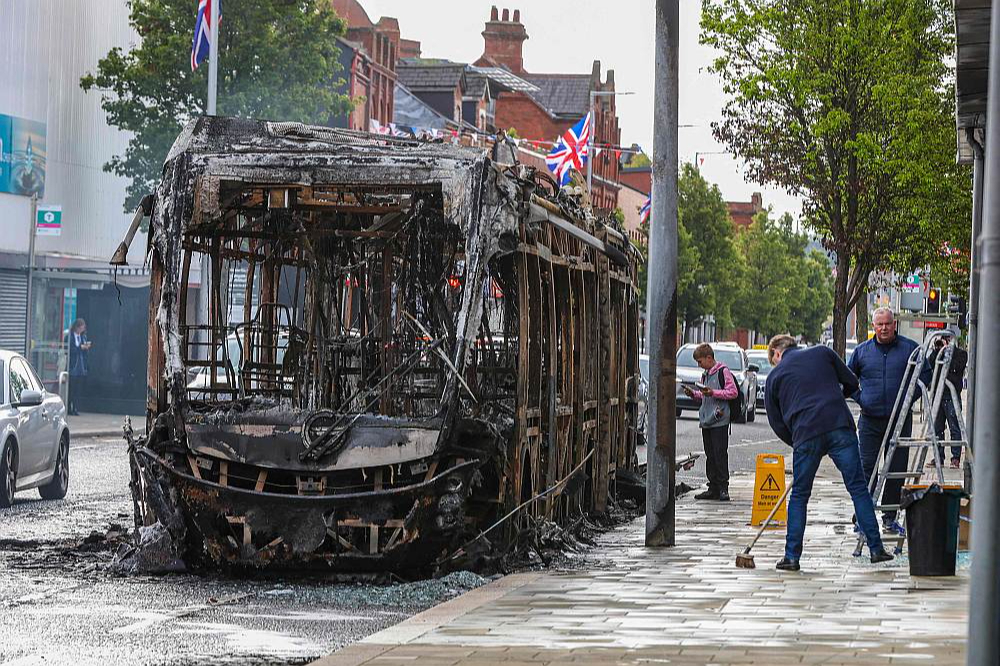
Violent anti-immigration protests erupted in Belfast, Northern Ireland, throughout early August 2024, resulting in property damage, street blockades, and multiple arrests. The unrest followed a series of incidents across the United Kingdom, which authorities and independent monitors have linked to the spread of misinformation and inflammatory rhetoric on social media platforms. According to the Police Service of Northern Ireland (PSNI), the disorder involved groups targeting businesses and individuals, prompting a significant deployment of officers to restore order in the city center and surrounding neighborhoods.
The violence was characterized by the burning of vehicles, the smashing of storefronts, and the intimidation of residents. Police officials have pointed to organized online agitation as a primary driver of the events, noting that digital platforms were used to coordinate gatherings and mobilize participants under the guise of anti-immigration sentiment. The PSNI confirmed that the unrest saw sustained attacks on officers, with several personnel sustaining injuries during clashes with agitators. These events occurred against a backdrop of heightened community tensions following a separate, unrelated stabbing incident in Southport, England, which was heavily exploited by online actors to trigger wider civil disorder across various British cities.
The Role of Online Misinformation in Escalating Unrest
Investigators and digital security analysts have identified a clear pattern of misinformation during the Belfast riots. According to reports from the Guardian, social media accounts—many of which were anonymous or recently created—circulated false claims regarding the identity and background of individuals involved in unrelated criminal acts. These digital campaigns were designed to incite anger, specifically targeting minority communities and asylum seekers in Northern Ireland.
The PSNI has initiated multiple investigations into the individuals responsible for organizing and inciting the violence. Police commanders stated that the speed at which false information traveled on platforms like X (formerly Twitter) and Telegram made it difficult to preemptively neutralize the threats to public safety. The use of digital tools to coordinate physical acts of vandalism suggests a shift in how civil unrest is organized in Northern Ireland, moving away from traditional community-based mobilization toward decentralized, platform-driven radicalization.
Impact on Belfast Communities and Local Businesses
The physical toll of the protests has been significant for local business owners. Several establishments, particularly those identified as belonging to immigrant entrepreneurs, were targeted during the nights of unrest. The Belfast Telegraph reported that many shopkeepers were forced to board up their premises or close early to protect their staff and property. This atmosphere of insecurity has prompted calls for greater community cohesion and a stronger police presence in affected areas.
Community leaders and local politicians have condemned the violence, urging the public to refrain from participating in activities that endanger the city’s stability. In a statement to the public, the Northern Ireland Executive emphasized that the actions of a small minority of agitators do not represent the values of the broader population. Authorities are currently reviewing high-definition CCTV footage and body-worn camera recordings to identify those who participated in the rioting, with the intent to bring formal charges against individuals involved in criminal damage and assault.
What Happens Next: Legal and Security Responses
As the situation stabilizes, the focus has shifted toward the legal aftermath and the broader implications for security policy. The Department of Justice in Northern Ireland is overseeing the processing of those arrested during the riots. Legal experts anticipate that the courts will prioritize cases involving public order offenses, given the severity of the damage caused to public and private property. The police have established a dedicated portal for members of the public to submit evidence, including photographs and video footage, to assist in ongoing criminal investigations.
For residents and business owners concerned about future disturbances, the PSNI continues to provide updates through its official website and social media channels. The government has encouraged those who have been victims of intimidation or hate crimes to report incidents directly to the authorities. As of mid-August 2024, the investigation remains active, with further arrests expected as detectives continue to process digital evidence and witness testimonies gathered during the period of unrest. We invite readers to share their thoughts on how local communities can best build resilience against the spread of online disinformation in the comments section below.
Keep reading