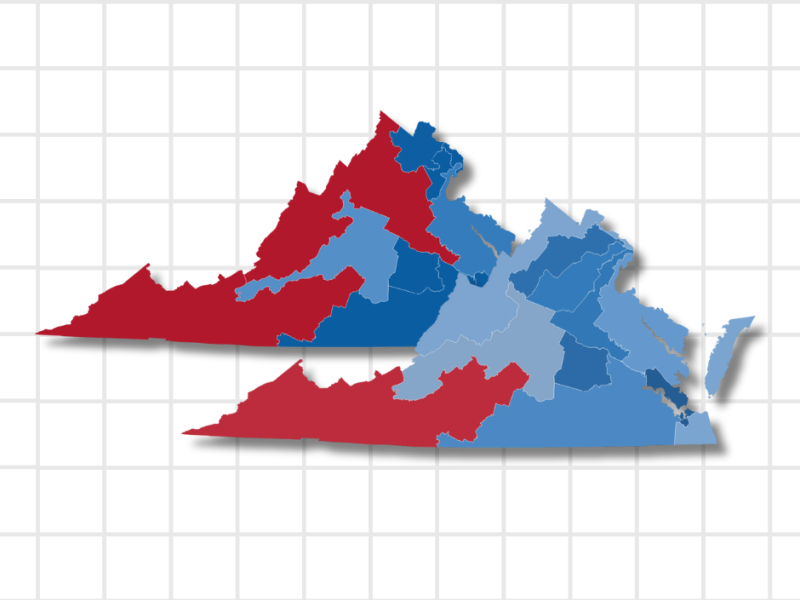
Democrats’ Virginia redistricting win reshapes 2026 House battle
Virginia voters on Tuesday approved a Democratic-backed redistricting plan that could allow the party to gain as many as four new seats in the U.S. House of Representatives during the November midterm elections. With 97% of the vote reported, the “yes” vote held a narrow 3-percentage-point lead in the special election, marking a significant victory for Democrats in their effort to counter Republican-led redistricting efforts in other states.
The approved constitutional amendment authorizes the Democratic-controlled Virginia legislature to bypass the state’s bipartisan redistricting commission and implement a new congressional map through the end of the decade. Democrats say the new map is designed to leave only one solidly Republican district out of Virginia’s 11 House seats, a dramatic shift from the current 6-5 Democratic advantage in the delegation.

The vote comes amid a broader national redistricting battle that began last year when former President Donald Trump urged Republican-led states to redraw their congressional maps to protect the GOP House majority. Republicans had enacted new maps in Texas, Missouri, and North Carolina, seeking to insulate their narrow House majority. Virginia, which Democrats now control the redistricting process in, offered a rare opportunity to respond.
“Virginia just changed the trajectory of the 2026 midterms,” said Virginia Democratic state House Speaker Don Scott in a statement following the results. Both parties invested millions of dollars and extensive campaign efforts in the weeks leading up to the vote, particularly during the early voting period.
If the final margin of victory is less than one-half of 1%, Virginia election law allows the defeated side to request a state-funded recount. Republicans have likewise indicated they may pursue legal challenges to preserve the existing congressional maps.
National implications of Virginia’s redistricting shift
The outcome in Virginia, combined with a similar referendum win for Democrats in California in 2025, means Trump is now trailing in a partisan gerrymandering fight he initiated. According to Eric Holder, chair of the National Democratic Redistricting Committee, the Virginia result has stopped Trump’s attempt to “steal” the midterm election through map manipulation.
Democrats currently hold a slim majority in the U.S. House, and control of the chamber in 2026 will depend on just a handful of competitive districts. The potential gain of up to four seats in Virginia alone could significantly alter the national balance of power, especially in a closely divided Congress.
The approved maps could transform Virginia’s 11-member congressional delegation from a 6-to-5 Democratic edge to an overwhelming 10-to-1 advantage, according to projections cited by election analysts. Such a shift would represent one of the most dramatic single-state redistricting outcomes in recent memory.
Legal and procedural context of the Virginia vote
The referendum was held as a special election on April 21, 2026, to determine whether the state legislature could assume full control of the redistricting process. Virginia had previously used a bipartisan redistricting commission established by a 2020 constitutional amendment to draw congressional and state legislative maps.
By approving the measure, voters granted the legislature authority to implement a new map without commission oversight for the remainder of the decade. The change reverses a voter-approved reform intended to reduce partisan influence in mapmaking.
Under Virginia law, congressional redistricting typically occurs after each decennial census. Though, mid-decade redistricting has become increasingly common as parties seek to capitalize on shifting political advantages between census years.
Reactions and next steps
Virginia Democrats celebrated the results as they came in, with state Senate President L. Louise Lucas posting on social media: “THANK YOU VIRGINIA,” accompanied by a video described by reporters as an expletive-laden victory lap. Lucas has been a prominent advocate for redistricting reform in the state legislature.
Republicans expressed disappointment but signaled their intent to challenge the new map in court. GOP leaders argued that the legislature’s action undermines the intent of the bipartisan commission and could lead to prolonged legal uncertainty over Virginia’s congressional boundaries.
As of now, no official date has been set for when the new map will be implemented. The legislature is expected to convene in the coming weeks to draft and approve the revised congressional districts, pending any legal actions that may delay the process.
The next major checkpoint in the national redistricting landscape will be ongoing litigation in states like Texas and North Carolina, where Republican-drawn maps are facing federal challenges. Courts are expected to rule on those cases later in 2026, which could further influence the balance of power ahead of the November elections.
For ongoing updates on redistricting developments and election-related legal proceedings, readers can follow official updates from state election boards and federal court filings.
If you found this analysis useful, consider sharing it with others interested in U.S. Politics and electoral processes. Join the conversation by leaving a comment below.