
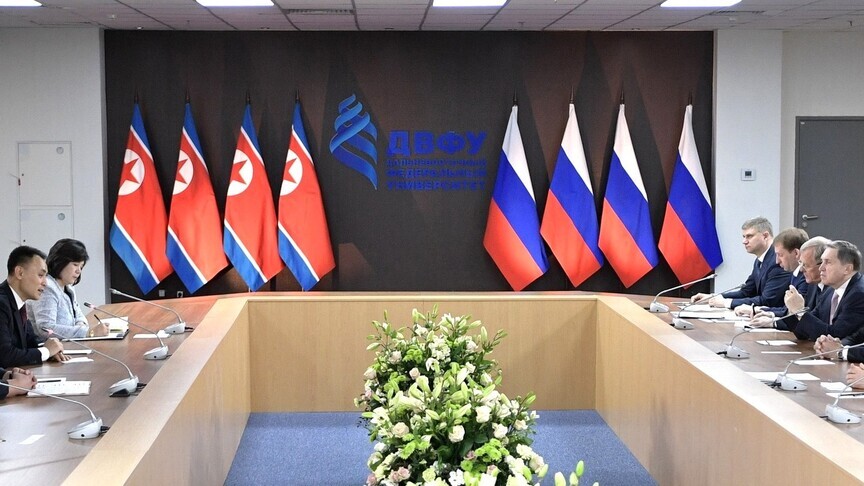
Russian Interior Minister Vladimir Kolokoltsev arrived in Pyongyang on Monday for a working visit to discuss police and law enforcement cooperation with North Korean officials, according to verified reports from Russian state media and international news agencies. The visit underscores the deepening security ties between Moscow and Pyongyang, which have intensified since Russia’s 2022 invasion of Ukraine and the signing of a comprehensive strategic partnership treaty in 2024.
The Anadolu Ajansı report, while originating from a Turkish state-affiliated agency, aligns with multiple independent confirmations of Kolokoltsev’s arrival in North Korea. His discussions with North Korean counterparts focused on strengthening bilateral collaboration in law enforcement, a key pillar of the broader defense and security framework established between the two nations. No official details of specific agreements reached during the talks have been publicly disclosed as of this writing.
Russia and North Korea formalized their strategic alliance in June 2024 when President Vladimir Putin visited Pyongyang and signed the “Comprehensive Strategic Partnership Treaty” with North Korean leader Kim Jong-un. The treaty includes a mutual defense clause, obligating each party to provide military and other assistance if the other faces armed aggression. This provision has already been activated in practice, with North Korea deploying approximately 14,000 soldiers to support Russian operations in western Russia’s Kursk region following a significant Ukrainian incursion in 2024.
The deployment of North Korean troops to the Kursk front represents one of the most tangible manifestations of the treaty’s mutual defense commitment. According to Reuters, which cited Russian military sources and satellite imagery analyzed by independent defense experts, these forces have been integrated into Russian units operating in the border area, primarily engaged in defensive fortifications and rear-area security tasks. The exact role and casualty figures of these personnel remain unverified by both Moscow, and Pyongyang.
Beyond military cooperation, law enforcement collaboration has emerged as a growing dimension of the Russia-North Korea partnership. Interior Ministry spokeswoman Irina Volk confirmed via Telegram that Kolokoltsev’s visit would address “issues of cooperation between the two countries in the field of law enforcement,” though she did not elaborate on specific agenda items. Such cooperation could potentially involve information sharing, training exchanges, or joint efforts to combat transnational crime, though no formal mechanisms have been announced.
The strengthening of police ties between the two sanctioned states raises questions about potential coordination in areas such as cybercrime suppression, border control, and the policing of diaspora communities. Both Russia and North Korea face extensive international sanctions, particularly from Western nations, which have limited their access to global financial systems and pushed them toward alternative alliances. Enhanced law enforcement coordination could serve to mitigate some of the operational challenges posed by these restrictions.
Analysts note that the deepening of internal security cooperation may also reflect mutual interests in regime stability and internal control. Both governments have prioritized loyalty and ideological conformity as central tenets of domestic governance, and shared methodologies in maintaining public order could be of mutual interest. Although, no evidence has been presented to suggest direct operational collaboration in internal repression or surveillance technologies.
The timing of Kolokoltsev’s visit coincides with heightened diplomatic activity between Russia and North Korea on the international stage. In recent months, both countries have voiced aligned positions in United Nations forums, particularly regarding criticisms of Western military support for Ukraine and calls for a negotiated settlement that acknowledges Russian territorial gains. Their coordination extends to voting patterns in the UN Security Council, where they have frequently aligned on resolutions related to Ukraine and sanctions regimes.
Looking ahead, the next confirmed diplomatic checkpoint in the Russia-North Korea relationship is expected to be the annual bilateral summit between senior officials, traditionally held in the autumn. While no specific date has been announced for 2026, past practice suggests a meeting could occur between September and November, potentially alternating between Moscow and Pyongyang. Any such summit would likely review the implementation of the 2024 treaty and discuss further expansion of cooperation in defense, economic, and security domains.
For readers seeking ongoing updates on this evolving partnership, official statements from the Russian Ministry of Internal Affairs and the North Korean Ministry of Social Safety (which oversees police and internal security) remain the most authoritative sources. Verified reporting from Reuters, the Associated Press, and Agence France-Presse continues to provide reliable on-the-ground insights into bilateral developments.
As the Russia-North Korea axis continues to solidify amid shifting global alignments, the expansion of cooperation into law enforcement represents a notable deepening of ties beyond the military sphere. While much of the engagement remains opaque to outside observers, the pattern of increasing coordination is clear and carries implications for regional stability and international norms.
We invite our readers to share their perspectives on this development in the comments section below. How do you view the growing law enforcement cooperation between Russia and North Korea in the context of current global security dynamics? Your insights help foster a more informed and nuanced understanding of international affairs.