
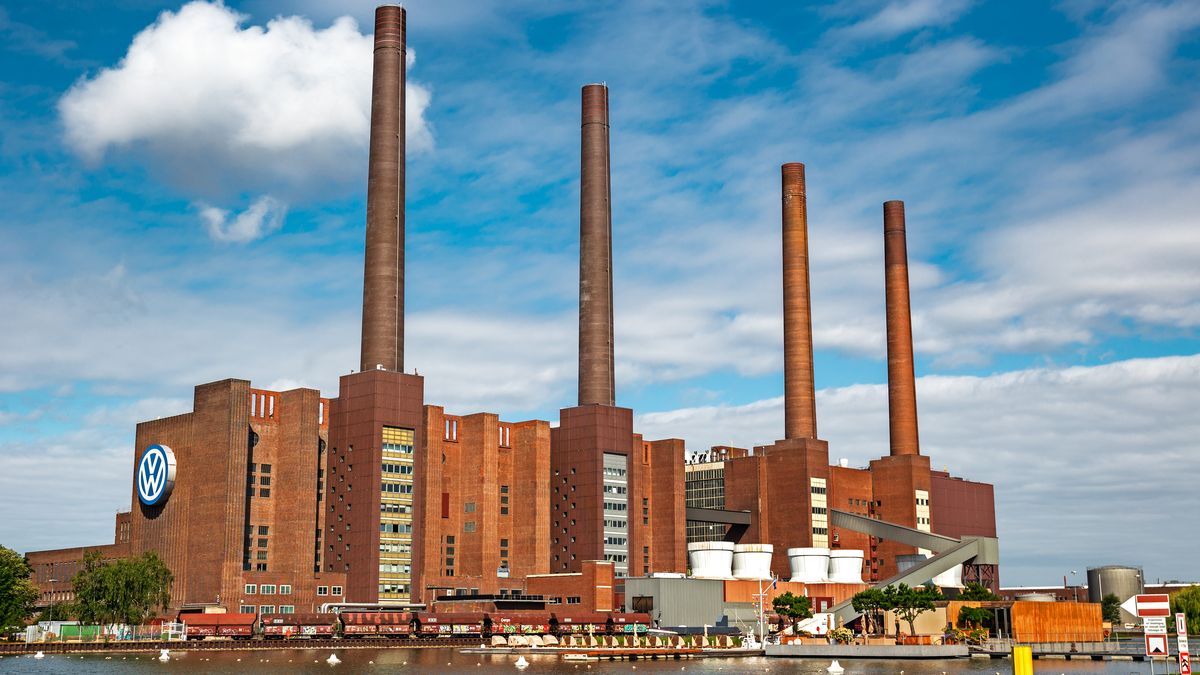
Volkswagen is accelerating a strategic shift toward reduced production as part of a broader effort to stabilize its finances amid declining market performance and mounting investor pressure. The German automaker, Europe’s largest car manufacturer, has confirmed plans to cut vehicle output by up to one million units annually, reflecting a deliberate move toward what industry analysts describe as “nerůst” – a Czech term translating to “non-growth” or “degrowth” in business contexts.
This production adjustment comes after years of declining profitability, particularly in key markets like China, where Volkswagen has lost its position as the top-selling automaker to domestic rival BYD. In January 2026, CEO Oliver Blume described the year as a “moment of truth” for leadership, noting that the combined market capitalization of Volkswagen and Porsche had fallen by approximately $48 billion (over 1.1 trillion Czech koruna) during his tenure. The announcement aligns with Volkswagen’s existing cost-saving initiative targeting €10 billion in savings by the end of 2026, which includes plant closures and workforce reductions in Germany.
Blume stepped down from his dual role as head of both Volkswagen and Porsche at the start of 2026 to focus exclusively on leading the core brand through its restructuring. His decision followed criticism over divided attention between the two companies, particularly as Porsche’s leadership transition saw Lutz Meschke depart and Porsche’s supervisory board appoint recent leadership. By relinquishing oversight of Porsche, Blume aims to concentrate on stabilizing Volkswagen’s operations in Wolfsburg, where tensions with labor unions over proposed factory closures and layoffs have intensified.
The production cuts are not limited to reducing output but extend to a broader reevaluation of Volkswagen’s global footprint. Reports indicate the company is considering divesting from underperforming factories and streamlining its workforce across multiple regions. These measures form part of a strategy to realign production with actual demand, especially as software development delays and costly partnerships — such as the investment in U.S. Electric vehicle maker Rivian — have failed to deliver expected returns, further eroding investor confidence.
Understanding Volkswagen’s ‘Nerůst’ Strategy
The term “nerůst,” central to discussions around Volkswagen’s new direction, reflects a conscious rejection of traditional growth-at-all-costs models. In automotive industry discourse, it signals a pivot toward sustainability, operational efficiency, and long-term resilience over quarterly volume targets. For Volkswagen, this means accepting lower sales volumes in exchange for improved margins, reduced complexity, and a stronger balance sheet.
This approach contrasts sharply with the aggressive expansion strategies of previous years, when Volkswagen pursued global scale through rapid platform sharing and aggressive pricing. Now, the focus is on optimizing existing assets, particularly in Europe, where high labor costs and stringent environmental regulations have compressed profitability. By lowering production, Volkswagen aims to reduce inventory buildup, decrease incentive spending, and improve pricing power — a shift already evident in its recent financial reporting.
Analysts note that such a strategy carries risks, including potential loss of market share and underutilization of fixed assets. However, proponents argue that in an era of slowing global auto demand and increasing competition from electric vehicle specialists, a leaner, more focused Volkswagen may be better positioned to withstand cyclical downturns. The company’s emphasis on software-defined vehicles and its “in China, for China” development strategy remain key components of its long-term vision, even as near-term adjustments take precedence.
Leadership Changes and Internal Tensions
The production cuts are unfolding against a backdrop of significant leadership changes at the top of Volkswagen Group. Oliver Blume became CEO of Volkswagen in September 2022, succeeding Herbert Diess. Initially, he retained responsibility for both Volkswagen and Porsche, a dual role that drew criticism from investors and supervisory board members who argued it分散ed his focus during a period of crisis. By January 2026, Blume had formally stepped down as head of Porsche, allowing him to dedicate full attention to Volkswagen’s turnaround.

This leadership shift coincided with reports of growing friction between Volkswagen’s management and its workforce, particularly in Germany. Plans to close factories and reduce staff have triggered warnings from powerful labor unions, including IG Metall, which has historically wielded significant influence over operational decisions at Volkswagen’s German plants. While no specific plant closures have been officially confirmed as part of the current round of cuts, the threat of such actions has contributed to a climate of uncertainty in Wolfsburg and other German production sites.
Meanwhile, the supervisory board continues to monitor progress closely, with investor patience wearing thin after years of declining returns. The pressure on Blume to deliver tangible results in 2026 has been described as unprecedented, with some analysts suggesting that failure to stabilize the company could lead to leadership changes. However, as of now, Blume remains in place, backed by the board’s commitment to giving his restructuring plan time to take effect.
Financial Pressures and Market Realities
Volkswagen’s decision to cut production is deeply rooted in its financial performance. The company has faced persistent challenges in maintaining profitability, particularly as the transition to electric vehicles has required massive capital expenditures while sales growth has lagged. In China — once Volkswagen’s most profitable market — the brand has struggled to adapt to local preferences and regulatory environments, allowing BYD and other domestic makers to capture significant share.
The automaker’s investment in Rivian, intended to accelerate its software and electrical architecture development, has likewise reach under scrutiny. Despite billions invested, the partnership has yet to yield a commercially viable software platform that can be deployed across Volkswagen’s fleet. Critics argue that the funds might have been better spent on internal development or more proven collaborations, though defenders note that the automotive software race is inherently risky and long-term.
Adding to the complexity, Volkswagen continues to grapple with the aftermath of its diesel emissions scandal, which, while largely settled in financial terms, still affects brand perception and diverts resources toward compliance and remediation efforts. These cumulative pressures have made the case for production reduction increasingly compelling to stakeholders who prioritize financial health over market share metrics.
What This Means for the Auto Industry
Volkswagen’s embrace of nerůst could signal a broader shift in how legacy automakers approach growth in a maturing market. As electric vehicle adoption accelerates and competition intensifies from both established players and new entrants, the traditional model of pursuing ever-higher sales volumes may no longer be sustainable. Volkswagen’s experiment with deliberate downsizing offers a case study in how a major industrial group might manage decline gracefully while preserving core capabilities.
For suppliers, dealers, and regional economies dependent on Volkswagen plants, the implications are significant. Reduced production could lead to lower orders for parts manufacturers and potential job losses in communities tied to specific factories. However, if the strategy succeeds in restoring profitability, it may ultimately support more stable employment and investment over the long term.
Consumers may experience fewer incentives and higher transaction prices as Volkswagen shifts focus from volume to value. Yet, the company maintains that its commitment to innovation — particularly in software, battery technology, and vehicle connectivity — remains unchanged. The challenge lies in balancing short-term austerity with long-term competitiveness in a rapidly transforming industry.
Looking Ahead: What to Watch in 2026
The coming months will be critical in determining whether Volkswagen’s nerůst strategy gains traction. Key milestones include the release of quarterly earnings reports, which will provide insight into whether production cuts are translating into improved margins and cash flow. Any announcements regarding specific plant closures, workforce reductions, or divestments will also be closely monitored as indicators of the strategy’s depth.

Labor negotiations in Germany are expected to remain a focal point, with IG Metall likely to resist any moves perceived as threatening jobs or wages. Simultaneously, investors will continue to assess whether Blume’s leadership can deliver the stability they seek, especially if market conditions in Europe or China fail to improve.
As of now, no official timeline has been published for the full implementation of the one-million-unit production cut, nor have specific facilities been named for potential closure or scaling back. Volkswagen has not released a detailed public roadmap for its nerůst initiative, leaving many details subject to speculation based on regional reports and supplier communications.
For ongoing updates, stakeholders are encouraged to consult Volkswagen’s official investor relations website, where financial statements, press releases, and presentations are regularly posted. The company also holds quarterly earnings calls, which are open to the public and provide direct access to management commentary on strategic progress.
Volkswagen’s journey toward nerůst remains a developing story — one that reflects not only the challenges facing one of the world’s largest automakers but also a potential inflection point in how industrial giants adapt to eras of constrained growth. Whether this approach succeeds will depend on execution, external conditions, and the willingness of all stakeholders to accept a new definition of success.
If you have insights or perspectives on Volkswagen’s strategic shift, we invite you to share them in the comments below. Your contribution helps foster a deeper understanding of the forces shaping the future of mobility. Please consider sharing this article with others who may be interested in the evolving dynamics of the global automotive industry.