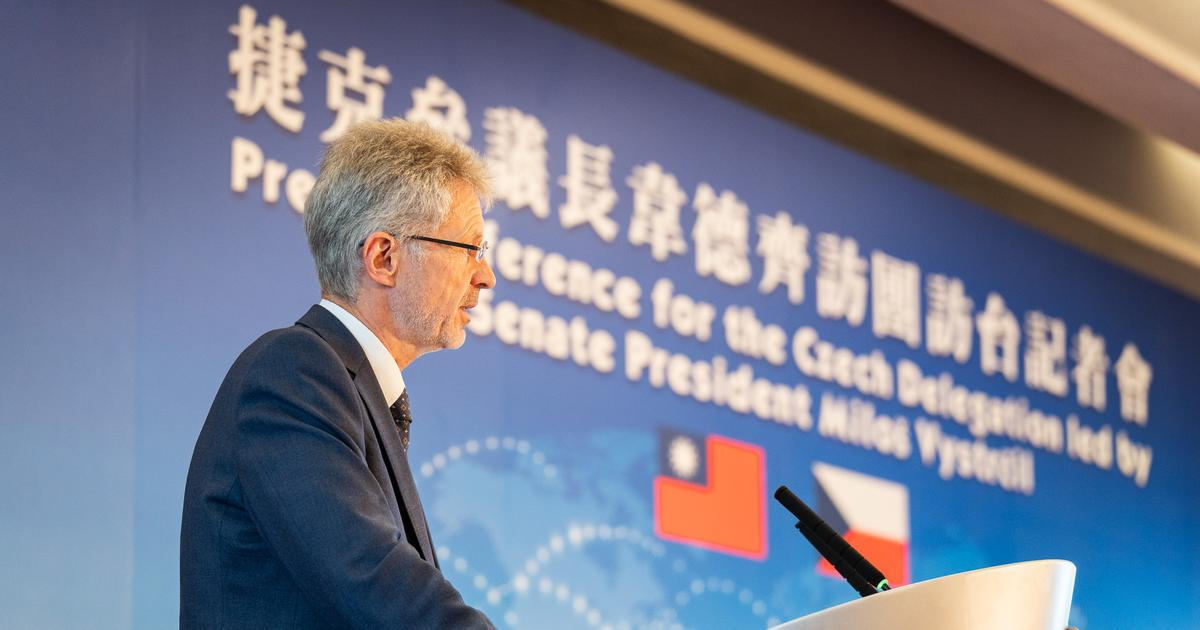
The diplomatic relationship between the Czech Republic and Taiwan has evolved into a significant pillar of Central European foreign policy in recent years. Central to this development was the 2020 visit of Miloš Vystrčil, the President of the Czech Senate, to Taipei—a trip that underscored a commitment to democratic values and deepened economic cooperation between the two nations. During the visit, Vystrčil was famously told, “You are now a Taiwanese,” a symbolic gesture that captured the warmth of the diplomatic reception he received.
This visit served as more than just a symbolic gesture of solidarity; it acted as a catalyst for a series of tangible economic outcomes. Following the delegation’s return, the Taiwanese government moved to strengthen its commercial ties with Prague, leading to the establishment of various initiatives aimed at fostering technological and industrial collaboration. For a nation like the Czech Republic, navigating the complexities of international trade while maintaining its commitment to human rights and democratic governance remains a delicate but increasingly productive balancing act.
As we examine the trajectory of these relations, the impact of the 2020 visit continues to resonate. The focus has since shifted from purely political signaling to the nuts and bolts of trade, investment and academic exchange. This article explores the progression of these ties and what they mean for the future of Czech-Taiwanese economic integration in the broader context of European foreign policy.
The Diplomatic Significance of the 2020 Senate Delegation
When Miloš Vystrčil led a high-profile delegation to Taiwan in August 2020, the move was met with strong opposition from the People’s Republic of China, which views the island as a breakaway province. Despite the external pressure, the Senate President maintained that the visit was essential for upholding the legacy of Václav Havel, the first president of the post-communist Czech Republic, who was a staunch advocate for human rights. According to the official records from the Senate of the Parliament of the Czech Republic, the visit was framed as an exercise of sovereign foreign policy, independent of external influence.
The visit was not merely a political statement but an opportunity to engage directly with Taiwanese leadership. During the trip, Vystrčil was awarded the Order of Propitious Clouds by the Taiwanese government, a high honor recognizing his contributions to the development of bilateral relations. In a gesture of personal diplomacy, the Senate President reciprocated by gifting the President of Taiwan a leather backpack, reflecting a more human-centered approach to international relations that has become a hallmark of his tenure.
Economic Cooperation and the “Billion-Crown” Impact
The aftermath of the 2020 visit saw a concerted effort by Taiwanese authorities to translate political goodwill into concrete economic benefits. A key development was the creation of a dedicated fund designed to facilitate investment and trade with the Czech Republic. As reported by the Executive Yuan of the Republic of China (Taiwan), these initiatives have targeted high-tech sectors, including semiconductor research and development, as well as green energy projects. The financial commitments, often discussed in terms of billions of Czech koruna, represent a significant influx of capital and expertise into the Central European market.
This economic pivot is part of a larger strategy by Taiwan to build robust partnerships within the European Union. By leveraging the Czech Republic as a gateway, Taiwanese firms have sought to localize production and research, thereby mitigating supply chain risks. The Czech Ministry of Industry and Trade has actively supported these collaborations, emphasizing the mutual benefits of integrating Czech engineering prowess with Taiwanese technological leadership in the global market.
Challenges and the Balancing Act
Maintaining a proactive relationship with Taiwan while managing ties with China presents a complex challenge for Czech policymakers. Critics of the 2020 visit, including certain factions within the Czech political spectrum at the time, argued that such overt displays of support could jeopardize trade relations with Beijing. However, proponents of the “Vystrčil doctrine” argue that the economic independence gained through diversified partnerships—particularly in high-tech sectors—outweighs the risks of diplomatic friction.
The ongoing dialogue between Prague and Taipei continues to focus on “resilience.” In an era of global uncertainty, the ability to secure supply chains for critical components, such as microchips, has become a matter of national security. The CzechInvest agency has played a pivotal role in these efforts, acting as a liaison between foreign investors and domestic industry to ensure that the “billion-crown” investments translate into long-term infrastructure and job creation.
Future Outlook: Beyond the Initial Milestone
Looking ahead, the relationship is moving toward a more institutionalized phase. Rather than relying solely on high-level state visits, both nations are focusing on creating permanent frameworks for cooperation. This includes the expansion of the Czech Economic and Cultural Office in Taipei and reciprocal efforts by Taiwan to bolster its presence in Prague. These institutions serve as the backbone for ongoing negotiations regarding double taxation agreements, scientific research grants, and student exchange programs.
The next major checkpoint for this partnership will likely involve the implementation of the semiconductor research hub, a project that has been under discussion between the two countries since 2022. As the European Union continues to develop its own strategies for technological sovereignty, the Czech-Taiwanese model serves as a compelling case study of how mid-sized nations can navigate the geopolitical landscape through strategic, values-based partnerships.
The evolution of this relationship is a testament to the fact that foreign policy is rarely a zero-sum game. By prioritizing innovation, shared democratic values, and economic pragmatism, the Czech Republic and Taiwan have successfully created a template for modern bilateral engagement. As both sides continue to navigate the complexities of the 21st-century global order, their cooperation remains a focal point for observers of international affairs.
What are your thoughts on the impact of these diplomatic ties on the European tech sector? Share your perspective in the comments section below.
Worth a look