
Yes, it is medically possible to become pregnant one month after giving birth, even before the return of your first postpartum menstrual period. While many people believe that breastfeeding or the absence of menstruation acts as a natural form of birth control, these methods are not guaranteed to prevent ovulation. In fact, the body can release an egg—signaling the return of fertility—before the first postpartum period actually occurs.
As a physician, I frequently discuss this with patients who are surprised to learn that ovulation often precedes menstruation. According to the American College of Obstetricians and Gynecologists (ACOG), the return of fertility varies significantly among individuals, and unprotected intercourse in the weeks following delivery carries a genuine risk of unintended pregnancy. Understanding your reproductive window is essential for postpartum health and family planning.
Why Fertility Returns Before Menstruation
The biological reason for this early return to fertility is that ovulation and menstruation are two distinct events. Menstruation is the shedding of the uterine lining, which happens only if an egg released during the cycle is not fertilized. Ovulation, however, is the release of the egg itself. You can ovulate—and therefore become pregnant—approximately two weeks before your first postpartum period begins.

For those who are not breastfeeding, ovulation can occur as early as 25 days after childbirth, according to the National Institutes of Health (NIH). This means a person could theoretically conceive before their six-week postpartum checkup. The hormonal shifts following birth are complex, and the suppression of ovulation is not immediate or uniform across all patients.
The Role of Breastfeeding as Contraception
Many patients inquire about the Lactational Amenorrhea Method (LAM), a form of natural birth control that relies on exclusive breastfeeding to suppress ovulation. While effective under specific conditions, it is not a foolproof method for every individual. For LAM to be considered highly reliable, the Centers for Disease Control and Prevention (CDC) notes that the infant must be under six months of age, the parent must not have experienced a return of their period, and the infant must be fed exclusively at the breast on demand, day and night.
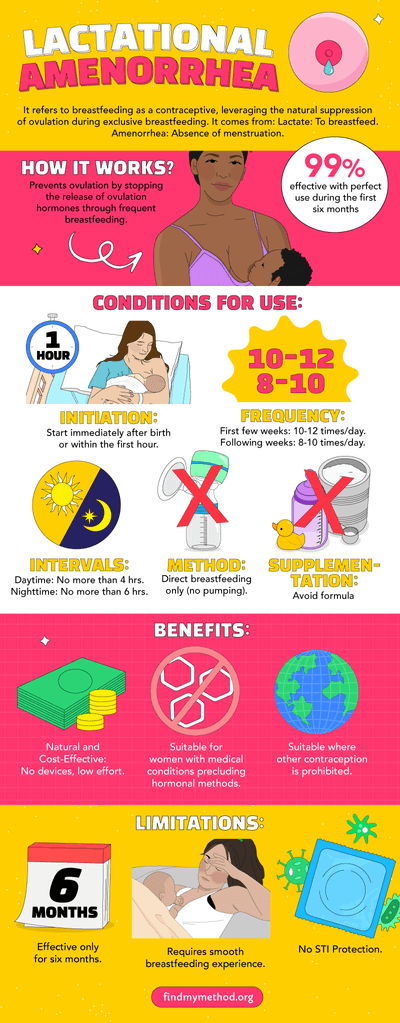
If these criteria are not met—for instance, if you introduce formula, supplement with bottles, or if your infant begins sleeping through the night—the hormonal signals that suppress ovulation can weaken. Relying solely on breastfeeding to prevent pregnancy requires strict adherence to these guidelines, and even then, healthcare providers often recommend using a backup method of contraception to ensure peace of mind.
Planning Your Postpartum Contraception
Because the return of fertility is difficult to predict, many healthcare professionals recommend discussing birth control options before you leave the hospital or during your initial prenatal visits. There are several safe, effective options available for the postpartum period, including progestin-only pills, intrauterine devices (IUDs), and implants, which do not interfere with milk production.

If you are concerned about the timing of your next cycle or wish to discuss long-acting reversible contraception (LARC), please consult your obstetrician or primary care provider. They can help you evaluate your specific medical history and choose a method that aligns with your lifestyle and breastfeeding goals. Ensuring you have a plan in place allows you to focus on your recovery and your newborn without the added stress of unintended pregnancy.
If you have questions about your personal health, please consult your healthcare provider or visit the World Health Organization (WHO) for comprehensive guidance on family planning and reproductive health.