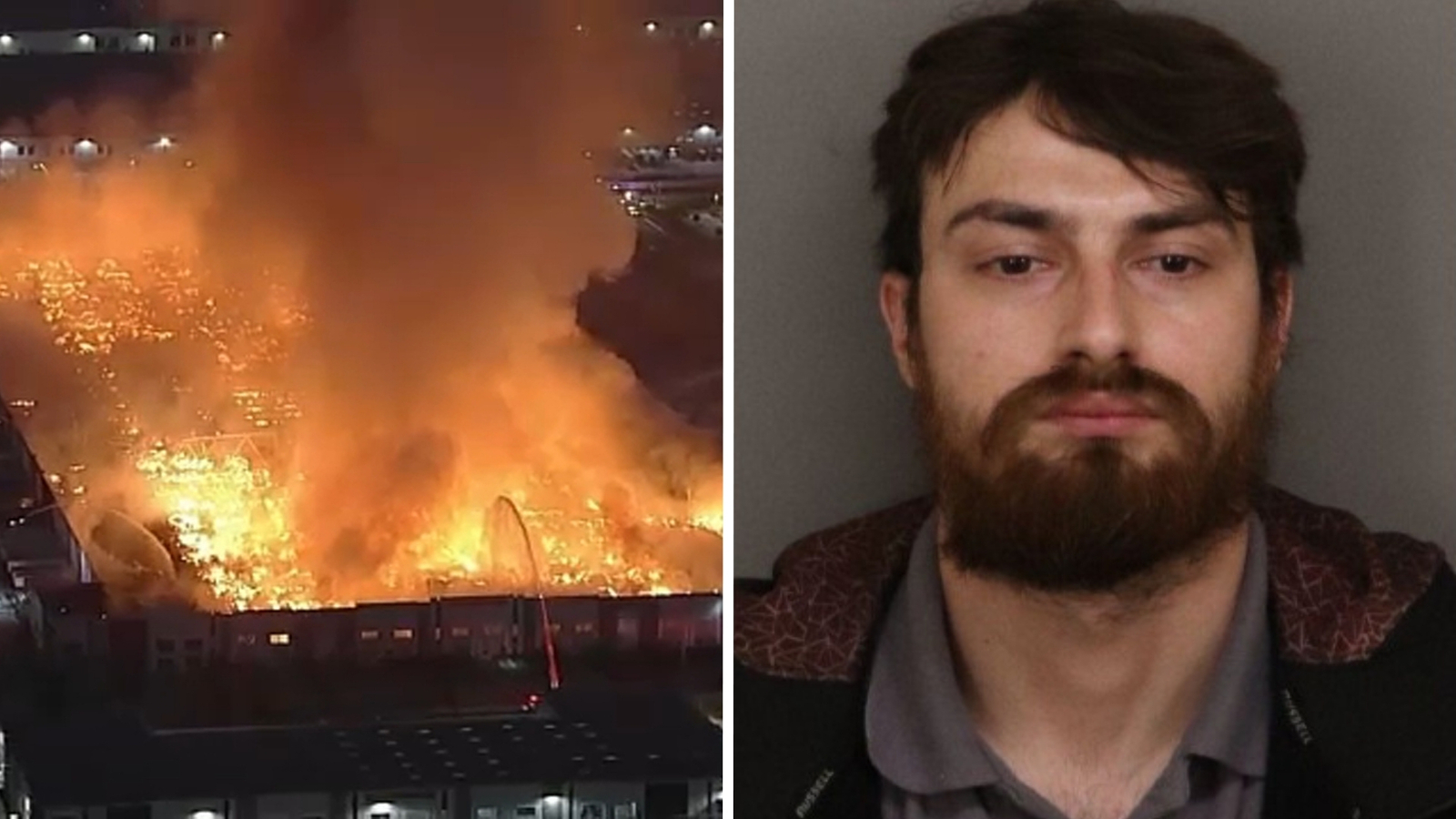
Federal and state authorities have charged a 29-year-old man in connection with a massive fire that completely destroyed a Kimberly-Clark distribution center in Ontario, California. The Ontario warehouse fire suspect Chamel Abdulkarim is accused of intentionally setting multiple fires within the facility, resulting in what officials describe as a catastrophic loss of property and infrastructure.
The incident, which occurred early Tuesday morning, led to the total destruction of a 1.2-million-square-foot warehouse. Federal prosecutors estimate the financial damage to be approximately $500 million. Abdulkarim, a resident of Highland, California, was an employee of NFI Industries, the third-party logistics provider responsible for the facility.
Authorities allege that the arson was not a random act of destruction but a targeted protest against corporate wage structures. Evidence presented by prosecutors suggests that Abdulkarim filmed himself committing the act and subsequently shared the footage on social media, accompanied by messages railing against shareholders and corporate greed.
Evidence and Motive: A Protest Against Wages
According to court documents and statements from the U.S. Attorney’s office for the Central District of California, Abdulkarim recorded himself using a lighter to ignite multiple pallets of paper products inside the distribution center. In the video, which was reportedly posted to his Instagram and Facebook accounts, Abdulkarim is heard complaining about his compensation.
On the recording, the suspect allegedly stated, “If you’re not going to pay us enough to [expletive] live or afford to live, at least pay us enough not to do this [expletive].” This sentiment was echoed in subsequent communications; prosecutors claim Abdulkarim sent text messages and made phone calls boasting about the scale of the destruction, with one message allegedly stating, “I just cost these [expletive] billions.”
The timing of the fire, which broke out after 12:30 a.m. On Tuesday, placed Abdulkarim at the scene during a shift where at least 20 other employees were working. While the facility was completely leveled, authorities have confirmed that no injuries were reported among the staff present during the blaze.
Ideological Ties and the Luigi Mangione Comparison
A significant detail emerging from the investigation is the suspect’s alleged alignment with anti-capitalist sentiments. During a press conference on Friday, First Assistant U.S. Atty. Bill Essayli revealed that Abdulkarim compared himself in text messages to Luigi Mangione.
Mangione, 27, has gained notoriety and been viewed by some as an anti-capitalist figure after allegedly killing the chief executive of UnitedHealthcare on a New York sidewalk. Authorities believe Abdulkarim viewed the destruction of the Kimberly-Clark facility as a similar strike against corporate power, framing his actions as a response to the disparity between worker wages and shareholder profits.
The Scale of the Distribution Center
The Kimberly-Clark facility served as a critical hub for paper products. The sheer size of the 1.2 million-square-foot building contributed to the intensity of the six-alarm fire, which required a massive response from local fire departments to contain. The total loss of the facility represents a significant disruption to the logistics chain for the consumer goods company.
Federal and State Legal Consequences
Chamel Abdulkarim is currently facing a dual legal battle with both federal and state prosecutors. The severity of the charges reflects the immense financial damage and the intentional nature of the act.
On the federal level, Abdulkarim has been charged with arson of a building used in interstate and foreign commerce. According to Bill Essayli, this specific charge carries a five-year mandatory minimum federal prison sentence and could result in up to 20 years in prison.
Simultaneously, the San Bernardino County District Attorney, Jason Anderson, has filed state charges against the suspect. These include one count of aggravated arson and six additional counts of arson, with each count corresponding to the individual fires Abdulkarim is accused of starting within the warehouse.
Key Case Summary
| Category | Details |
|---|---|
| Suspect | Chamel Abdulkarim, 29 |
| Estimated Loss | $500 Million |
| Facility Size | 1.2 Million Square Feet |
| Federal Charge | Arson (Interstate/Foreign Commerce) |
| State Charges | 1x Aggravated Arson, 6x Arson |
| Alleged Motive | Wage disputes / Anti-capitalism |
What This Means for Logistics and Labor
The incident highlights a volatile intersection of labor frustration and extremist action. While wage disputes are common in the logistics and warehousing industry, the transition from workplace grievance to the intentional destruction of a half-billion-dollar facility is an extreme escalation. For companies like Kimberly-Clark and their partners like NFI Industries, the event underscores the critical need for internal security and the monitoring of employee sentiment in high-stress distribution environments.

The mention of Luigi Mangione suggests a growing trend of “folk hero” narratives surrounding individuals who target corporate entities or executives. This ideological layer may complicate the legal proceedings, as the defense may attempt to frame the actions within a broader social or political context, though federal arson statutes typically focus on the act of destruction and the resulting damage regardless of political motivation.
The destruction of such a massive hub in the Inland Empire—a global center for logistics—also raises questions about the vulnerability of critical supply chain infrastructure to internal threats.
The next confirmed step in the legal process will be the ongoing arraignment and preliminary hearings to determine bail and the progression of the federal and state cases. Updates regarding court dates and further filings from the San Bernardino County District Attorney’s office are expected as the investigation into Abdulkarim’s communications continues.
World Today Journal encourages readers to share this story and join the conversation in the comments regarding the balance between labor rights and corporate security.