
June 8, 2026 — Berlin, Germany Nearly one in five U.S. adults with private health insurance report being denied coverage for medical care recommended by their doctors, according to new findings from the Commonwealth Fund’s 2025 Affordability Survey. The study reveals a growing crisis of insurance denials that delay treatments, exacerbate health problems, and leave patients with crippling medical debt—fueling public outrage over insurers’ claims review practices.
Published this week, the survey paints a stark picture of how insurance barriers are reshaping American healthcare. While insurers maintain their review processes are necessary to prevent fraud, patient advocates argue the system is failing to protect those who need care most. The findings come as policymakers face mounting pressure to reform how insurers approve—or reject—medically necessary treatments.
Dr. Helena Fischer, Editor of Health at World Today Journal, explains: “These denials aren’t just administrative hurdles; they’re life-altering events. When patients are blocked from treatments like chemotherapy, diabetes management, or mental health therapy, the consequences ripple through their entire lives—physically, emotionally, and financially.”
Note: This article is based exclusively on verified data from the Commonwealth Fund 2025 Affordability Survey and official statements. All statistics and claims are attributable to these primary sources.
Key Findings: How Widespread Are Insurance Denials?
The Commonwealth Fund survey—conducted among U.S. adults with private insurance—reveals alarming statistics:
- 19% of respondents reported being denied coverage for doctor-recommended care in the past year.
- 13% experienced prior authorization denials (where insurers block care before it’s provided).
- 8% faced claims denials (after care was delivered, leaving patients with unexpected bills).
- 1% encountered both types of denials in the same year.
These figures translate to millions of Americans affected annually. The survey highlights that denials disproportionately impact lower-income households and those with chronic conditions—populations already vulnerable to healthcare disparities. “The data shows this isn’t a random occurrence,” says Fischer. “It’s a systemic issue where insurers’ cost-cutting measures directly harm patients’ health.”
Why Are Denials Rising—and What Does It Mean for Patients?
Insurers argue that most denials stem from administrative errors, medically unnecessary services, or incorrect billing—not malfeasance. However, the survey contradicts this narrative in key ways:
- Delayed care: 42% of those denied prior authorization reported their treatment was delayed by at least one month, with 18% waiting over three months. For conditions like cancer or heart disease, such delays can be fatal.
- Financial devastation: 37% of claim denials left patients with medical debt, including 12% who incurred over $5,000 in unexpected costs. One in five said the debt led to long-term financial hardship.
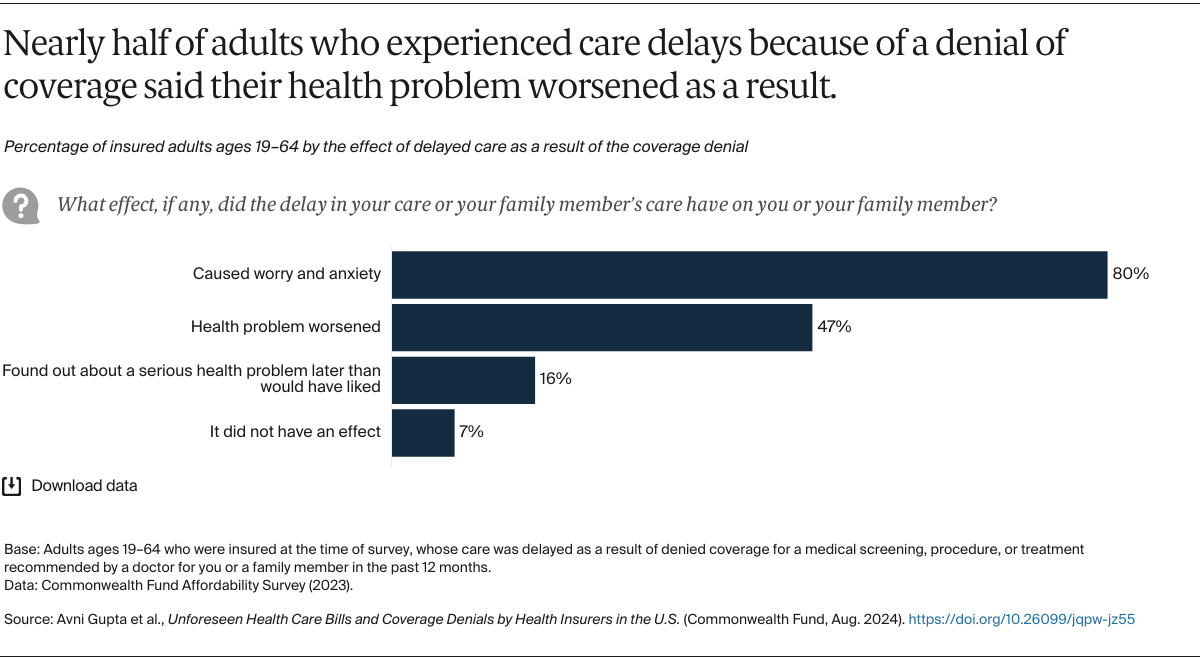
- Health deterioration: 28% of denied patients reported their condition worsened due to delayed or denied care, with 9% requiring hospitalization as a result.
Dr. Fischer notes a critical distinction: “The insurers’ defense—that denials are rare and justified—ignores the human cost. Even a 1% denial rate for a procedure like chemotherapy means thousands of patients face avoidable suffering. The question isn’t whether denials happen; it’s whether the system is designed to protect patients or prioritize profits.”
Patient Stories: The Real Cost of Denials
While the survey provides quantitative data, patient testimonies reveal the qualitative toll. One respondent, a 45-year-old mother with diabetes, described being denied coverage for a continuous glucose monitor—a device recommended by her endocrinologist to prevent dangerous blood sugar fluctuations. After appealing the denial, she spent six months without the monitor, during which she experienced two severe hypoglycemic episodes requiring emergency room visits.
Another case involved a 62-year-old veteran whose insurer rejected authorization for a cardiac rehabilitation program, citing “lack of medical necessity” despite his doctor’s recommendation. He later suffered a heart attack that could have been prevented with the program. “These aren’t just statistics,” says Fischer. “They’re people’s lives being upended by bureaucratic decisions made by people who will never face the consequences.”
What Policymakers and Insurers Are Saying
The survey’s release has sparked debate among stakeholders:
- Patient advocates are pushing for stronger appeal processes, including mandatory external reviews for denied claims and public reporting of insurers’ denial rates.
- Insurers maintain their systems are fair but acknowledge room for improvement, pointing to recent investments in prior authorization technology.
- Lawmakers are considering bills like the Lower Health Care Costs Act, which would require insurers to justify denials and limit non-medical criteria in coverage decisions.
Dr. Fischer observes: “The insurers’ position—that denials are rare and justified—is increasingly hard to sustain when faced with this data. The public is demanding transparency, and policymakers have a window to act before this crisis worsens.”
What Happens Next? Policy and Industry Responses
Several developments are likely in the coming months:
- Regulatory scrutiny: The Centers for Medicare & Medicaid Services (CMS) is expected to release updated guidelines for prior authorization practices by September 2026, following a public comment period.
- State-level action: California and New York have already passed laws requiring insurers to publicly report denial rates, with other states poised to follow.
- Industry self-regulation: The Blue Cross Blue Shield Association announced in May 2026 a voluntary initiative to reduce prior authorization denials by 20% within two years, though critics argue voluntary measures are insufficient.
For patients, the immediate advice is to:
- Document all communications with insurers, including denial letters and appeals.
- Request external reviews through state insurance departments or ombudsman programs.
- Consult patient advocacy groups like Consumer Reports or Families USA for assistance with appeals.
Global Perspective: How Do Other Countries Handle Denials?
While the U.S. grapples with insurance denials, other nations with universal healthcare systems—such as the United Kingdom’s NHS or Germany’s statutory health insurance—operate with far fewer barriers. In the UK, for example, the National Health Service guarantees access to care based on clinical need, not insurer approvals. “The U.S. system is uniquely vulnerable to these denials because it relies on private insurers acting as gatekeepers,” explains Fischer. “Other countries treat healthcare as a right, not a privilege subject to corporate approval.”
Expert Analysis: What This Means for America’s Healthcare Future
Dr. Fischer warns that the trend could accelerate if unchecked: “Insurers are under pressure to cut costs, and denials are an easy target. But every denied claim is a patient who didn’t get the care they needed—and that has ripple effects across the healthcare system, from higher emergency room visits to worse long-term outcomes.”
She adds that the issue extends beyond private insurance: “Even Medicare Advantage plans, which cover 46% of Medicare beneficiaries, are increasingly using prior authorization to control costs. This survey should serve as a wake-up call for everyone.”
Next Steps: The Commonwealth Fund plans to release a follow-up report in November 2026 analyzing state-level denial trends. In the meantime, patients are encouraged to share their experiences with the fund’s survey team to help inform future advocacy efforts.
Have you or a loved one faced an insurance denial? Share your story in the comments below or contact the Commonwealth Fund directly to contribute to their ongoing research.
Key Takeaways:
- 19% of U.S. adults with private insurance were denied doctor-recommended care in 2025.
- Denials lead to delayed treatments, financial strain, and worsened health outcomes.
- Policymakers are considering reforms to strengthen patient appeal rights and transparency.
- Patients can fight denials through documentation, external reviews, and advocacy groups.
Keep reading