
President Donald J. Trump has issued a new executive order concerning artificial intelligence, focusing on the evaluation of “covered frontier models.” While the directive establishes a framework for government agencies to assess potential security vulnerabilities in advanced AI systems, it explicitly limits the government’s power to mandate compliance or impose binding licensing requirements on developers. The policy marks a shift from previous administration approaches, emphasizing innovation-led development while creating a voluntary pathway for cybersecurity reviews.
The Mechanics of the New AI Directive
The executive order introduces a process for AI companies to provide the federal government with access to frontier models for a period of up to 30 days prior to public release. This window is intended to allow for vulnerability testing and to evaluate how systems might be manipulated or abused. To manage this, the order directs relevant agencies to establish evaluation standards and organize an “AI cybersecurity clearinghouse.”

Despite these provisions, the document includes specific language that constrains federal authority. According to the text of the order, nothing within the section should be interpreted as authorizing “mandatory governmental licensing, preclearance, or permitting requirement” for the creation or distribution of AI models. Furthermore, the order specifies that it is “not intended to, and does not, create any right or benefit, substantive or procedural, enforceable at law or in equity” against the United States or its officials.
Policy Perspectives and Industry Response
The reception of the directive has been mixed, reflecting broader debates over how to balance rapid technological advancement with national security concerns. Some analysts view the order as a foundational step for future policy. Graham Brookie, vice president for technology programs and strategy at the Atlantic Council, described the administration’s focus on Advanced AI Innovation and Security as a “serious policy” that has garnered support across various stakeholders. According to Brookie, the initiative provides a framework that “can be built on” to ensure the government is actively evaluating cybersecurity risks associated with frontier models.
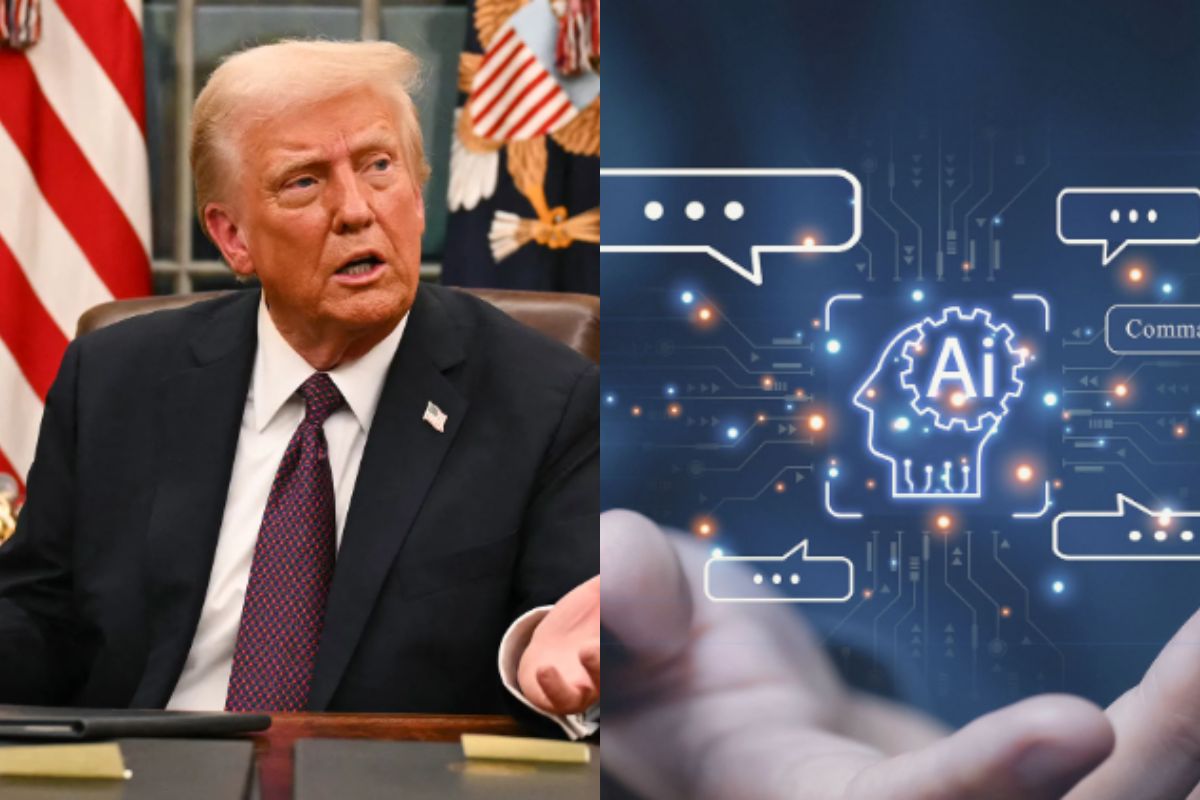
Conversely, other observers have questioned the practical efficacy of the order. Concerns have been raised regarding the lack of specific funding allocations to support these new evaluation mandates. The order instructs the Director of the Office of Management and Budget (OMB), in coordination with the National Cyber Director and the Director of the Cybersecurity and Infrastructure Security Agency (CISA), to identify existing federal grant programs that might support applicants working on AI vulnerability detection. However, the order does not earmark new capital for these efforts.
Paul Benda, executive vice president for risk, fraud, and cybersecurity at the American Bankers Association, has offered a more positive assessment. Benda characterized the order as a “constructive step toward strengthening the nation’s approach” to managing risks, noting that it could assist in protecting critical infrastructure, including the financial sector.
Operational Challenges and Implementation
A significant question remains regarding the capacity of federal agencies to conduct these evaluations within the proposed 30-day timeline. While the order suggests a collaborative effort involving the National Security Agency, the U.S. Treasury Department, and CISA, the actual execution of these reviews would likely fall to CISA. Skeptics point to the logistical difficulty of scaling such oversight given current resource constraints within the federal government.

Furthermore, the competitive nature of the AI industry—where companies are under constant pressure to release models to investors and the public—creates a potential hurdle for the adoption of voluntary review processes. Because the order does not mandate participation, industry analysts are monitoring whether developers will prioritize a 30-day “on ice” period for government assessment when the market incentive remains heavily weighted toward speed to market.
The Brennan Center for Justice has also weighed in on the broader constitutional implications of the order, questioning its substantive weight and legal reach. As the administration moves forward, the primary focus for industry stakeholders and policymakers will be the development of the evaluation standards and the official guidance on how the proposed cybersecurity clearinghouse will function in practice.
Future updates regarding the implementation of these standards are expected as agencies begin the process of coordinating with the National Cyber Director. Readers are encouraged to monitor official government portals for upcoming guidance and public comment opportunities regarding the new evaluation frameworks.
Keep reading
- Google Launches Lyria 3.5: Next-Gen AI Music Generation Now in Flow Music
- Zenith Defy: New Rare Model Blends Bold Carbon and Blue Lapis Lazuli
- Controversy at Bundaran HI: Alphard Incident and Security Guard Drama (newsdirectory3.com)
- The Senate Blue Slip, Explained: The Custom Trump Wants Gone (daybreakwire.com)