
Apple TV+ has carved out a specific niche for itself in the streaming wars, often leaning into high-concept dramas and polished sci-fi. However, the arrival of Widow’s Bay signals a pivot toward a more daring, tonal tightrope walk: the horror-comedy. This new series attempts to marry the cozy, small-town absurdity of a civic comedy with the visceral, unsettling dread of supernatural folk horror, creating a viewing experience that is as stressful as it is humorous.
At its core, Widow’s Bay is a study in skepticism clashing with the inexplicable. Set in a sleepy seaside hamlet on a remote island 40 miles off the New England coast, the series introduces us to a community defined by its isolation and its ghosts. For the residents, the supernatural is a matter of fact; for the town’s leadership, it is a public relations nightmare that needs to be dismantled for the sake of tourism and civic pride.
The series manages to capture a specific atmospheric tension, utilizing the briny, oppressive air of the coast to heighten the sense of entrapment. By blending elements of civic dysfunction with genuine terror, Apple TV+ has delivered a show that refuses to stay in one lane, oscillating between laugh-out-loud character beats and sequences designed to wrack the nerves of the audience.
The Skeptic in the Haunted House
The narrative engine of Widow’s Bay is driven by Mayor Tom Loftis, played by Matthew Rhys. Loftis serves as the quintessential “straight man,” a leader desperately trying to maintain a veneer of normalcy in a town that is anything but. His primary goal is to prove to his constituents—and perhaps to himself—that the island’s hauntings are mere folklore and not a tangible threat.
This conflict reaches a breaking point when Loftis agrees to a dare: spending a single night alone in the town’s infamous Breakwater Inn. To document his bravery and provide empirical evidence that the inn is not haunted, Loftis records his stay on a camcorder. The choice of technology is a poignant narrative detail; because the island lacks cell phone reception, the camcorder becomes his only link to a rational world, capturing his descent into a night of escalating supernatural encounters.
Loftis’s challenges at the inn are specific and escalating. He must enter a closet, close the door, and turn off the lights; he must occupy the especially haunted Captain’s Suite; and he must venture into the basement crawlspace. While he initially balks at the basement, the tension of these sequences provides the show’s most effective scares, proving that the “spookiness” of the town is, as one critic noted, the real deal.
A Collision of Creative Pedigrees
The unique tonal blend of Widow’s Bay is no accident, but rather the result of a high-profile creative pairing. The series is created by Katie Dippold, an alum of Parks and Recreation, and directed by Hiro Murai, known for his groundbreaking work on Atlanta. This combination explains the show’s distinct DNA: Dippold brings the “Pawnee-style coziness” and rhythmic comedic timing, while Murai provides the surrealist, cinematic dread.
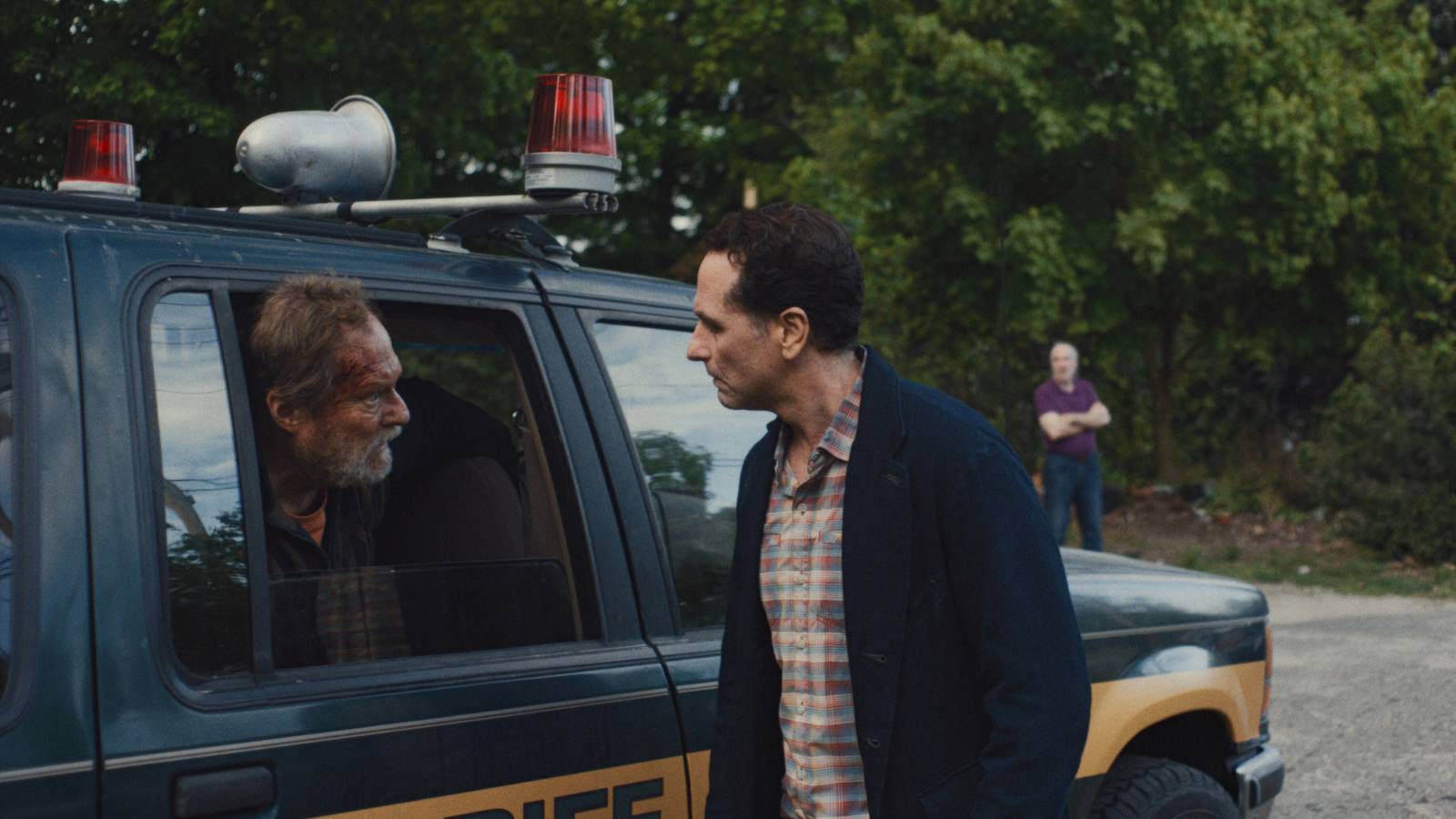
The result is a mashup that feels both familiar and fresh. The comedy stems from the friction between the town’s eccentric personalities—such as the outrageous Wyck, played by Stephen Root, who advocates for shutting the town down to outsiders—and the genuine horror of the island’s supernatural hand. The photography by Christian Sprenger further enhances this duality, presenting the town with crisp, appealing visuals of shingled buildings and briny breezes that mask a deeper, more sinister undercurrent.
The casting supports this balance. Matthew Rhys brings a grounded, irritable energy to Mayor Loftis, making his desperation palpable. The supporting cast, including Kate O’Flynn, Kevin Carroll, Dale Dickey, and Jeff Hiller, populates the town with a variety of quirky archetypes that prevent the horror from becoming too oppressive, ensuring the “comedy” half of the horror-comedy equation remains intact.
The Tech of Isolation: Disconnected Modernity
From a technological perspective, Widow’s Bay uses the absence of connectivity as a primary plot device. In an era where most horror protagonists are tethered to the world via smartphones, the total lack of Wi-Fi and cell service on the island strips the characters of their modern safety nets. This “appealingly old-fashioned” isolation forces the characters to rely on analog tools and their own instincts.
The use of the camcorder by Mayor Loftis is particularly effective. It transforms the viewing experience into a pseudo-found-footage exercise during the Breakwater Inn sequences, creating a sense of intimacy and vulnerability. The camera becomes a shield and a witness, capturing the moments where Loftis’s skepticism begins to crumble under the weight of the supernatural.
This theme of disconnected modernity serves as a refreshing antidote to the digital noise of the current age, though it simultaneously makes the horror more potent. When there is no one to call and no signal to reach, the supernatural threats feel more immediate and inescapable, turning the island’s geographic isolation into a psychological prison.
Evaluating the Balance of Terror and Wit
While the premise is strong, the execution of Widow’s Bay has been described as somewhat uneven. The challenge of blending two opposing genres—horror and comedy—is that one often threatens to undermine the other. At times, the comedic absurdity of the town’s politics can soften the blow of the horror; conversely, the “terrifying supernatural folk horror” can occasionally overshadow the humor.
However, for many viewers, this unpredictability is the show’s greatest strength. The ability to move from a scene of civic bickering to a sequence that leaves the audience “actually stressed out” is a challenging feat. Reviews indicate that the first three episodes successfully establish this rhythm, proving that the series can be genuinely frightening while remaining witty.
The show avoids the common pitfall of relying solely on jump scares, instead building a sense of atmospheric dread. The “Derry-esque chills” mentioned by critics suggest a depth of horror that goes beyond surface-level shocks, hinting at a larger, more complex mythology tied to the island’s history and the nature of its hauntings.
Key Series Details
| Category | Detail |
|---|---|
| Platform | Apple TV+ |
| Release Date | Wednesday, April 29 |
| Lead Actor | Matthew Rhys (Mayor Tom Loftis) |
| Creator | Katie Dippold |
| Director | Hiro Murai |
| Genre | Horror-Comedy / Supernatural Folk Horror |
As the series progresses, the central question remains whether Mayor Loftis can reconcile his need for a “normal” town with the undeniable reality of the supernatural. The tension between the town’s marketing pitch—wanting to be a quaint destination—and its actual identity as a haunted enclave provides a sharp satire of how communities curate their identities for the outside world.

For those seeking a series that defies easy categorization, Widow’s Bay offers a compelling trip. It is a show that understands the thin line between a laugh and a scream, utilizing its remote New England setting to explore the fragility of skepticism in the face of the unknown.
Viewers can currently stream the opening episodes of Widow’s Bay on Apple TV+. Future episodes are expected to further delve into the history of the Breakwater Inn and the origins of the island’s supernatural activity.
Do you think the blend of comedy and horror works in Widow’s Bay, or does the humor undercut the tension? Share your thoughts in the comments below.
Related reading