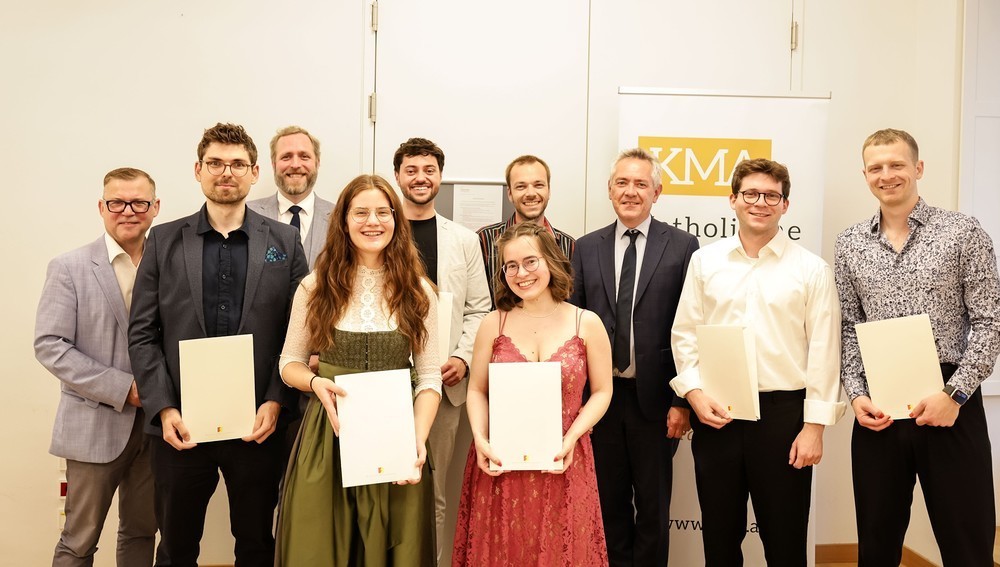
The Katholische Medien Akademie (KMA) in Vienna has officially graduated its latest cohort of junior journalists, marking the completion of the intensive “Journalismus als Beruf” (Journalism as a Profession) training program. Participants in the 2024/2025 academic cycle concluded their three-semester curriculum, which is specifically designed to be completed alongside university studies or professional commitments. The program emphasizes a blend of theoretical media ethics and practical editorial skills, catering to the evolving demands of the European media landscape.
Based in the Austrian capital, the KMA serves as a central hub for media education within the Catholic Church’s communications framework, though its curriculum is structured to align with broader industry standards for professional reporting. According to official documentation from the Katholische Medien Akademie, the training focuses on equipping students with the tools necessary for modern multimedia storytelling, investigative research, and digital content production. The graduation ceremony serves as an entry point for these individuals into the competitive Austrian and German-speaking media markets.
Professional Standards in Modern Media Education
The structure of the “Journalismus als Beruf” program reflects a growing trend in European vocational training, where institutions prioritize “studienbegleitend” (concurrent with studies) formats to ensure students can bridge the gap between academic theory and daily newsroom operations. By spreading the curriculum over three semesters, the academy allows participants to maintain their primary academic or professional responsibilities while undergoing rigorous editorial training. This approach is consistent with the standards for journalism education in Austria, which often favor a dual-track model of practical internship experience and structured academic instruction.

The curriculum covers essential technical skills, including audio-visual production, digital journalism, and legal frameworks governing media in the European Union. Furthermore, the program places a significant emphasis on media ethics—a cornerstone of the KMA’s pedagogical approach. Graduates are expected to uphold the principles of objective, fact-based reporting, a necessity in an era characterized by increasing public scrutiny of media institutions and the rapid proliferation of digital misinformation.
The Evolving Role of Church-Affiliated Media Training
While the KMA operates under the auspices of the Catholic Church, its educational output is frequently recognized for its professional rigor. The academy functions as a bridge between traditional journalistic values and the requirements of the digital age. By training a new generation of journalists, the KMA contributes to the broader diversity of voices in the Austrian media space. According to the Kathpress news agency, which frequently reports on developments within the Catholic media sector in Austria, the academy remains a vital institution for fostering talent that is both technically proficient and ethically grounded.
The 2024/2025 cohort represents a demographic that is increasingly comfortable with cross-platform distribution—a vital skill for modern newsrooms. As traditional print media continues to transition toward digital-first models, the ability to produce content that is optimized for both web and social platforms has become a mandatory requirement for entry-level journalists. The KMA’s training reflects this shift, moving away from siloed instruction toward an integrated, multi-disciplinary approach to news gathering and dissemination.
What Lies Ahead for Recent Graduates
Graduates of the KMA program typically transition into roles at major Austrian media outlets, specialized publications, or communications departments within the non-profit and public sectors. The professional network established during the three-semester course is often cited as a key benefit for students, providing them with direct access to experienced mentors and editors who currently serve in the industry. The academy maintains an active alumni network, which provides ongoing professional development opportunities and career support for those entering the workforce.

For those interested in the future of the KMA’s training cycles, the academy typically publishes updates regarding application deadlines and curriculum adjustments on its official website. Prospective students are encouraged to monitor the KMA portal for information regarding the next selection process for the “Journalismus als Beruf” course. As the industry continues to evolve, the academy’s focus on ethical, high-quality reporting remains a focal point for aspiring journalists in Vienna and beyond. We invite our readers to share their thoughts on the state of journalism education in the comments section below.
Related reading