Global oil prices could face significant downward pressure, potentially stabilizing near $70 per barrel, as market analysts evaluate the long-term impact of supply chain security and geopolitical shifts in the Middle East. While current market volatility remains linked to tensions in the Strait of Hormuz, projections from major financial institutions suggest that a de-escalation in regional maritime risks—combined with increased production capacity from alternative pipeline infrastructure—could reshape the global energy landscape by the end of the fiscal year.
According to recent market analyses, including projections from institutions like Fitch Ratings, the stabilization of global crude prices is heavily contingent upon the predictable flow of energy through key maritime chokepoints. As of early 2024, the International Energy Agency (IEA) has highlighted that global oil demand growth is expected to slow, which, when paired with non-OPEC+ supply increases, creates a framework for a potential price correction toward the $70 mark. This outlook assumes that existing geopolitical tensions do not manifest in long-term physical disruptions to tanker traffic.
Geopolitical Risks and the Strait of Hormuz
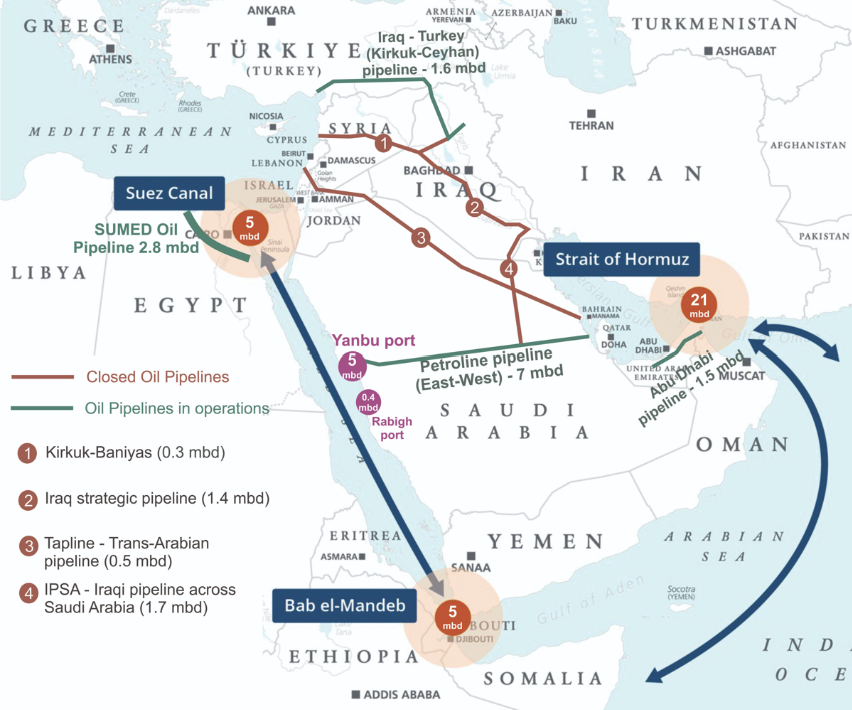
The Strait of Hormuz remains the world’s most critical oil chokepoint, with approximately 21 million barrels of petroleum and petroleum products passing through it daily, according to the U.S. Energy Information Administration (EIA). Any perceived threat to this route creates an immediate “risk premium” on global oil prices. When shipping lanes face closures or security threats, insurance costs for tankers rise, which is immediately reflected in the cost of Brent and WTI crude.
Recent diplomatic efforts between regional powers, including discussions between Oman and Iran regarding the regulation of transit, have been viewed by market observers as a necessary step toward stabilizing energy logistics. While these negotiations are ongoing, the market remains reactive to any signs of military posturing. The ability of major producers in the Gulf Cooperation Council (GCC) to maintain steady exports is the primary hedge against extreme price spikes.
Strategic Infrastructure and Pipeline Diversification
To mitigate the risks associated with the Strait of Hormuz, several nations have invested heavily in land-based pipeline infrastructure. Saudi Arabia operates the East-West Pipeline, capable of transporting significant volumes of crude to the Red Sea, effectively bypassing the Persian Gulf entirely. Similarly, the United Arab Emirates has utilized the Habshan-Fujairah pipeline to ensure a consistent output of oil to the Gulf of Oman.

The effectiveness of these bypass systems is a subject of ongoing debate among energy economists. While they provide a critical safety valve, their total capacity is limited compared to the massive throughput of the Strait of Hormuz. According to data provided by the Atlantic Council, these pipelines currently provide a significant buffer, but they cannot entirely replace the maritime route if a total blockade were to occur. Consequently, the reliance on these alternatives serves as a stabilizing factor that prevents prices from surging uncontrollably during periods of localized tension.
Market Dynamics and Future Projections
The prediction that oil prices may gravitate toward $70 per barrel is not solely based on geopolitical de-escalation; it is also anchored in macroeconomic trends. The IEA has reported that high interest rates and the transition toward renewable energy sources are dampening long-term consumption growth in developed economies. When demand growth cools, the market becomes more sensitive to supply surpluses, which typically exerts downward pressure on prices.
Furthermore, the fiscal requirements of oil-producing nations play a role in supply management. Many states rely on high oil revenues to fund national budgets. However, as global inventories fluctuate, the collective decision-making of the OPEC+ coalition remains the most influential factor in supply management. Market analysts continue to monitor the group’s ministerial meetings for adjustments to production quotas, which serve as the primary mechanism for maintaining price floors in a volatile market.
Key Factors Influencing Price Stability
- Demand Growth: A slowdown in global manufacturing and a shift toward electrification are reducing the urgency of crude oil demand.
- Supply Diversification: The expansion of pipeline networks by Saudi Arabia and the UAE reduces the systemic risk of a single maritime chokepoint failure.
- Geopolitical Diplomacy: Ongoing communication between regional actors regarding maritime safety protocols is essential for lowering the risk premium currently embedded in oil prices.
- OPEC+ Policy: Production adjustments remain the primary tool for managing global supply balances and preventing prolonged price drops.
As the global energy market looks toward the next quarterly reporting period, traders will be closely watching data on commercial crude stockpiles and official statements from major exporters. The next scheduled OPEC+ ministerial meeting, as announced on the official OPEC website, remains a critical checkpoint for determining production levels for the coming months. Readers are encouraged to monitor updates from the EIA and the IEA for the most current data on global energy balances and to share their perspectives on these market shifts in the comments section below.
Keep reading