
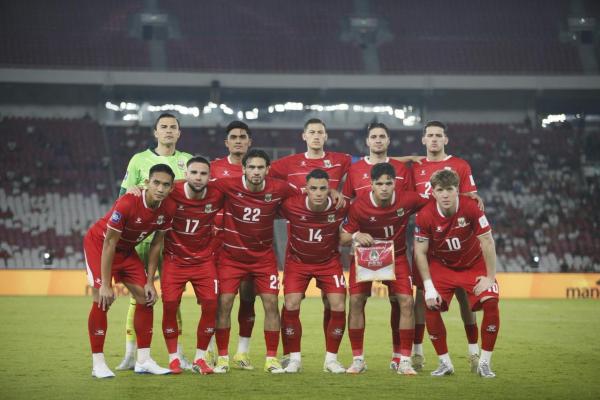
The road to the 2026 FIFA World Cup is becoming increasingly complex as teams navigate the final stages of qualification. For many nations, the dream of reaching the tournament hosted by Canada, Mexico, and the United States now hinges on the high-stakes environment of the intercontinental play-offs. These additional brackets provide a final lifeline for teams that have narrowly missed direct qualification but remain competitive on the global stage.
Among the teams currently stirring conversation are the Indonesian national team and Italy. While these two nations operate in vastly different tiers of footballing history, both find themselves in a position where the World Cup 2026 play-off scenarios could potentially alter their trajectories. For Indonesia, it represents a historic opportunity to break onto the world stage, while for Italy, it would be a necessary redemption after the trauma of missing the previous two tournaments.
The current landscape of the third round of Asian qualifiers has put the “Garuda” squad in a precarious yet hopeful position. Under the guidance of their new English manager, John Herdman, the Indonesian team is balancing a rigorous 2026 calendar that includes the FIFA Series and various youth tournaments alongside their pursuit of a World Cup berth IDN Times. The possibility of entering a play-off bracket is not just a mathematical curiosity but a tangible goal for a nation seeing a surge in footballing ambition.
However, the narrative is further complicated by geopolitical tensions and administrative hurdles. Recent reports have highlighted a potential “emergency scenario” involving Iran, whose presence in the tournament has been questioned due to diplomatic frictions with the United States. While FIFA has reportedly rejected requests to move Iran’s match locations, the resulting speculation has fueled rumors about potential replacement teams and redirected play-off slots, though these remains unconfirmed by official FIFA mandates.
The Mechanics of the 2026 Intercontinental Play-offs
To understand how teams like Indonesia or Italy could find themselves in a play-off, one must first look at the expanded format of the 2026 World Cup. With the tournament growing to 48 teams, the number of slots allocated to each confederation has increased, but the competition for those spots remains fierce. The intercontinental play-offs serve as a bridge, allowing teams from different continents to compete for the final remaining vacancies.

In the Asian Football Confederation (AFC), teams that do not finish as group winners or runners-up in the third round of qualifiers are not immediately eliminated. Instead, those who finish third in their respective groups move into a fourth round of qualification. Those who fail to secure a direct ticket there may still find a path through the intercontinental play-offs, depending on the final allocation of slots. This structure is what keeps the dream alive for the Indonesian national team as they fight through the third round FIFA.
For Italy, the situation is different. Having struggled with the traditional UEFA qualification routes in recent years, any “emergency scenario” or additional play-off slot created by the disqualification or withdrawal of another nation would be a welcome reprieve. While there is no official FIFA announcement regarding a “special” slot for Italy, the desperation of the Azzurri to return to the global stage has made them a frequent subject of speculation whenever the tournament brackets are adjusted.
Indonesia’s 2026 Roadmap Under John Herdman
The Indonesian national team is currently undergoing a significant transition. The appointment of John Herdman, a veteran English coach, signals a shift toward a more structured, long-term vision for the squad. Herdman’s arrival coincides with a packed schedule designed to maximize the team’s exposure to high-level competition and improve their FIFA world ranking.
According to the 2026 agenda, the Indonesian squad is slated for several key engagements. In March 2026, the team will participate in the FIFA Series, an event where Indonesia has been selected as one of the hosts. This tournament is particularly critical as it falls within the official FIFA calendar, providing an opportunity to earn valuable ranking points that could influence seeding in future play-offs IDN Times.
The team’s commitments extend beyond the senior level, reflecting a holistic approach to development. The schedule includes the U-17 Asian Cup in May and a series of FIFA Matchdays in June. The latter half of the year will see the team competing in the AFF Cup (Piala AFF) during July and August, followed by the U-23 squad’s participation in the Asian Games in Japan during September and October Bola.net.
This rigorous cycle of competitive matches is essential for a team aiming for the World Cup 2026 play-offs. The ability to maintain consistency across different formats—from the short-burst nature of the FIFA Series to the grueling group stages of the AFC qualifiers—will determine if the Garuda can realistically challenge for a spot in North America.
The Iran Controversy and Potential Ripple Effects
A significant point of contention in the lead-up to the tournament is the status of the Iranian national team. Given the geopolitical climate and the fact that the United States is a co-host, questions have arisen regarding whether Iran will be permitted to play on American soil. This has led to a wave of speculation regarding “replacement” teams.
Reports indicate that FIFA has maintained a firm stance, rejecting requests to move Iran’s matches to alternative locations. However, the persistence of these rumors has led some to speculate that if Iran were unable to participate, a vacancy would open up. This is where the rumors of Indonesia or Italy being “plotted” as replacements originate. Such a scenario is highly speculative and not based on any official FIFA directive.
In a standard sporting meritocracy, a vacancy created by a withdrawal is typically filled by the next highest-ranked team in the play-offs or the best-performing team that failed to qualify. If such a vacancy were to occur, the intercontinental play-off winners would be the primary candidates for promotion. This keeps the pressure on teams currently fighting for those play-off spots, as a single opening could change the fate of an entire national program.
Key Takeaways for the 2026 Qualification Cycle
- Expanded Format: The 2026 World Cup features 48 teams, increasing the number of slots and creating more paths via intercontinental play-offs.
- Indonesia’s Path: The team must navigate the third round of AFC qualifiers and potential fourth-round play-offs to reach the intercontinental stage.
- Managerial Shift: John Herdman is leading Indonesia with a focus on FIFA ranking points and diverse tournament experience throughout 2026.
- Geopolitical Uncertainty: Rumors persist regarding Iran’s participation in the US, though FIFA has officially rejected requests for location changes.
- The “Italy Factor”: While not officially in a play-off, Italy remains a focal point of speculation due to their historical status and previous qualification failures.
Comparing the Qualification Stakes
The stakes for the 2026 play-offs differ wildly between a rising power like Indonesia and a fallen giant like Italy. For Indonesia, qualifying for the World Cup would be a transformative event for the nation’s sports culture, validating the massive investments in naturalized players and coaching infrastructure. For Italy, it is a matter of national pride and the restoration of their status as a global football powerhouse.
| Factor | Indonesia (AFC) | Italy (UEFA) |
|---|---|---|
| Current Status | Active in 3rd Round Qualifiers | Seeking return to global stage |
| Primary Goal | Historic first appearance | Restoration of dominance |
| Key Obstacle | Consistency in AFC group stages | Strict UEFA qualification quotas |
| Potential Path | Intercontinental Play-offs | Emergency slots/Play-off redistribution |
The complexity of the 2026 cycle is a testament to the growing global nature of the game. The inclusion of more teams allows for more “Cinderella stories,” but it also increases the administrative burden on FIFA to manage the logistics of an expanded tournament. For the fans in Jakarta and Rome, the hope remains that the play-off system will provide one last chance to see their teams on the world’s biggest stage.
As the qualification rounds progress, the focus will shift toward the final standings of the AFC third round. The next critical checkpoint for the Indonesian national team will be their performance in the FIFA Series in March 2026, which will serve as a litmus test for John Herdman’s tactical adjustments before the final push for World Cup qualification.
We want to hear from you: Do you believe the expanded 48-team format improves the quality of the World Cup, or does it dilute the prestige of qualification? Share your thoughts in the comments below and share this analysis with fellow football fans.