As we age, maintaining a healthy weight becomes increasingly complex, particularly around the midsection. For many individuals over 60, stubborn belly fat—often referred to as belly overhang—persists despite regular exercise routines that once worked effectively in younger years. This shift is not merely a matter of willpower but reflects physiological changes that alter how the body stores and burns fat.
Understanding these changes is key to adopting strategies that function with the body’s evolving needs rather than against them. While abdominal exercises like crunches can strengthen core muscles, they do not directly target the subcutaneous fat that contributes to visible belly overhang. Instead, a holistic approach combining movement, metabolic support, and lifestyle adjustments proves more effective for reducing visceral and subcutaneous fat in later life.
To explore evidence-based strategies tailored for this demographic, we consulted verified sources on aging, metabolism, and exercise physiology. The following insights focus on practical, accessible movements that can be integrated into a morning routine to support fat loss and overall well-being after 60.
The Science Behind Belly Fat Accumulation After 60
After age 60, several interconnected factors contribute to increased abdominal fat storage. One primary driver is sarcopenia—the natural loss of muscle mass that begins as early as the 30s but accelerates after 60. According to research published by the National Institutes of Health, muscle mass declines by approximately 3–8% per decade after age 30, with the rate increasing after 60. This loss reduces resting metabolic rate, meaning the body burns fewer calories at rest, making fat accumulation more likely even without changes in diet or activity.
Hormonal shifts further compound this effect. In women, the decline in estrogen during and after menopause is associated with a redistribution of fat from the hips and thighs to the abdominal area. Men experience a gradual decrease in testosterone, which also influences fat metabolism and muscle retention. Both hormonal changes are linked to increased visceral fat—the type that surrounds internal organs and is strongly correlated with insulin resistance, cardiovascular disease, and type 2 diabetes.
elevated cortisol levels due to chronic stress or poor sleep can promote fat storage, particularly in the visceral depot. Sleep disturbances become more common with age, and research from the American Academy of Sleep Medicine shows that adults over 60 who consistently sleep fewer than six hours per night have higher levels of circulating cortisol and greater abdominal adiposity compared to those who sleep seven to eight hours.
These biological realities explain why traditional ab-focused workouts often fail to reduce belly overhang in older adults. While such exercises improve muscle tone, they do not significantly impact fat oxidation in the abdominal region. Instead, effective fat loss requires a combination of full-body movement, improved insulin sensitivity, stress management, and consistent sleep hygiene—elements that collectively support metabolic health.
Evidence-Based Morning Exercises for Metabolic Support
The following four exercises are selected not for their ability to “spot-reduce” fat—a concept debunked by exercise science—but for their role in enhancing overall metabolic function, preserving lean muscle mass, and supporting daily energy expenditure. When performed consistently in the morning, they can facilitate regulate cortisol rhythms, improve insulin sensitivity, and establish a foundation for sustained fat loss when combined with proper nutrition and lifestyle habits.
1. Bodyweight Squats
Bodyweight squats are a fundamental compound movement that engages multiple large muscle groups, including the quadriceps, hamstrings, glutes, and core. By activating these muscles, squats increase energy expenditure both during and after the workout due to the afterburn effect (excess post-exercise oxygen consumption, or EPOC). This makes them particularly valuable for counteracting age-related metabolic slowdown.
To perform a bodyweight squat correctly:
- Stand with feet shoulder-width apart, toes slightly turned out.
- Keep the chest lifted and spine neutral, engaging the core to support the lower back.
- Lower the body by bending at the knees and hips, as if sitting back into a chair.
- Descend until the thighs are parallel to the floor or as low as mobility allows without compromising form.
- Press through the heels to return to standing, squeezing the glutes at the top.
Performing two to three sets of 10–15 repetitions in the morning can help activate major muscle groups early in the day, supporting glucose uptake and metabolic readiness. For those with joint concerns, holding onto a sturdy chair or counter for balance is recommended.
2. Standing March
The standing march is a low-impact, accessible movement that promotes circulation, engages the core, and supports hip mobility—all of which tend to decline with age. Unlike high-impact exercises, it places minimal stress on the joints while still encouraging rhythmic movement that can help regulate circadian rhythms when done in the morning.
To perform the standing march:
- Stand tall with feet hip-width apart, arms relaxed at the sides.
- Lift one knee to hip height, keeping the torso upright and avoiding leaning back.
- Pause briefly at the top, engaging the abdominal muscles to stabilize the pelvis.
- Lower the foot with control and repeat on the opposite side.
- Alternate legs in a steady, marching rhythm.
This movement improves proprioception and balance—critical for fall prevention in older adults—while gently elevating heart rate. Performing three sets of 30–60 seconds can serve as an effective warm-up or standalone movement break, particularly beneficial for those who experience stiffness upon waking.
3. Cross-Body Knee Drives
Cross-body knee drives introduce a rotational component that engages the obliques and deep core stabilizers more effectively than traditional flexion-based ab exercises. This diagonal movement pattern mimics real-life motions and enhances neuromuscular coordination, which is essential for functional independence in later life.
To perform cross-body knee drives:
- Stand with feet hip-width apart, hands lightly behind the head or crossed over the chest.
- Engage the core and lift the right knee while simultaneously rotating the torso to bring the left elbow toward it.
- Return to center and repeat on the opposite side, driving the left knee toward the right elbow.
- Alternate sides in a controlled motion, avoiding momentum or jerking.
This exercise supports spinal health by promoting thoracic mobility and reducing reliance on the lumbar spine for rotation. It also increases heart rate more than stationary movements, contributing to daily caloric expenditure without requiring equipment or high impact.
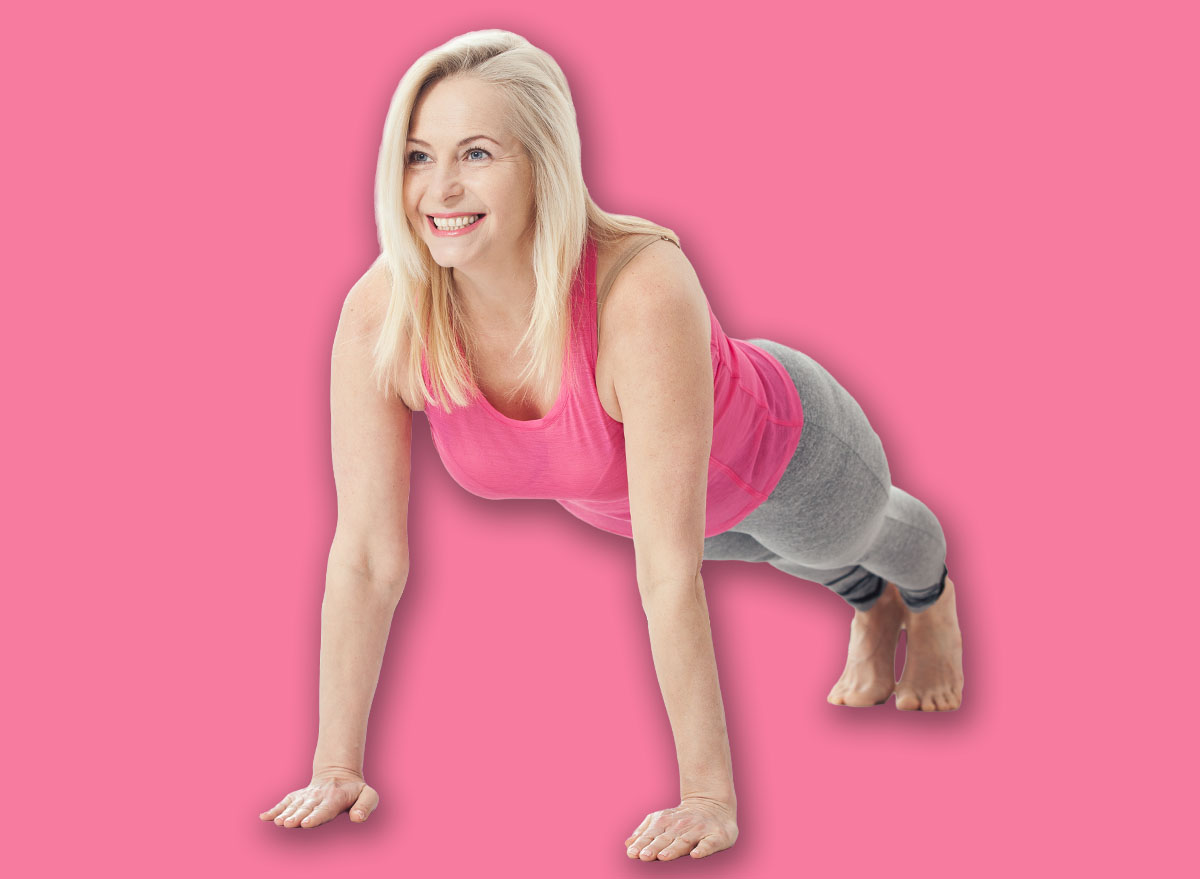
4. High Plank
The high plank is a full-body isometric hold that strengthens the core, shoulders, and glutes while improving posture and spinal alignment. Unlike dynamic ab exercises, it trains the deep stabilizing muscles of the trunk to resist extension and rotation—functions critical for preventing lower back pain and maintaining balance.
To perform a high plank correctly:
- Begin on hands and knees, then place palms flat under the shoulders, fingers spread for stability.
- Step the feet back one at a time, forming a straight line from head to heels.
- Engage the abdominals, glutes, and quadriceps to prevent sagging or hiking of the hips.
- Keep the neck neutral, gazing slightly forward to maintain spinal alignment.
- Hold the position while breathing steadily.
Beginners may start with 10–15 second holds and gradually build to 30–60 seconds as strength improves. For those with wrist discomfort, performing the plank on the forearms (low plank) or using push-up handles can reduce joint strain. The key is maintaining proper form over duration.
Integrating Movement Into a Holistic Routine
While these four exercises form a valuable foundation, their effectiveness is maximized when combined with other evidence-based lifestyle factors. Nutrition plays a pivotal role: prioritizing protein intake (1.2–2.0 grams per kilogram of body weight daily) helps preserve muscle mass during weight loss, while fiber-rich foods support satiety and gut health. The American Heart Association recommends a dietary pattern rich in vegetables, fruits, whole grains, lean proteins, and healthy fats for metabolic health in older adults.
Sleep quality is equally vital. The National Sleep Foundation advises adults over 65 to aim for seven to eight hours of sleep per night, emphasizing consistent bedtimes and wake times—even on weekends—to regulate circadian rhythms. Limiting screen exposure before bed and creating a cool, dark sleep environment can improve sleep onset and continuity.
Stress management techniques such as mindfulness meditation, deep breathing, or gentle yoga have been shown to reduce cortisol levels and improve emotional regulation. A study published in JAMA Internal Medicine found that older adults who practiced mindfulness-based stress reduction for eight weeks experienced significant reductions in perceived stress and improvements in sleep quality.
Finally, consistency matters more than intensity. Engaging in moderate movement most days of the week—such as walking, swimming, or cycling—complements the strength and stability benefits of the exercises above. The World Health Organization recommends at least 150 minutes of moderate-intensity aerobic activity per week for adults aged 65 and older, alongside muscle-strengthening activities on two or more days.
When to Seek Professional Guidance
Individuals with pre-existing conditions such as osteoporosis, cardiovascular disease, or uncontrolled hypertension should consult a healthcare provider before beginning any new exercise regimen. A physical therapist or certified trainer with experience in senior fitness can provide personalized modifications to ensure safety and effectiveness.
This proves also important to recognize that fat loss is not always linear, and fluctuations due to fluid retention, hormonal shifts, or dietary changes are normal. Focusing on non-scale victories—such as improved energy, better sleep, increased strength, or enhanced mobility—can provide motivation beyond aesthetic goals.
For those seeking community support, programs led by certified professionals specializing in midlife and older adult health—such as those offering menopause-specific training or functional fitness for seniors—can provide both expertise and accountability.
the goal after 60 is not merely to reduce belly overhang but to enhance resilience, independence, and quality of life. By combining smart movement, nourishing food, restorative sleep, and stress awareness, individuals can support their bodies through the natural aging process with strength and vitality.
If you’ve tried these movements or have insights about staying active after 60, we welcome your experiences in the comments below. Sharing what works helps build a collective resource for healthy aging.
Worth a look