
Hubble Space Telescope Captures Stunning New Image of Trifid Nebula for 36th Anniversary
In a breathtaking celebration of its 36th year in orbit, the Hubble Space Telescope has released a new, high-resolution image of the Trifid Nebula, a dazzling star-forming region located approximately 5,000 light-years from Earth in the constellation Sagittarius. The image, captured using Hubble’s advanced Wide Field Camera 3, offers an unprecedented view of the nebula’s dynamic evolution over nearly three decades, showcasing the telescope’s unparalleled ability to document cosmic changes on human timescales.
The Trifid Nebula, also known as Messier 20 or M20, has long been a subject of fascination for astronomers due to its vibrant colors and complex structure. The latest image from Hubble reveals a rusty-hued cloud of gas and dust that resembles a “Cosmic Sea Lemon,” a nickname inspired by its resemblance to a marine sea slug gliding through the cosmos. This new portrait not only highlights the nebula’s beauty but also provides critical insights into the processes of star formation and the ever-changing nature of our universe.
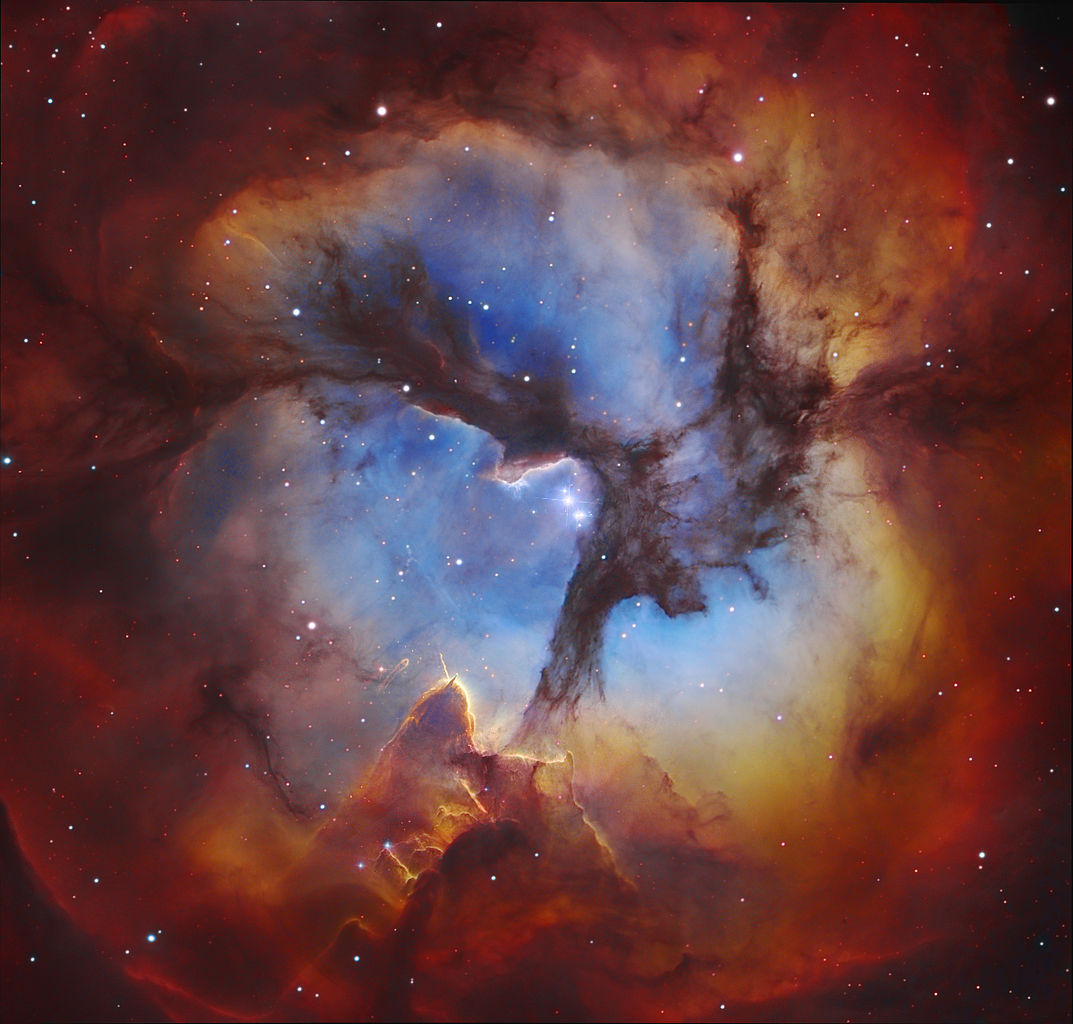
Hubble’s latest observation is particularly significant because it marks the first time the telescope has revisited the Trifid Nebula since 1997. Over the past 29 years, Hubble has leveraged its improved camera technology to capture subtle changes in the nebula, offering scientists a rare opportunity to study the lifecycle of stars in real time. The image is a testament to Hubble’s enduring legacy as one of humanity’s most powerful tools for exploring the cosmos.
The Trifid Nebula: A Cosmic Laboratory for Star Formation
The Trifid Nebula is a stellar nursery, a region where new stars are born from collapsing clouds of gas and dust. The nebula’s name, “Trifid,” refers to its three-lobed appearance, which is caused by dark lanes of dust that divide its glowing core. These lanes are remnants of the dense molecular clouds that serve as the raw material for star formation. The latest Hubble image focuses on a small portion of this vast region, capturing the “head” and undulating “body” of the Cosmic Sea Lemon, a structure shaped by the powerful ultraviolet winds of massive stars located just outside the frame.
According to NASA and the European Space Agency (ESA), these massive stars have been sculpting the Trifid Nebula for at least 300,000 years. Their intense radiation and stellar winds blow an enormous bubble within the nebula, compressing the surrounding gas and dust and triggering new waves of star formation. This process is visible in the image, where bright, young stars illuminate the nebula’s gas clouds, creating a shimmering display of colors reminiscent of an underwater scene.
One of the most striking features in the new image is Herbig-Haro 399, a jet of plasma periodically ejected by a young protostar embedded in the head of the Cosmic Sea Lemon. Herbig-Haro objects are short-lived phenomena that occur when the jets of gas from young stars collide with surrounding material, creating shock waves that glow brightly. The expansion of this jet over time can be observed by comparing Hubble’s latest image with its 1997 observation, providing astronomers with valuable data on the early stages of stellar evolution.
Hubble’s Legacy: 36 Years of Unprecedented Discoveries
Launched on April 24, 1990, the Hubble Space Telescope has revolutionized our understanding of the universe. Over the past 36 years, Hubble has made more than 1.5 million observations, contributing to groundbreaking discoveries such as the acceleration of the universe’s expansion, the characterization of exoplanet atmospheres, and the detailed mapping of dark matter. Its ability to capture high-resolution images in visible, ultraviolet, and near-infrared light has made it an indispensable tool for astronomers worldwide.
The Trifid Nebula image is the latest in a long line of anniversary observations that highlight Hubble’s enduring impact on astronomy. Each year, the telescope’s team selects a celestial object to observe in celebration of its launch, often revisiting targets to document changes over time. This year’s choice of the Trifid Nebula is particularly fitting, as it underscores Hubble’s unique capability to track cosmic evolution on human timescales—a feat that would be impossible with ground-based telescopes due to atmospheric distortion.
Hubble’s longevity is a testament to the ingenuity of the scientists and engineers who have maintained and upgraded the telescope over the years. During its fourth servicing mission in 2009, astronauts installed the Wide Field Camera 3, which has significantly enhanced Hubble’s imaging capabilities. This upgrade has allowed the telescope to capture even more detailed and expansive views of the cosmos, as evidenced by the latest Trifid Nebula image.
Why This Image Matters: Understanding Our Cosmic Origins
The Trifid Nebula is more than just a stunning visual spectacle; We see a critical laboratory for studying the processes that shape our universe. By observing regions like the Trifid, astronomers can gain insights into the conditions that lead to star formation, the lifecycle of stars, and the evolution of galaxies. These observations are essential for understanding our own cosmic origins, as the elements that make up our planet and even our bodies were forged in the hearts of stars like those forming in the Trifid Nebula.
The latest Hubble image also serves as a reminder of the dynamic nature of the universe. While the timescales of cosmic evolution are often measured in millions or billions of years, Hubble’s ability to revisit the same region over decades allows scientists to observe subtle changes that would otherwise go unnoticed. This capability is particularly valuable for studying transient phenomena like Herbig-Haro objects, which provide a glimpse into the early stages of star formation.
the Trifid Nebula’s location in the constellation Sagittarius makes it a popular target for both professional astronomers and amateur stargazers. Its relative proximity to Earth—just 5,000 light-years away—allows for detailed observations that can be used to refine models of star formation and nebula dynamics. The nebula’s distinctive appearance, with its combination of emission, reflection, and dark nebulae, also makes it a favorite subject for astrophotographers.
What’s Next for Hubble?
As Hubble enters its 37th year in orbit, the telescope shows no signs of slowing down. Despite the launch of the James Webb Space Telescope (JWST) in 2021, Hubble remains a vital asset for astronomers, offering unique capabilities that complement those of its successor. While JWST excels at observing the universe in infrared light, Hubble’s strength lies in its ability to capture high-resolution images in visible and ultraviolet light, making the two telescopes a powerful duo for exploring the cosmos.
Looking ahead, Hubble is expected to continue its mission for several more years, with scientists eagerly anticipating its next set of observations. The telescope’s team has already begun planning for future anniversary images, which will likely revisit some of Hubble’s most iconic targets to document further changes. These observations will not only provide new insights into the universe but also serve as a testament to Hubble’s enduring legacy as a pioneer in space exploration.
For now, the latest image of the Trifid Nebula stands as a stunning reminder of the beauty and complexity of the cosmos. As we celebrate Hubble’s 36th anniversary, we can look forward to many more years of groundbreaking discoveries and awe-inspiring images from this remarkable telescope.
Key Takeaways
- Hubble’s 36th Anniversary Image: The Hubble Space Telescope has released a new, high-resolution image of the Trifid Nebula to celebrate its 36th year in orbit. The image highlights the nebula’s dynamic evolution over nearly three decades.
- Star Formation in Action: The Trifid Nebula is a stellar nursery where new stars are born from collapsing clouds of gas and dust. The latest image captures the “Cosmic Sea Lemon,” a structure shaped by the powerful winds of massive stars.
- Herbig-Haro 399: One of the image’s standout features is Herbig-Haro 399, a jet of plasma ejected by a young protostar. Comparing this image with Hubble’s 1997 observation reveals the jet’s expansion over time.
- Hubble’s Legacy: Launched in 1990, Hubble has made over 1.5 million observations, contributing to groundbreaking discoveries in astronomy. Its ability to capture high-resolution images has revolutionized our understanding of the universe.
- Cosmic Origins: Observing regions like the Trifid Nebula helps astronomers understand the processes that shape our universe, including star formation and the lifecycle of stars.
- Future of Hubble: Despite the launch of the James Webb Space Telescope, Hubble remains a vital tool for astronomers. Its unique capabilities in visible and ultraviolet light complement JWST’s infrared observations.
FAQ
-
What is the Trifid Nebula?
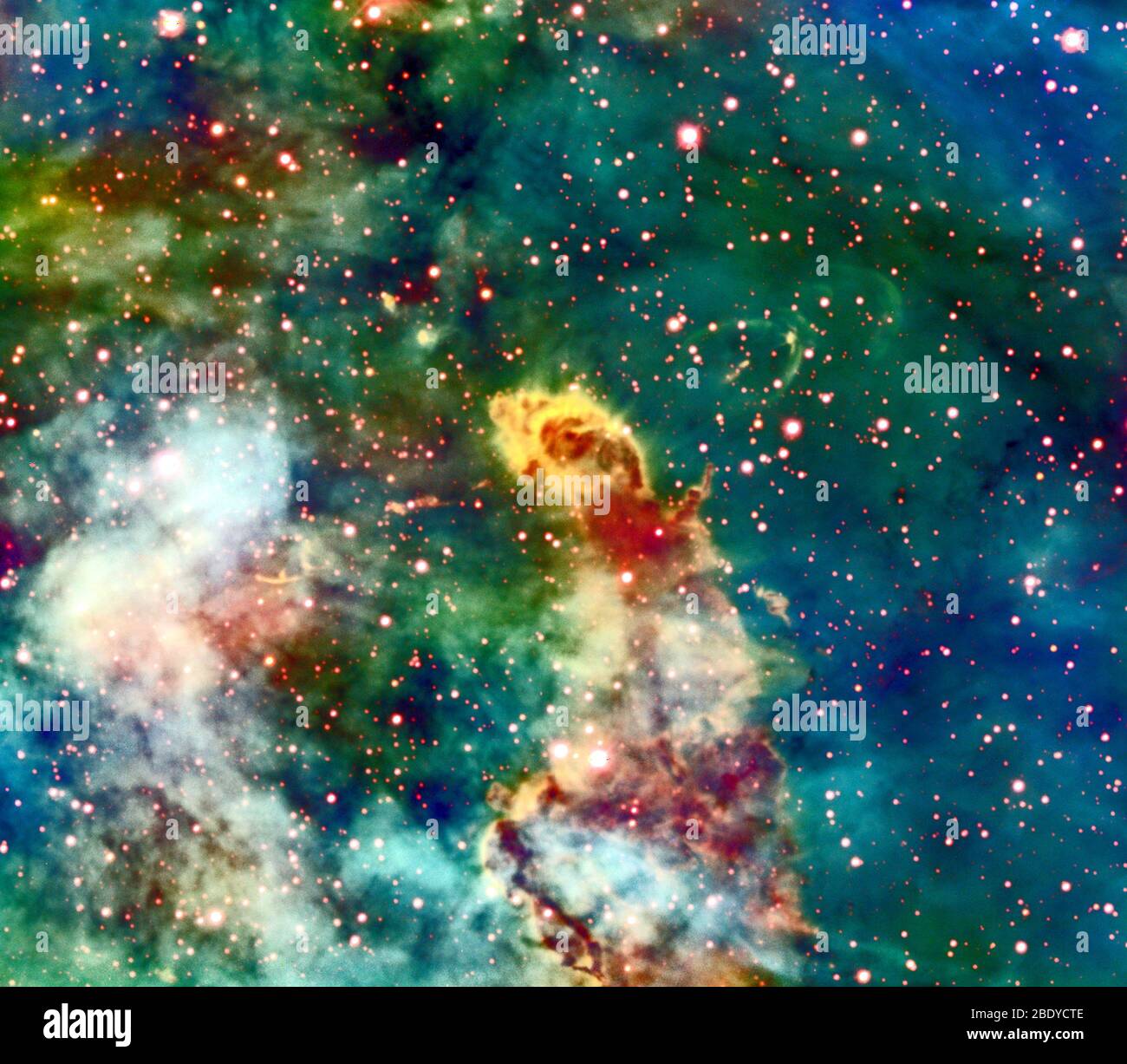
Herbig Haro The Trifid Nebula The Trifid Nebula, also known as Messier 20 or M20, is a star-forming region located approximately 5,000 light-years from Earth in the constellation Sagittarius. It is named for its three-lobed appearance, caused by dark lanes of dust that divide its glowing core.
-
Why is Hubble’s new image of the Trifid Nebula significant?
The new image is significant because it marks the first time Hubble has revisited the Trifid Nebula since 1997. Over the past 29 years, Hubble has captured subtle changes in the nebula, offering scientists a rare opportunity to study the lifecycle of stars in real time.
-
What is a Herbig-Haro object?
Herbig-Haro objects are short-lived phenomena that occur when jets of gas from young stars collide with surrounding material, creating shock waves that glow brightly. Herbig-Haro 399, visible in the new image, is a jet of plasma ejected by a young protostar in the Trifid Nebula.
-
How has Hubble contributed to astronomy?
Hubble has made over 1.5 million observations since its launch in 1990, contributing to groundbreaking discoveries such as the acceleration of the universe’s expansion, the characterization of exoplanet atmospheres, and the detailed mapping of dark matter.
-
What’s next for the Hubble Space Telescope?
Hubble is expected to continue its mission for several more years, with scientists planning future anniversary images that will revisit some of the telescope’s most iconic targets. Its unique capabilities in visible and ultraviolet light complement those of the James Webb Space Telescope, making the two a powerful duo for exploring the cosmos.
For more updates on Hubble’s mission and the latest discoveries in astronomy, visit NASA’s Hubble Mission Page and ESA/Hubble. Share your thoughts on Hubble’s latest image in the comments below, and don’t forget to share this article with fellow space enthusiasts!