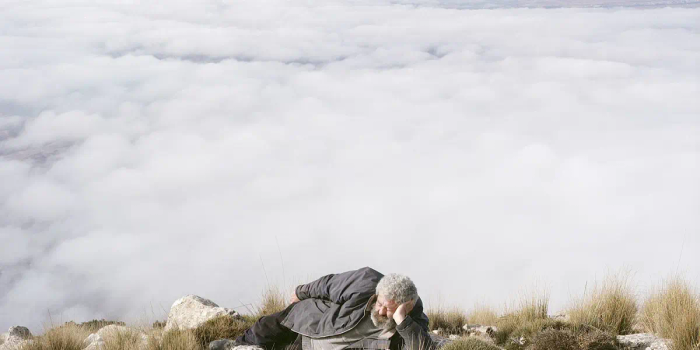
Mulhouse, France – Spanish photographer Pablo Castilla is gaining international recognition for his ongoing project, “Altiplano,” a series of evocative images documenting a remote and historically rich region in the Granada province of Spain. Castilla’s operate, recently showcased in Mulhouse, France, explores the stark beauty of this arid landscape and its hidden past, prompting reflection on the passage of time and the traces of vanished ecosystems. The project has earned him accolades, including recognition at the Open Call of the Biennale de la Photographie de Mulhouse and Mulhouse Art Contemporain.
Castilla began exploring the Altiplano region in 2015, drawn to its desolate yet captivating terrain. The area, one of the least populated in southern Spain, presents a unique visual experience – a vast, rocky and arid expanse that, according to Castilla, “hides as much as it reveals on its surface.” His photographs delve into the layers of this landscape, focusing on the earth, caves, and the ochre horizon, seeking to capture a sense of timelessness and uncover a hidden dimension.
Unearthing a Lost World
The Altiplano region’s present-day aridity belies a dramatically different past. Geological evidence suggests that approximately two million years ago, the area was a thriving inland basin connected to both the Mediterranean and Atlantic oceans. As Castilla explains on his website, this ancient environment supported a rich and unique ecosystem, teeming with fauna now extinct. This prehistoric landscape is a central theme in his photographic exploration.
Castilla’s work isn’t simply about documenting the current state of the Altiplano; it’s about investigating what lies beneath the surface, both literally and figuratively. He describes being “attracted by a landscape that hides as much as it reveals on its surface,” and his photographs reflect this fascination with the unseen. The project asks a fundamental question: how can photography represent what is invisible or has disappeared? This inquiry drives his artistic approach, leading him to explore caves, fissures in the ground, and the subtle nuances of the landscape.
A Photographer’s Journey and Artistic Vision
Pablo Castilla’s artistic process is deeply rooted in observation and immersion. He doesn’t simply capture images; he engages with the landscape, seeking to understand its history and its hidden narratives. His approach is described as a journey of discovery, a process of “seeking the hole, the entrance that calls to you,” and allowing oneself to be fully open to the perceptions and impressions the landscape evokes. As noted by Dominique Bannwarth in Mulhouse Art Contemporain, Castilla’s images resonate with the theme of “Sedimentation(s),” the focus of the 2026 Biennale de la Photographie de Mulhouse.
The exhibition in Mulhouse, presented on the banks of the Ill river, showcases Castilla’s work as a laureate of the Biennale’s Open Call. The photographs are not merely representations of a place but invitations to contemplate the layers of time and the traces of life that have shaped the Altiplano. The project’s success highlights the growing appreciation for photographic art that engages with environmental history and the complexities of landscape.
The Altiplano Landscape: A Detailed Look
The Altiplano region itself is characterized by its unique geological features and harsh climate. It’s a high-altitude plateau, marked by rocky terrain, sparse vegetation, and a distinct lack of surface water. This aridity, however, is a relatively recent development in the region’s history. The evidence of a once-lush ecosystem, including the remnants of an ancient lagoon, adds a layer of intrigue to the landscape. Castilla’s photographs capture the textures and forms of this environment, emphasizing its stark beauty and its sense of isolation.
The photographer’s exploration extends beyond the visible surface, delving into the subterranean world of caves and fissures. These hidden spaces represent a metaphorical gateway to the past, offering glimpses into the region’s geological and biological history. Castilla’s work suggests that the Altiplano is not simply a barren wasteland but a repository of hidden stories, waiting to be uncovered.
Recognition and Future Prospects
Pablo Castilla’s “Altiplano” project has garnered significant attention within the art world. His selection as a laureate of the Open Call for the Biennale de la Photographie de Mulhouse is a testament to the project’s artistic merit and its relevance to contemporary themes. The exhibition in Mulhouse, which runs until July 2026, provides an opportunity for a wider audience to experience Castilla’s work and engage with the story of the Altiplano.
The project’s success also reflects a broader trend in contemporary photography, where artists are increasingly drawn to landscapes that bear the marks of human history and environmental change. Castilla’s work aligns with this trend, offering a nuanced and evocative exploration of a region shaped by both geological forces and the passage of time. His photographs invite viewers to consider the relationship between landscape, memory, and the enduring power of the natural world.
As Castilla continues his exploration of the Altiplano, his work promises to offer further insights into this fascinating region and its hidden history. The project serves as a reminder of the importance of preserving and understanding our planet’s diverse landscapes and the stories they hold.
The next confirmed event related to Pablo Castilla’s work is the continuation of the “Altiplano” exhibition on the banks of the Ill in Mulhouse, France, running through July 2026. We encourage readers to share their thoughts on Castilla’s work and the themes it explores in the comments below.
Keep reading