
The specter of Alzheimer’s disease looms large over an aging global population, and for decades, diagnosis has relied on observable cognitive decline – often occurring *after* significant brain damage has already taken hold. But a growing body of research suggests that the biological changes indicative of Alzheimer’s can begin decades before symptoms manifest, potentially opening a window for earlier intervention and preventative strategies. Recent studies, including research published in the journal JAMA Network Open, are pinpointing specific biomarkers in blood that could predict an individual’s risk of developing the disease up to 25 years in advance.
This isn’t simply about identifying those already on a trajectory toward Alzheimer’s; it’s about understanding the very earliest stages of the disease process. For years, scientists have known that the hallmark pathologies of Alzheimer’s – the accumulation of amyloid plaques and tau tangles – develop silently over a long period. The challenge has been finding non-invasive ways to detect these changes before they cause irreversible neurological damage. The emerging field of blood-based biomarkers offers a potentially transformative solution, promising a future where proactive health management could significantly alter the course of this devastating illness.
Early Detection: The Role of p-tau217
A key focus of recent research is a specific form of the tau protein, known as p-tau217. Tau proteins are naturally present in the brain, playing a crucial role in stabilizing microtubules, which are essential for neuronal function. In Alzheimer’s disease, though, tau proteins become abnormally modified and accumulate into tangles, disrupting neuronal communication and ultimately leading to cell death. The p-tau217 variant appears to be particularly sensitive and specific to the pathological changes occurring in the brains of individuals who will eventually develop Alzheimer’s.
Researchers at the University of California, San Diego (UCSD) have been at the forefront of this work. Their study, published in JAMA Network Open, focused on women and found that elevated levels of p-tau217 in the blood were strongly correlated with future cognitive decline and an increased risk of Alzheimer’s disease, even decades before the onset of clinical symptoms. The study involved analyzing data from women who initially exhibited normal cognitive function, demonstrating that the biomarker could predict future decline with remarkable accuracy. The study details the methodology and findings, highlighting the potential of p-tau217 as a predictive biomarker.
“This represents a significant step forward given that it suggests we can identify individuals at risk long before they show any signs of cognitive impairment,” explains Dr. Suzanne Craft, a geriatric psychiatrist and researcher at Wake Forest University, who was not directly involved in the UCSD study. “Early detection is crucial because it allows us to explore interventions – lifestyle modifications, potential therapies – that might delay or even prevent the onset of the disease.”
Beyond p-tau217: Other Biomarkers and Approaches
Whereas p-tau217 is currently receiving significant attention, it’s not the only biomarker being investigated for Alzheimer’s risk prediction. Researchers are also exploring other proteins, including amyloid beta, as well as genetic factors and imaging techniques like PET scans, which can detect amyloid plaques in the brain. However, PET scans are expensive and not widely accessible, making blood-based biomarkers a more practical and scalable solution for widespread screening.
Another recent study, published by researchers at New York Langone Health, suggests that a simple blood test measuring the ratio of neutrophils to lymphocytes – two types of white blood cells – may also be a predictor of Alzheimer’s risk. According to reporting in the New York Times, this ratio, easily obtained through a complete blood count (CBC), becomes elevated in individuals who later develop Alzheimer’s. The study analyzed data from nearly 400,000 participants, finding a strong correlation between a higher neutrophil-to-lymphocyte ratio and an increased risk of the disease, both in the short and long term.
Neutrophils are typically the first immune cells to respond to infection or inflammation, while lymphocytes play a more sustained role in immune defense. An elevated neutrophil-to-lymphocyte ratio suggests chronic inflammation, which is increasingly recognized as a contributing factor to Alzheimer’s disease. This finding is particularly intriguing because CBCs are routinely performed as part of standard medical checkups, potentially allowing for early identification of individuals at risk without the need for specialized testing.
The Implications for Prevention and Treatment
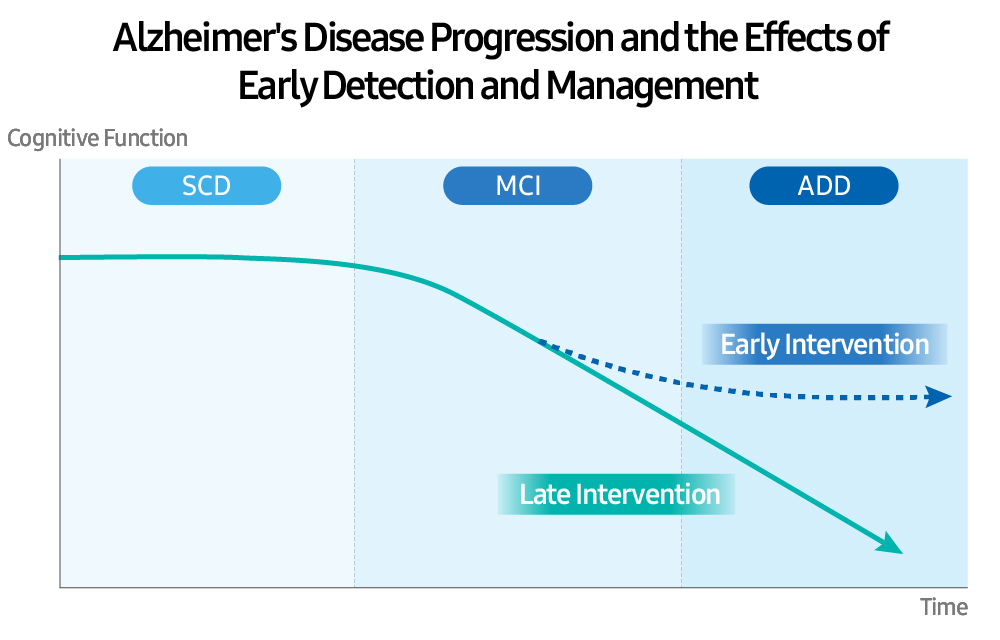
The ability to predict Alzheimer’s risk decades in advance has profound implications for both prevention and treatment. Currently, there is no cure for Alzheimer’s, and existing treatments primarily focus on managing symptoms. However, researchers are actively developing new therapies aimed at slowing disease progression and even preventing its onset. These include drugs targeting amyloid plaques and tau tangles, as well as immunotherapies designed to boost the immune system’s ability to clear these harmful proteins from the brain.
Early detection would allow individuals at high risk to participate in clinical trials for these promising new therapies, potentially benefiting from interventions before significant brain damage has occurred. Lifestyle modifications – such as regular exercise, a healthy diet, cognitive stimulation, and social engagement – have been shown to reduce the risk of cognitive decline. Individuals identified as being at risk could proactively adopt these lifestyle changes to potentially delay or prevent the onset of Alzheimer’s.
Challenges and Future Directions
Despite the exciting progress in biomarker research, several challenges remain. One key challenge is ensuring the accuracy and reliability of blood tests. Factors such as age, sex, and other medical conditions can influence biomarker levels, potentially leading to false positives or false negatives. Further research is needed to refine these tests and establish standardized protocols for their use.
Another challenge is addressing the ethical and psychological implications of early diagnosis. Knowing that one is at risk for Alzheimer’s can be emotionally distressing, and there is currently no way to guarantee that preventative measures will be effective. Careful counseling and support will be essential for individuals receiving a positive result on a predictive biomarker test.
Looking ahead, researchers are focused on developing more sophisticated biomarker panels that combine multiple markers to provide a more comprehensive assessment of Alzheimer’s risk. They are also exploring the use of artificial intelligence and machine learning to analyze complex datasets and identify patterns that might not be apparent through traditional statistical methods. The ultimate goal is to develop a simple, accurate, and affordable blood test that can be used to screen large populations and identify individuals who would benefit from early intervention.
Key Takeaways
- Recent research has identified blood-based biomarkers, particularly p-tau217, that can predict Alzheimer’s risk up to 25 years before symptom onset.
- A simple blood test measuring the neutrophil-to-lymphocyte ratio may also be a predictor of Alzheimer’s risk.
- Early detection allows for proactive interventions, including lifestyle modifications and participation in clinical trials for new therapies.
- Challenges remain in ensuring the accuracy and reliability of biomarker tests and addressing the ethical implications of early diagnosis.
The ongoing research into early Alzheimer’s detection represents a paradigm shift in our approach to this devastating disease. While a cure remains elusive, the prospect of identifying and intervening before significant brain damage occurs offers a glimmer of hope for millions of individuals and families affected by Alzheimer’s worldwide. Further research and continued investment in this area are crucial to translating these scientific advances into tangible benefits for patients and the public health. The next major milestone will be the widespread availability and validation of these blood tests in clinical settings, a process expected to unfold over the next several years.
Do you have thoughts on the potential impact of early Alzheimer’s detection? Share your comments below, and please share this article with your network to raise awareness of this important research.
Worth a look