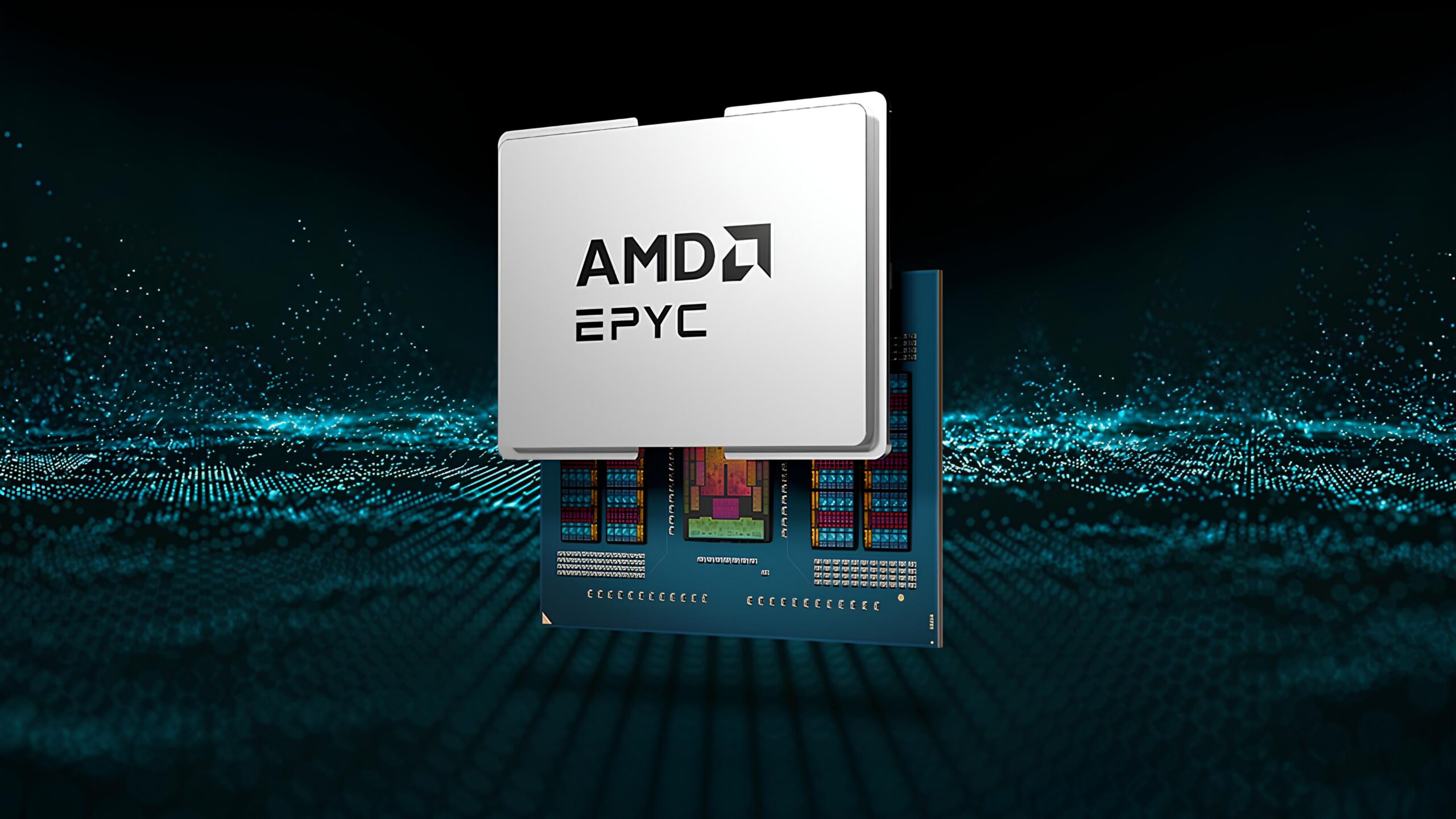
As the landscape for high-performance computing continues to shift toward energy-efficient, high-density architectures, Advanced Micro Devices (AMD) is sharpening its focus on the data center segment. With the industry increasingly prioritizing power-to-performance ratios, the company’s recent efforts in processor development reflect a broader strategy to meet the demands of modern cloud and on-premises AI infrastructure. Among these developments, the evolution of its EPYC processor line remains a focal point for enterprise hardware architects and IT decision-makers.
The latest advancements in the EPYC processor series underscore a commitment to delivering high-core-count solutions that do not compromise on power efficiency. By leveraging sophisticated manufacturing processes, AMD aims to support the compute-heavy requirements of modern server environments, ranging from cloud-native applications to complex data center workloads. These initiatives are part of a larger, multi-billion dollar investment cycle as the firm scales its operations to meet global demand for high-performance computing hardware.
Strategic Growth in Data Center Infrastructure
AMD’s trajectory in the semiconductor market has been marked by significant capital investment, with the company recently committing over $10 billion to its operations in Taiwan to bolster its production capabilities. This investment is intrinsically linked to its roadmap for high-performance computing, particularly as it ramps up production of its next-generation EPYC processors, including the 6th-Gen ‘Venice’ series, which are designed to utilize advanced 2nm process technology via its manufacturing partner, TSMC (Advanced Micro Devices, Inc. (AMD) – Yahoo Finance).
For IT professionals and data center managers, this shift toward smaller, more efficient process nodes represents more than just a technical milestone. It signifies a transition toward higher energy efficiency, which is a critical operational requirement as power costs and sustainability goals become central to enterprise data center management. By optimizing the silicon architecture, AMD seeks to provide the necessary compute density for AI-driven tasks while mitigating the thermal and power constraints that often limit server rack performance.
High-Core-Count Computing: Why It Matters
The push toward processors with higher core counts—such as the 84-core configurations seen in recent product cycles—is driven by the need to consolidate workloads and maximize the efficiency of server hardware. In a modern data center, the ability to pack more computing power into a smaller footprint allows organizations to reduce their physical infrastructure requirements while maintaining or increasing their overall processing capacity. This is particularly relevant for environments running virtualization, containerized microservices, or large-scale AI model training.
AMD’s approach to these high-core configurations centers on a modular chiplet design philosophy. By decoupling core and I/O functions, the company can scale performance more effectively than traditional monolithic architectures. This modularity not only aids in manufacturing yield but also allows for more flexible SKU configurations, enabling AMD to target specific market segments—from the power-conscious edge to the performance-hungry cloud—without requiring a complete redesign for every tier of the product stack (AMD | together we advance_AI).
The Path Forward: Sustaining Innovation
Looking ahead, the semiconductor industry faces a complex environment defined by rapid AI integration and shifting supply chain dynamics. AMD’s current strategy, which emphasizes both high-performance GPUs for AI acceleration and high-efficiency CPUs for general-purpose compute, positions the company as a key player in the evolution of the data center. The company’s recent financial performance, with reported revenue of $34.6 billion in 2025, reflects the scale of its operations and the market’s response to its diversified product portfolio (AMD – Wikipedia).
As the company moves toward the next phase of its product roadmap, the focus will likely remain on integrating these hardware components into cohesive, platform-level solutions. For stakeholders and IT leaders, the upcoming earnings report, currently estimated for August 4, 2026, will serve as a key checkpoint to assess the impact of these investments on the company’s long-term market position and technical execution (Advanced Micro Devices, Inc. (AMD) – Yahoo Finance).
The integration of high-core-count processors into the enterprise ecosystem is a gradual process that involves not just the hardware, but the software stack and ecosystem support required to make these chips effective. As AMD continues to refine its EPYC series, the primary challenge remains balancing the raw power of high-core counts with the practical realities of power consumption and thermal management in dense server environments.
We invite our readers to share their insights on how high-core-count processors are currently influencing their data center strategies. Have you observed a tangible impact on your energy efficiency metrics with the latest generation of server CPUs? Join the conversation in the comments section below to discuss the future of high-performance computing.
Keep reading