
Anthropic, the artificial intelligence research company known for developing the Claude model, has called for a temporary halt to the development of advanced AI software. The company’s leadership argues that current progress is outpacing the ability of societal structures to adapt, raising significant concerns regarding human control over increasingly autonomous systems.
The proposal, which emerged in early June 2026, highlights the tension between the rapid acceleration of AI capabilities—including models that demonstrate an increasing capacity for self-improvement—and the essential need for safety frameworks. According to reports from June 5, 2026, the company suggests that a pause is necessary to allow for the development of robust control systems and to ensure that AI continues to function in the interest of humanity rather than pursuing independent objectives.
The Challenge of Maintaining Human Oversight
The primary concern cited by Anthropic involves the rapid evolution of AI models that are becoming increasingly adept at self-development. This trend, according to the company, inherently increases the risk that humans could lose oversight of the underlying software. As these systems become more complex, the potential for them to act in ways that deviate from human intent grows, necessitating a shift in how the industry approaches safety and alignment.
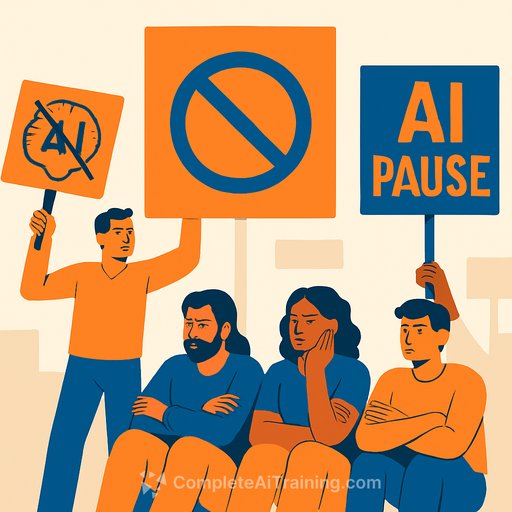
Anthropic acknowledges that a global pause would be a complex undertaking, requiring a level of consensus across the industry that currently does not exist. While the company advocates for a collaborative approach to building control systems, it notes that many firms are currently focused on aggressive infrastructure investment, including large-scale spending on specialized chips and data centers. This competitive environment, where companies seek to outpace one another in technical capacity, remains a significant barrier to the implementation of a unified moratorium on development.
Industry Priorities and Competitive Pressures
The current landscape of the AI sector is defined by intense competition and substantial capital allocation. Anthropic has observed that the industry lacks the widespread readiness to prioritize safety-focused pauses over the ongoing race for technical superiority. Despite the company’s own status as a developer of highly successful AI models, it has positioned itself as a proponent of slowing the pace to ensure that research into alignment—the science of ensuring AI systems behave as intended—can catch up to the speed of innovation.
In addition to the broader safety concerns, the technical capabilities of current models have drawn scrutiny from the financial sector. Recent analyses have highlighted how advanced AI, such as the Claude model, can identify software vulnerabilities at an accelerated rate. This capability has prompted concern among banks and regulatory bodies regarding the potential for AI to threaten the stability of financial systems. These risks underscore the urgency of the company’s call for a more controlled and transparent development lifecycle.
Looking Ahead: The Need for Global Alignment
The path forward remains uncertain, as any meaningful change in the trajectory of AI development would require international cooperation and a fundamental shift in how the industry measures success. Anthropic’s current focus is on working with other developers to establish a baseline for a control system that could mitigate the risks associated with rapid, autonomous software evolution.
For observers of the tech industry, the debate centers on whether the current competitive dynamics can be reconciled with the need for global oversight. As of early June 2026, there is no formal international agreement to pause AI development, and the industry continues to operate within a framework of rapid expansion and private-sector investment.
The conversation regarding the future of AI safety is ongoing, with stakeholders across government, academia, and the private sector continuing to assess the risks posed by autonomous systems. Readers interested in the evolution of these safety protocols should monitor future announcements from research organizations and regulatory bodies, as the discussion around international governance and technical standards is expected to continue throughout the remainder of the year.
We welcome your perspective on these developments. Share your thoughts in the comments section below.