
The return of a space traveler is often defined by the monumental scale of their achievement—the distance covered, the records broken, and the scientific data gathered. However, for NASA astronaut Christina Koch, the most profound moment of her return from the Moon was not the applause of the global community, but the exuberant greeting of her dog, Sadie. The viral footage of their reunion has captured the world’s attention, reminding us that even the most pioneering explorers are anchored by the simple, enduring bonds of home.
This emotional homecoming follows the historic Christina Koch Artemis II mission, a voyage that fundamentally altered the landscape of human space exploration. As a mission specialist, Koch didn’t just orbit the Earth. she became the first woman to travel beyond low Earth orbit and journey around the Moon, marking a pivotal milestone in NASA’s quest to return humans to the lunar surface. The mission, which took place in early April 2026, set a recent record for the furthest distance a human has ever traveled from Earth Christina Koch – Wikipedia.
For those following the Artemis program, Koch’s journey represents more than a technical success. It is the culmination of years of rigorous training and a career defined by breaking glass ceilings in the vacuum of space. From the International Space Station (ISS) to the far side of the Moon, her trajectory reflects a shift in how humanity approaches deep-space exploration—moving from short-term visits to sustainable presence.
Breaking the Lunar Barrier: The Artemis II Milestone
The Artemis II mission launched on April 1, 2026, at 6:35 p.m. EDT from Launch Pad 39B at the Kennedy Space Center in Florida Christina Koch – NASA. Aboard NASA’s Space Launch System (SLS) rocket, Koch and her crew embarked on a mission that spanned from April 1 to April 10, 2026 Christina Koch – Britannica. While the mission was a masterclass in orbital mechanics and spacecraft endurance, its primary legacy is the expansion of the human footprint in the solar system.
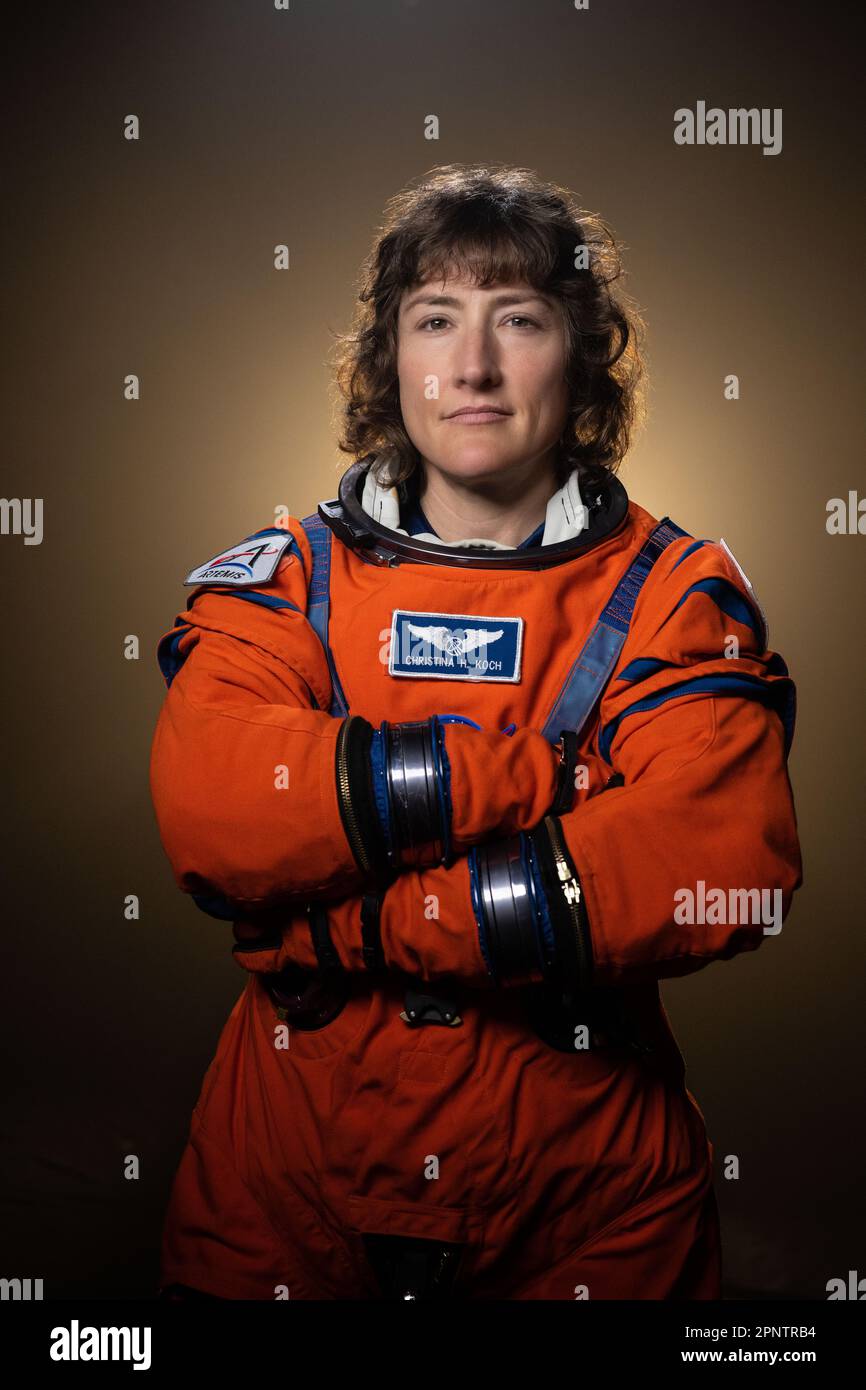
By traveling around the Moon, Koch became the first American woman to reach the lunar vicinity. This achievement is a critical stepping stone for the Artemis program, which aims to establish a long-term human presence on the Moon as a precursor to future missions to Mars. The mission’s success proves that the systems required to sustain human life beyond the protective shield of low Earth orbit are functional and scalable.
Beyond the record-breaking distance, the mission served as a vital test of the Orion spacecraft’s capabilities. Koch’s role as a mission specialist involved overseeing complex systems and ensuring the safety of the crew as they navigated the hazardous radiation environment of deep space, far beyond the magnetic protection of Earth.
A Legacy of Firsts: From the ISS to Deep Space
Christina Koch’s ascent to the Artemis II crew was paved by a series of unprecedented accomplishments. Long before her lunar journey, she established herself as one of the most experienced astronauts in the NASA corps. During her long-term mission to the International Space Station in 2019-2020, she participated in the first all-female spacewalks, a moment that resonated globally as a symbol of gender equality in STEM and exploration Christina Koch – Wikipedia.
Her endurance in space is equally noteworthy. Koch set the record for the longest single spaceflight by a woman, though records vary slightly by measurement. Some data indicates she spent a total of 338 days, 15 hours, and 30 minutes in space Christina Koch – Wikipedia, while other NASA summaries highlight 328 consecutive days spent living and working on the ISS across Expeditions 59, 60, and 61 Christina Koch – NASA.
This extensive time in microgravity provided Koch with the operational expertise necessary for the demands of Artemis II. Her experience as a flight engineer on the ISS, coupled with her training in Russia for the Soyuz missions, created a versatile skill set that NASA leveraged for the complexities of the lunar trajectory. Her ability to manage long-duration isolation and technical failures in a high-stress environment made her an ideal candidate for the first crewed mission to the Moon in over half a century.
The Human Element: Sadie and the Psychology of Return
While the technical specifications of the Christina Koch Artemis II mission dominate the official logs, the viral reunion between Koch and her dog, Sadie, highlights the psychological toll and triumph of spaceflight. Space exploration is often framed as a triumph of machines and mathematics, but the emotional vacuum created by months or years of separation from loved ones is a significant challenge for any astronaut.
The footage of Sadie’s reaction—a chaotic, joyful greeting—serves as a poignant reminder of the “re-entry” process. For astronauts, returning to Earth involves more than just physical rehabilitation to combat bone density loss and muscle atrophy; it involves a psychological transition from the sterile, controlled environment of a spacecraft back to the sensory richness of Earth.
The bond between humans and their pets is often cited as a primary motivator for astronauts to maintain their mental health during long-duration missions. In an era where NASA is planning multi-year journeys to Mars, understanding the emotional impact of these reunions is as critical as understanding the physics of the launch. The “Sadie effect” underscores the necessity of strong social and emotional support systems for those venturing into the deep dark of space.
Engineering the Future: Koch’s Path to the Stars
Christina Koch’s success is rooted in a rigorous academic and professional foundation. Born in Grand Rapids, Michigan, she pursued her education at North Carolina State University, where she earned both a Bachelor of Science and a Master of Science Christina Koch – Wikipedia. This technical background in engineering was essential for her early career at the Goddard Space Flight Center and her role as station chief for the National Oceanic and Atmospheric Administration’s (NOAA) American Samoa Observatory.
Her experience is not limited to the lab or the cockpit. Before joining the NASA Astronaut Corps in 2013, Koch engaged in remote scientific field engineering in some of the most inhospitable environments on Earth, including the Antarctic and Arctic Christina Koch – NASA. This history of operating in extreme conditions—whether on a frozen tundra or in the vacuum of space—has defined her approach to mission safety and problem-solving.
Outside of her professional achievements, Koch is known for her passion for the outdoors, including rock and ice climbing, surfing, and triathlons. This affinity for physical challenge and exploration likely contributed to her resilience during the Artemis II mission, where the mental fortitude to face the unknown is just as important as the engineering of the spacecraft.
Key Mission Milestones: Christina Koch
| Milestone | Detail | Significance |
|---|---|---|
| ISS Mission (2019-2020) | 328-338 days in space | Longest single spaceflight by a woman |
| First All-Female Spacewalk | 6 Total EVAs | Breaking gender barriers in extravehicular activity |
| Artemis II Mission | April 1-10, 2026 | First woman to journey around the Moon |
| Distance Record | Beyond Low Earth Orbit | Furthest distance from Earth by a human |
What Happens Next for the Artemis Program?
The successful return of Christina Koch and her crew marks the end of the Artemis II testing phase and the beginning of the push toward Artemis III. While Artemis II was a flyby mission designed to test the Orion spacecraft and the crew’s ability to survive deep-space transit, Artemis III will aim for the first actual human landing on the lunar surface since the Apollo era.
The data gathered by Koch and her teammates during their journey around the Moon will be analyzed to refine the landing procedures and habitat requirements for the upcoming lunar south pole mission. This region is of particular interest to scientists due to the presence of water ice, which could be used to produce oxygen and rocket fuel, effectively turning the Moon into a refueling station for the rest of the solar system.
As NASA continues to integrate the lessons from the Artemis II mission, the global community awaits the official release of the mission’s scientific findings and the updated timeline for the first lunar landing of the 21st century. For now, the image of an astronaut reuniting with her dog remains the most human face of an otherwise interstellar achievement.
Stay tuned for official NASA updates regarding the Artemis III crew selection and launch window. We invite you to share your thoughts on the future of lunar exploration in the comments below.
Related reading