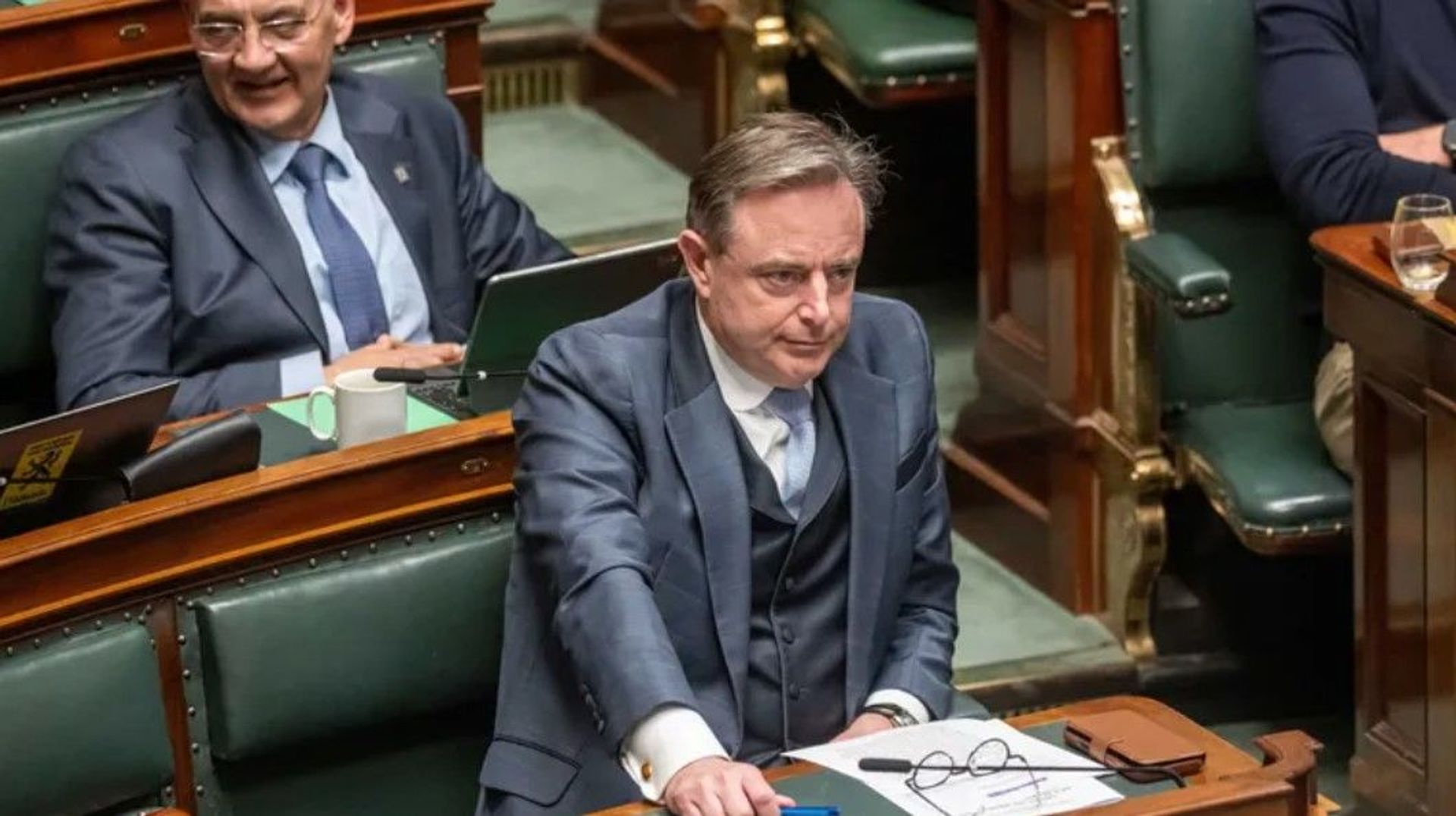
The Belgian federal government has reached a decision regarding the escalating costs of energy, opting against the implementation of a “cliquet inversé”—or reverse ratchet mechanism—despite significant pressure from key partners within the governing coalition. This decision comes as Belgian households and businesses grapple with surging fuel prices triggered by geopolitical instability in the Middle East, specifically following US-Israeli bombings in Iran which have caused energy bills to swell.
As a veteran journalist covering international affairs for over 16 years, I have seen how energy shocks often expose the fragile seams of coalition governments. In this instance, the “Arizona” coalition—the governing alliance led by De Wever—is facing internal friction over how to shield citizens from inflation. While the government has rejected the specific tax-reduction tool requested by its francophone members, it has signaled that alternative measures, specifically targeting commuting costs (déplacement domicile-travail), will be prioritized to alleviate the burden at the pump.
The debate centers on the tension between maintaining state revenue and providing immediate relief to a public facing record price hikes. For the Belgian government, the challenge is to balance fiscal responsibility with the urgent need to prevent a cost-of-living crisis from deepening. The rejection of the reverse ratchet marks a pivotal moment in the coalition’s handling of the current energy volatility.
Understanding the “Cliquet Inversé” Mechanism
To understand the current political deadlock, one must first understand the “cliquet inversé.” What we have is a specific fiscal mechanism designed to act as an automatic stabilizer for fuel prices. In simple terms, the reverse ratchet provides for a reduction in excise duties—the taxes the state levies on fuel—whenever pump prices exceed a predetermined threshold to limit the overall price increase for the consumer.
The primary objective of such a policy is to ensure that the state does not profit from a crisis. When global oil prices rise, the total amount collected through taxes often increases even if the tax rate remains the same, because the taxes are applied to a higher base price. Proponents of the reverse ratchet argue that it is unacceptable for the state to “fill its coffers” while citizens struggle to afford basic transportation. By lowering the excise duties during price spikes, the government effectively returns a portion of those windfall tax revenues to the consumer.
Political Friction Within the Arizona Coalition
The push for this mechanism was led by the two francophone parties within the Arizona coalition: the Mouvement Réformateur (MR) and Les Engagés. The MR, the liberal party, was the first to sound the alarm, reaffirming its position on Monday, March 30, 2026, that a reverse ratchet was necessary to protect consumers and ensure that any increase in state revenue is returned to the citizens. At one point, the MR even advocated for a strict price ceiling, attempting to limit fuel costs to 2 euros per liter, though they were initially isolated in this specific demand.
The political landscape shifted on Wednesday, April 1, 2026, when Les Engagés, led by Yvan Verougstraete, joined the call for the reverse ratchet. Verougstraete emphasized the responsibility of the state to avoid profiting from the Middle East crisis, noting that the government cannot promise “magic money” or checks that it cannot afford to pay. Instead, he argued that adjusting the tax structure on fuel was the most sustainable way to provide relief.
This alignment, however, was not without irony. Sources within the MR noted that Les Engagés had effectively “turned their coat,” as the liberals had felt isolated within the government on this issue just a week prior according to a liberal source. This internal maneuvering highlights the precarious nature of the coalition’s consensus as they attempt to navigate the economic fallout of the Iranian conflict.
Alternative Measures and the Path Forward
Despite the lobbying from MR and Les Engagés, the federal government has officially ruled out the reverse ratchet. Instead, the administration is pivoting toward targeted interventions. The most significant shift is the decision to intervene specifically on “déplacement domicile-travail”—the costs associated with commuting between home and perform.
While the details of these commuting measures are still being finalized, they represent a move away from broad tax cuts toward targeted support. This approach allows the government to support the workforce without implementing a sweeping fiscal change that could lead to unpredictable revenue losses. The MR has called for the government to monitor and control “surprofits” (excess profits) within the energy sector to ensure that corporate gains are not coming at the direct expense of the Belgian public as energy prices rise.
Key Takeaways of the Government’s Decision
- No Reverse Ratchet: The federal government will not implement the “cliquet inversé,” rejecting the demand to automatically lower excise duties as fuel prices rise.
- Focus on Commuting: Relief efforts will instead be directed toward supporting the costs of commuting between home and work.
- Coalition Tension: The decision follows a period of internal pressure from the MR and Les Engagés, who argued against the state profiting from the energy crisis.
- Geopolitical Driver: The price surge is directly linked to the instability following US-Israeli military actions in Iran.
The next critical checkpoint for Belgian consumers will be the rollout of the specific commuting aid measures. The government is expected to provide further details on how these interventions will be applied and which demographics will be eligible for support. As the situation in the Middle East remains volatile, the federal government’s ability to manage energy inflation without destabilizing its own coalition will be a primary focus of political analysis in the coming weeks.
Do you believe targeted commuting aid is a sufficient substitute for broad fuel tax cuts? Share your thoughts in the comments below or share this article to join the conversation.
Related reading
- YTN Anchors Interview Disaster Advisor Gong Gangjin
- ICE Studios City Series: Celebrating Black and Brown Women’s Creativity and Community Through Sport in NYC
- Hot Oatmeal with Fruits & Natural Ingredients for Energy & Satiety (world-today-news.com)
- Iowa Generates More Electricity Than It Uses Through Wind Energy (archyde.com)