High-Yield Bitcoin Investment Products: Can a 41.64% Annual Return Be Trusted?
By Dr. Olivia Bennett, Chief Editor, Business
London — The promise of earning 41.64% per year with Bitcoin has caught the attention of investors worldwide, particularly after a YouTube video and financial product listings highlighted a structured certificate tied to the cryptocurrency’s performance. But as with any high-yield investment, the question remains: Is this return realistic, sustainable, or even verifiable?
At the center of the discussion is the ISIN DE000VY2X822, a structured investment certificate marketed under the name “Titoli Bitcoin 2.” According to verified product documentation from Deutsche Börse’s Frankfurt Stock Exchange, this certificate offers a 3.47€ quarterly coupon and is linked to the performance of Bitcoin, along with shares in three publicly traded crypto-related companies: Marathon Digital Holdings (MARA), Coinbase Global (COIN) and Strategy Inc. The product’s marketing materials suggest it can deliver an annualized return of 41.64%, a figure that has sparked both excitement and skepticism in equal measure.
But how does such a return work—and what are the risks? To answer that, we must examine the structure of the product, the underlying assets, and the broader market conditions shaping Bitcoin’s volatility.
What Is the “Titoli Bitcoin 2” Certificate?
The ISIN DE000VY2X822 is a structured investment product issued by Vontobel, a Swiss financial services firm with a long history in structured products. According to Vontobel’s official product page, the certificate is designed to provide investors with exposure to Bitcoin’s price movements while also generating a fixed income component through quarterly coupons.
The product is not an exchange-traded fund (ETF) or a direct Bitcoin investment. Instead, it is a derivative-based certificate that tracks the performance of Bitcoin alongside three publicly traded companies deeply embedded in the cryptocurrency ecosystem:
- Marathon Digital Holdings (MARA) – A U.S.-based Bitcoin mining company that operates large-scale mining facilities and holds a significant Bitcoin treasury.
- Coinbase Global (COIN) – The largest cryptocurrency exchange in the U.S., offering trading, custody, and institutional services.
- Strategy Inc. – A lesser-known entity, but one that appears to be involved in crypto asset management or advisory services, though its exact role in the certificate’s structure remains unclear.
The certificate promises a 3.47€ quarterly coupon, which, if paid consistently over four quarters, would amount to 13.88€ per year. Based on the product’s initial offering price (typically around 100€), this translates to an annualized yield of approximately 13.88%—far below the 41.64% figure cited in promotional materials. This discrepancy suggests that the higher return may be based on leveraged performance scenarios, past backtests, or hypothetical projections, rather than guaranteed outcomes.
Vontobel’s documentation confirms that the certificate includes a “memory coupon” feature, meaning that if a coupon payment is missed in one quarter, it can be paid out in a subsequent period if certain conditions are met. However, this does not guarantee that all coupons will be paid, particularly if the underlying assets underperform.
How Does the 41.64% Return Claim Stack Up?
The 41.64% annual return claim appears to originate from promotional materials rather than official regulatory filings. A review of Frankfurt Stock Exchange’s product page for ISIN DE000VY2X822 does not list this figure as a guaranteed or expected return. Instead, the exchange describes the product as a “yield enhancement certificate”, a type of structured note that can amplify returns—but also magnify losses.
To understand how such a high return might be possible, we must look at the product’s participation rate—the degree to which the certificate’s performance is tied to Bitcoin’s price movements. Structured products often use leverage or options strategies to boost returns, but these mechanisms come with significant risks:
- Leverage: Some certificates use borrowed capital to amplify exposure. For example, a 2x leveraged product would see a 10% Bitcoin price increase translate into a 20% gain—but a 10% decline would result in a 20% loss.
- Barrier Mechanisms: Many structured products include a “knock-out” barrier. If Bitcoin’s price falls below a certain threshold, the certificate may lose value rapidly or even become worthless.
- Coupon Dependence on Performance: The 3.47€ quarterly coupon is not guaranteed. It may only be paid if Bitcoin and the linked stocks meet specific performance conditions, which are not always disclosed in full.
A comparison with other Bitcoin-linked investment products reveals just how aggressive the 41.64% claim is. For example:
| Product | Type | Annualized Yield (Projected) | Expense Ratio | Leverage |
|---|---|---|---|---|
| ISIN DE000VY2X822 (“Titoli Bitcoin 2”) | Structured Certificate | Up to 41.64% (marketing claim) | Not disclosed | Likely (not confirmed) |
| Bitwise Core Bitcoin ETP (BTC2.AS) | ETP (Exchange-Traded Product) | -12.42% YTD (2026) | 0.00% | None |
| 2x Bitcoin Strategy ETF (BITX) | Leveraged ETF | -33.36% YTD (2026) | 2.38% | 2x |
| ProShares Ultra Bitcoin ETF (BITU) | Leveraged ETF | -2.13% (1-day, April 27, 2026) | 0.95% | 2x |
The table above, based on data from Yahoo Finance, shows that even leveraged Bitcoin products have struggled to deliver positive returns in 2026. The 2x Bitcoin Strategy ETF (BITX), for instance, has lost 33.36% year-to-date, while the Bitwise Core Bitcoin ETP (BTC2.AS) is down 12.42%. These figures underscore the volatility—and risk—inherent in Bitcoin-linked investments, particularly those with leverage.
The Risks: What Investors Need to Know
While the prospect of a 41.64% annual return is undeniably attractive, financial experts urge caution. Structured products like ISIN DE000VY2X822 are complex instruments that combine elements of debt, equity, and derivatives. Here are the key risks investors should consider:

1. Market Risk: Bitcoin’s Volatility
Bitcoin remains one of the most volatile assets in the financial markets. In 2026 alone, its price has swung between $52,000 and $78,000, according to CoinGecko. A sudden downturn could erase the value of the certificate’s underlying assets, including the stocks of Marathon Digital and Coinbase, which are themselves highly sensitive to Bitcoin’s price movements.
2. Credit Risk: The Issuer’s Solvency
Structured certificates are unsecured debt obligations of the issuer—in this case, Vontobel. If the bank were to face financial difficulties, investors could lose their entire investment, even if Bitcoin’s price remains stable. This is a critical distinction from ETFs or ETPs, which hold the underlying assets in a segregated account.
3. Liquidity Risk: Can You Sell When You Need To?
While ISIN DE000VY2X822 is listed on the Frankfurt Stock Exchange, structured products often have limited secondary market liquidity. In other words that if many investors try to sell simultaneously, the price may drop sharply, or buyers may disappear entirely. Unlike ETFs, which are traded throughout the day, structured certificates may only see sporadic trading activity.
4. Complexity Risk: Understanding the Fine Print
The product’s terms and conditions are lengthy and technical. Key details—such as the exact conditions for coupon payments, the participation rate, and any barriers or caps—are often buried in legal jargon. Investors who do not fully understand these terms may be unpleasantly surprised by the product’s performance.
5. Regulatory Risk: Changing Rules for Crypto
The regulatory environment for cryptocurrencies is still evolving. In 2026, the European Union’s Markets in Crypto-Assets Regulation (MiCA) is fully in effect, imposing stricter rules on crypto service providers. Meanwhile, the U.S. Securities and Exchange Commission (SEC) continues to scrutinize Bitcoin-linked products, particularly those offering leveraged exposure. Any regulatory crackdown could impact the certificate’s performance or even its availability.
Who Is This Product For?
Given the risks, ISIN DE000VY2X822 is not suitable for most retail investors. Financial advisors typically recommend structured products only for sophisticated investors who:
- Have a high risk tolerance and can afford to lose their entire investment.
- Understand the mechanics of derivatives, leverage, and barriers.
- Are using the product as a small part of a diversified portfolio, rather than a core holding.
- Have a long-term investment horizon and are not reliant on the product’s liquidity.
For investors seeking simpler, lower-risk exposure to Bitcoin, alternatives include:
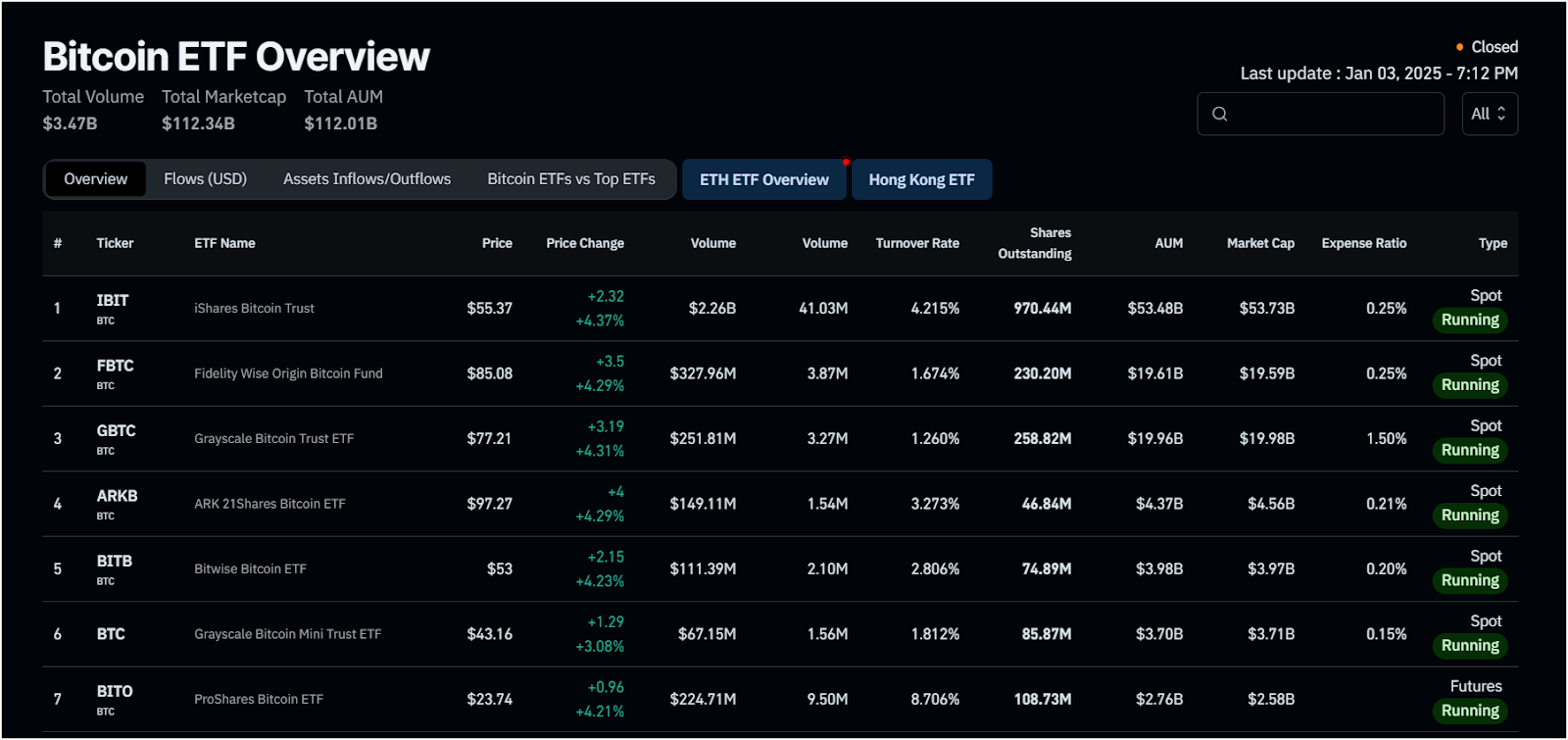
- Spot Bitcoin ETFs, such as the iShares Bitcoin Trust (IBIT), which hold actual Bitcoin and trade like stocks.
- Bitcoin ETPs, like the Bitwise Core Bitcoin ETP (BTC2.AS), which track Bitcoin’s price without leverage.
- Direct Bitcoin ownership, through regulated exchanges or custody services, though this requires managing private keys and security risks.
Key Takeaways: Should You Invest?
Before considering ISIN DE000VY2X822 or any similar product, investors should weigh the following:
- The 41.64% return is not guaranteed. It appears to be a marketing projection, not a promise. The actual yield will depend on Bitcoin’s price, the performance of the linked stocks, and the certificate’s complex terms.
- Structured products are high-risk. They combine market risk, credit risk, and liquidity risk, making them unsuitable for conservative investors.
- Leverage amplifies both gains and losses. A small decline in Bitcoin’s price could result in a disproportionate loss for the certificate.
- Read the fine print. Understand the conditions for coupon payments, any barriers or caps, and the issuer’s creditworthiness.
- Consider simpler alternatives. Spot Bitcoin ETFs or ETPs offer direct exposure without the complexity of structured products.
- Consult a financial advisor. Given the product’s complexity, professional guidance is strongly recommended.
What’s Next for Bitcoin-Linked Investments?
The cryptocurrency investment landscape continues to evolve rapidly. In 2026, regulators are paying closer attention to leveraged and structured products, particularly those marketed to retail investors. The SEC has already delayed decisions on several spot Bitcoin ETF applications, citing concerns about market manipulation and investor protection. Meanwhile, the European Securities and Markets Authority (ESMA) is reviewing the risks of crypto-linked structured products under MiCA.
For investors, the key takeaway is this: High returns always come with high risks. While products like ISIN DE000VY2X822 may offer the allure of outsized gains, they also carry the potential for significant losses. As always, the golden rule of investing applies: Never invest more than you can afford to lose.
For the latest updates on Bitcoin-linked investment products, follow World Today Journal’s Business section. Have you considered investing in Bitcoin or related products? Share your thoughts in the comments below.
Worth a look