
Boehringer Ingelheim’s Survodutide Shows Promising Weight Loss Results in Phase 3 Trial
Berlin, Germany – In a significant development for the treatment of obesity, Boehringer Ingelheim has announced positive topline results from the Phase 3 SYNCHRONIZE-1 clinical trial of survodutide, an investigational dual GLP-1 and glucagon receptor agonist. The trial demonstrated an average weight reduction of 16.6% after 76 weeks of treatment in participants with obesity or overweight, meeting all primary endpoints. The findings, released April 28, 2026, offer a potential new approach to managing a condition affecting millions worldwide.
Obesity is a complex chronic disease with serious health consequences, including increased risk of cardiovascular disease, type 2 diabetes, and certain cancers. Current treatment options, including lifestyle interventions and existing medications, often yield modest results, highlighting the need for more effective therapies. Survodutide’s unique mechanism of action – simultaneously activating both GLP-1 and glucagon receptors – sets it apart from other weight loss drugs currently on the market, and may offer a more comprehensive metabolic effect.
Dual-Action Mechanism Targets Multiple Pathways
Survodutide (development code BI 456906) works by mimicking the effects of two naturally occurring hormones: glucagon-like peptide-1 (GLP-1) and glucagon. GLP-1 receptors are known to regulate appetite and increase feelings of fullness, while glucagon receptors play a role in glucose metabolism and energy expenditure. By activating both receptors, survodutide aims to address multiple facets of obesity, potentially leading to greater and more sustained weight loss. This dual approach is designed to not only reduce food intake but also enhance the body’s ability to burn fat and improve metabolic function.
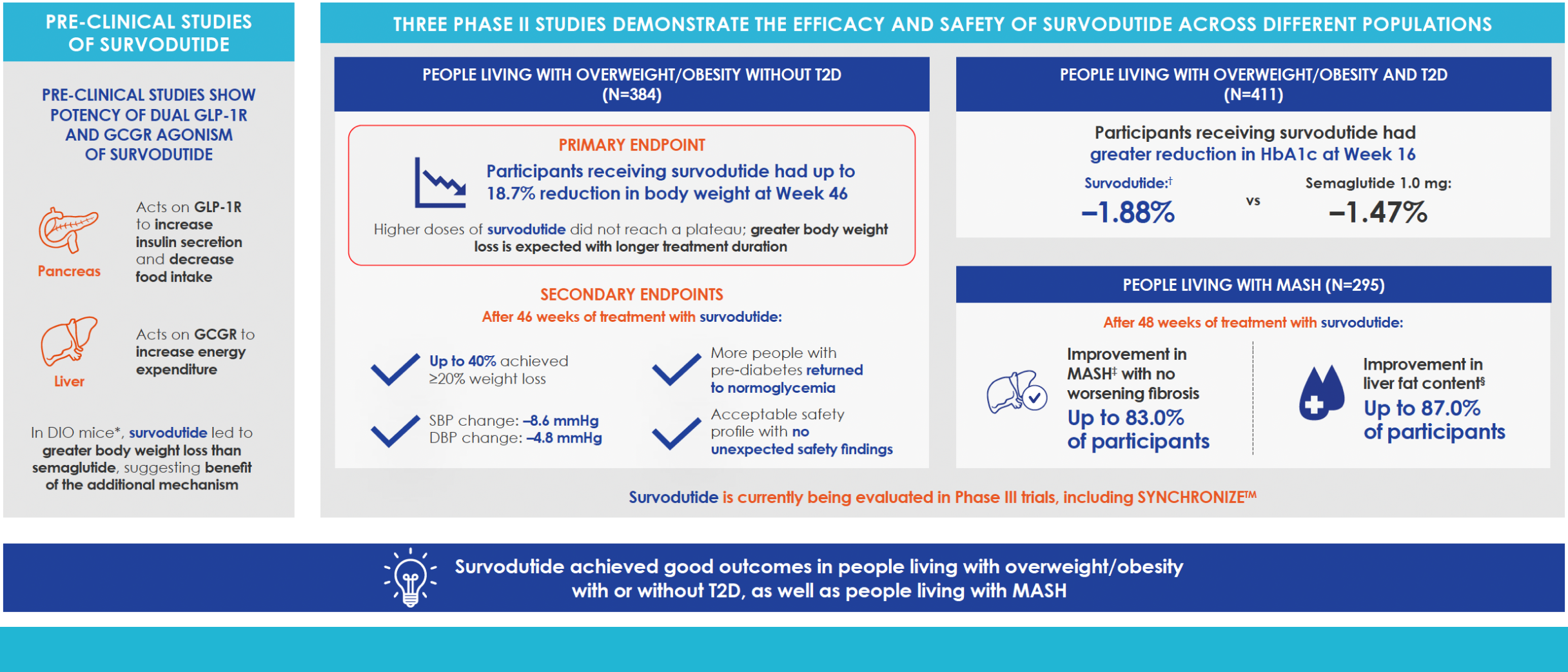
The SYNCHRONIZE-1 trial involved 725 adults with obesity or overweight, but without type 2 diabetes. Participants were randomly assigned to receive either survodutide at a dose of 3.6mg or 6.0mg weekly, or a placebo. After 76 weeks, those receiving survodutide experienced an average weight reduction of 16.6% (approximately 17.8 kg or 39.2 pounds) compared to a 3.2% reduction in the placebo group. This difference was statistically significant, demonstrating the efficacy of survodutide in promoting weight loss. 85.1% of participants in the survodutide groups achieved at least 5% weight loss, significantly higher than the 38.8% observed in the placebo group.
Regulatory Progress and Broader Clinical Development
Boehringer Ingelheim has been actively pursuing regulatory approvals for survodutide across multiple regions. The drug has already received “Fast Track” and “Breakthrough Therapy” designations from the U.S. Food and Drug Administration (FDA) for the treatment of metabolic dysfunction-associated steatohepatitis (MASH), a severe form of non-alcoholic fatty liver disease. It has also been granted “Priority Medicine” status by the European Medicines Agency (EMA) and “Innovative Drug” designations in China, and Taiwan. These designations expedite the review process and potentially accelerate access to the drug for patients.
Beyond obesity, Boehringer Ingelheim is evaluating survodutide in four ongoing Phase 3 clinical trials, including studies in MASH, type 2 diabetes, and other metabolic conditions. This broad clinical development program reflects the company’s belief that survodutide has the potential to address a wide range of metabolic disorders. The company is also investigating the drug’s impact on cardiovascular and metabolic risk factors, such as blood sugar levels, cholesterol, and blood pressure.
How Survodutide Compares to Existing Therapies
The weight loss results achieved with survodutide in the SYNCHRONIZE-1 trial are comparable to those seen with other recently approved obesity medications, such as semaglutide (Wegovy) from Novo Nordisk. Semaglutide demonstrated a 12.4% weight loss in a 68-week Phase 3 trial. However, survodutide’s results fall slightly short of those achieved with tirzepatide (Zepbound) from Eli Lilly, which showed a 17.8% weight loss in its Phase 3 trial. Another drug in development, retatrutide from Eli Lilly, has shown even more promising results in Phase 2 trials, with a maximum weight loss of 22.1% in a 48-week study.
Despite not leading in overall weight loss percentage, Boehringer Ingelheim emphasizes the potential advantages of survodutide’s unique mechanism of action. The activation of glucagon receptors may offer benefits beyond weight loss, particularly in improving liver health and reducing visceral fat – the dangerous fat stored around abdominal organs. This could position survodutide as a valuable treatment option for patients with obesity-related complications, such as MASH. The company believes that targeting glucagon offers a differentiated approach that could address unmet needs in the obesity treatment landscape.
Looking Ahead: Potential Impact on Public Health
The development of new and effective obesity treatments is crucial in addressing the global obesity epidemic. According to the World Health Organization, over 1 billion people worldwide are living with obesity, and the prevalence continues to rise. Obesity is a major risk factor for numerous chronic diseases, placing a significant burden on healthcare systems and reducing quality of life.

If approved, survodutide could provide a much-needed additional tool for healthcare professionals in managing obesity and its associated complications. The drug’s potential to improve metabolic health and reduce liver fat could be particularly beneficial for patients at high risk of developing MASH and other obesity-related conditions. However, as with all weight loss medications, survodutide is expected to be used in conjunction with lifestyle interventions, such as diet and exercise, to achieve optimal results.
Key Takeaways
- Boehringer Ingelheim’s survodutide demonstrated a 16.6% average weight loss in a Phase 3 trial for obesity.
- The drug’s dual GLP-1 and glucagon receptor agonist mechanism offers a novel approach to weight management.
- Survodutide has received expedited regulatory designations in the U.S., Europe, and Asia.
- The drug is also being investigated for the treatment of MASH and type 2 diabetes.
Boehringer Ingelheim plans to submit the SYNCHRONIZE-1 trial data to regulatory authorities in the coming months. The timeline for potential market approval remains uncertain, but the positive results represent a significant step forward in the development of new obesity treatments. Further updates on the regulatory process and clinical development of survodutide will be closely watched by the medical community and patients alike.
Do you have thoughts on the potential of new obesity treatments? Share your comments below, and please share this article with your network.
Related reading