
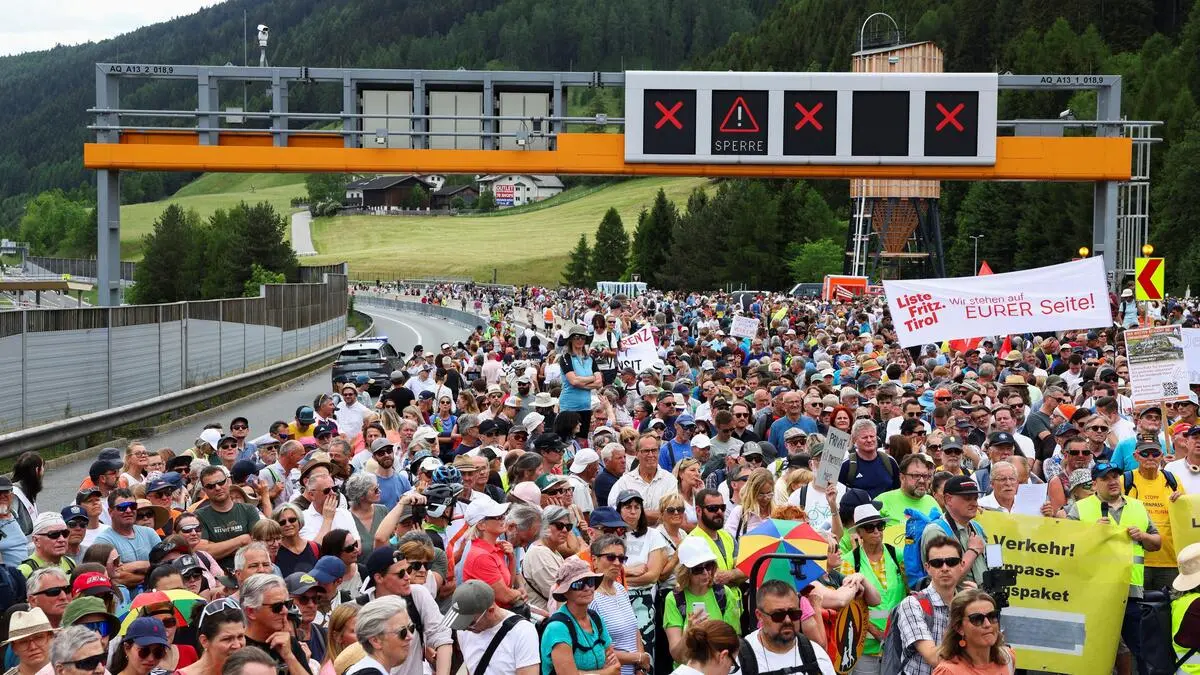
The Brenner Pass, a critical artery for European trade and transit, has once again become a focal point for regional tensions regarding heavy goods vehicle (HGV) traffic. Earlier today, thousands of demonstrators gathered on the A13 Brenner Motorway in Austria, effectively halting transit through the vital Alpine crossing to protest against the rising volume of freight transport and its impact on the local environment and quality of life.
As the Editor of the News section here at World Today Journal, I have spent years tracking the delicate balance between the European Union’s commitment to the free movement of goods and the local concerns of communities nestled along these major transit corridors. Today’s demonstration, which saw protestors occupy the thoroughfare, underscores the growing frustration among local residents and environmental advocates who are demanding a structural shift in how transalpine transit is managed.
The Anatomy of the Brenner Transit Crisis
The Brenner Pass is arguably the most important transit route in the European Alps, linking the industrial heartlands of Germany and Northern Italy. However, the sheer volume of HGVs—often exceeding 2.5 million trucks annually—has long been a point of contention between the Austrian province of Tyrol and the European Commission. The Trans-European Transport Network (TEN-T) policy mandates the seamless flow of commerce, but authorities in Tyrol have frequently implemented “block clearances” (Blockabfertigung) to mitigate traffic congestion and air pollution, a move that the Italian government and various logistics industry groups have challenged in the European Court of Justice.

Today’s protest was characterized by a specific ultimatum directed toward both national and EU-level policymakers. Organizers called for a significant reduction in road freight and a more aggressive push to shift goods onto rail infrastructure. While the motorway was closed for the duration of the demonstration, local authorities reported that the traffic situation remained largely controlled, as many logistics companies had adjusted their schedules in anticipation of the disruption, according to the ÖAMTC (Austrian Automobile, Motorcycle and Touring Club).
Infrastructure and the Environmental Impasse
The core of the dispute lies in the discrepancy between transit capacity and environmental limits. For those living in the Wipptal valley, the constant noise, vibration, and nitrogen dioxide emissions associated with the heavy truck traffic are no longer considered sustainable. The protest highlights a demand for the implementation of a digital, quota-based booking system for HGVs, which many in the region believe would provide better predictability and control over the flow of vehicles.
From an economic perspective, the reliance on the Brenner corridor is immense. The European Commission has consistently emphasized that the free circulation of goods is a cornerstone of the Single Market. However, the legal battles between the Austrian government and its neighbors continue to escalate. In recent months, the Court of Justice of the European Union has been tasked with adjudicating whether the restrictions imposed by Tyrol are discriminatory or necessary for public health and environmental protection.
Key Takeaways: What You Need to Know
- Transit Disruption: The A13 Brenner Motorway experienced a full closure due to public assembly, affecting both North-South and South-North traffic.
- The Core Demand: Protesters are calling for a strict cap on HGV transit and an immediate prioritization of rail freight investments.
- Economic Impact: While major gridlock was avoided through advance planning, the logistical uncertainty continues to impact supply chains across Central Europe.
- Legal Status: The ongoing conflict regarding Austrian transit restrictions remains subject to ongoing review by the European Court of Justice.
Looking Ahead: The Path Toward Resolution
What happens next remains a question of political will rather than just engineering. While the protest has concluded, the underlying issues regarding the “traffic avalanche”—as it is often termed in German-language media—are far from resolved. The next major checkpoint will be the upcoming ministerial meetings between Austrian, Italian, and German transport officials, where the implementation of a more robust, digitized transit management system will be on the table.

For our readers traveling through the region or managing supply chain logistics, it is essential to monitor real-time updates from official sources such as the ASFINAG (Austrian Motorway Operator) to stay informed of any future traffic restrictions or scheduled maintenance that could exacerbate transit delays. The balance between the economic necessity of the Brenner corridor and the environmental health of the Alpine region is one of the most significant geopolitical challenges of our time.
We will continue to provide updates as these discussions evolve. If you have been affected by the transit situation at the Brenner Pass, or if you have insights into the evolving freight management policies in Europe, I invite you to share your thoughts in the comments section below. Your perspectives help inform the broader conversation on how we manage our shared infrastructure in a changing world.