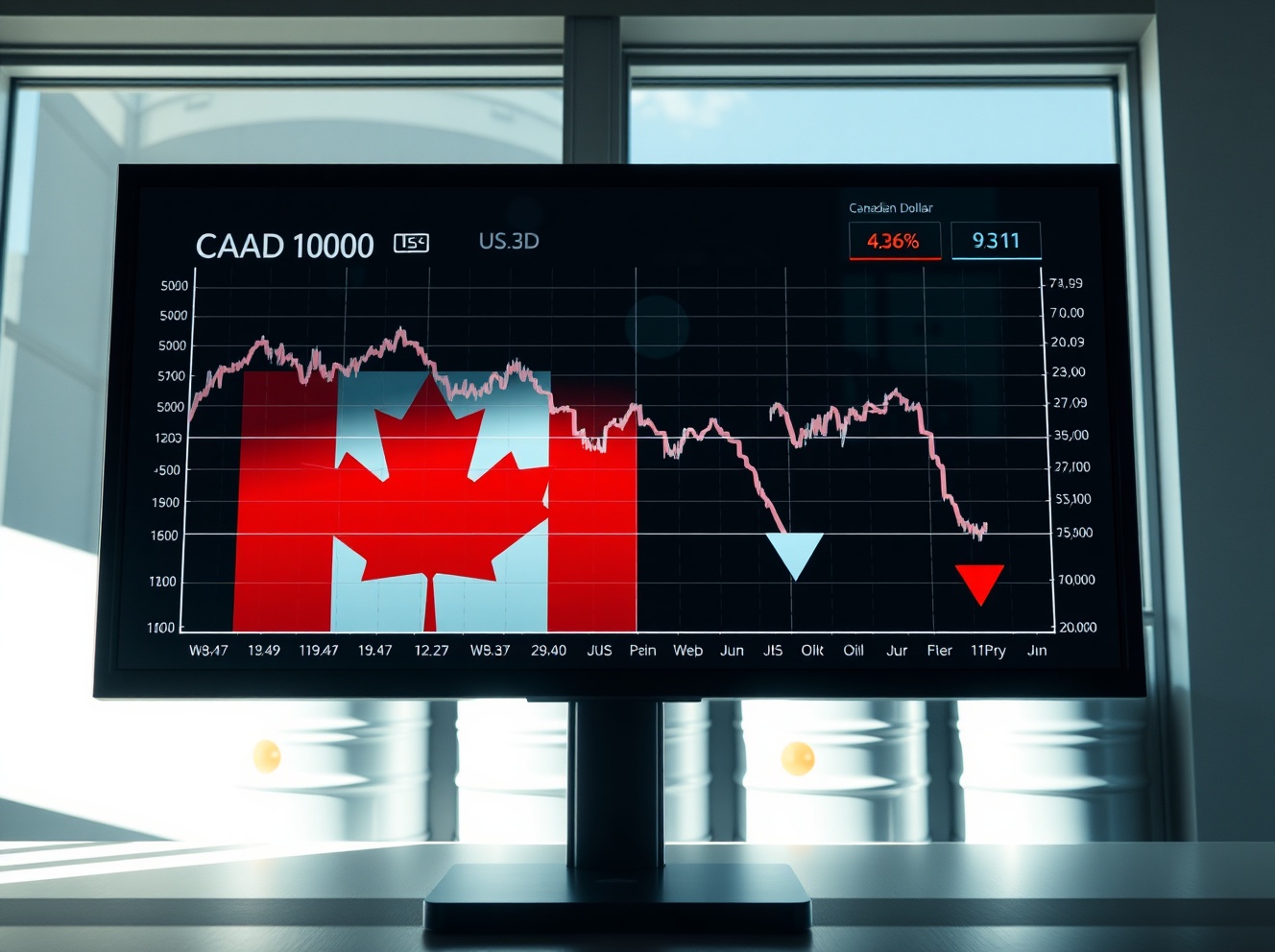
The Canadian dollar faces ongoing downward pressure as a decline in global oil prices weighs on the commodity-linked currency, while diverging monetary policy paths between the U.S. Federal Reserve and the Bank of Canada (BoC) create significant uncertainty in foreign exchange markets. As energy prices retreat, the traditional inflationary shock associated with crude oil is showing signs of easing, yet the resulting currency volatility continues to influence investor sentiment across North American markets.
According to current market data, the Canadian dollar’s performance remains closely tethered to the price of West Texas Intermediate (WTI) crude, which has experienced notable fluctuations amid geopolitical tensions in the Middle East and concerns over global demand. The Bank of Canada continues to monitor these commodity shifts as it balances the need to stabilize the domestic currency against broader economic objectives. Meanwhile, the U.S. Federal Reserve maintains a distinct approach to interest rate policy, leaving investors to navigate the widening gap between the two central banks.
Diverging Monetary Policy and the CAD
The relationship between the Federal Reserve and the Bank of Canada has become a focal point for currency traders as both institutions signal different timelines for interest rate adjustments. While the Federal Reserve has maintained a cautious stance on inflation, the Bank of Canada has faced unique domestic pressures, including a cooling housing market and varying levels of consumer spending. This policy divergence is a primary driver of the current exchange rate instability, as capital flows shift toward the higher-yielding U.S. dollar, effectively weakening the CAD.
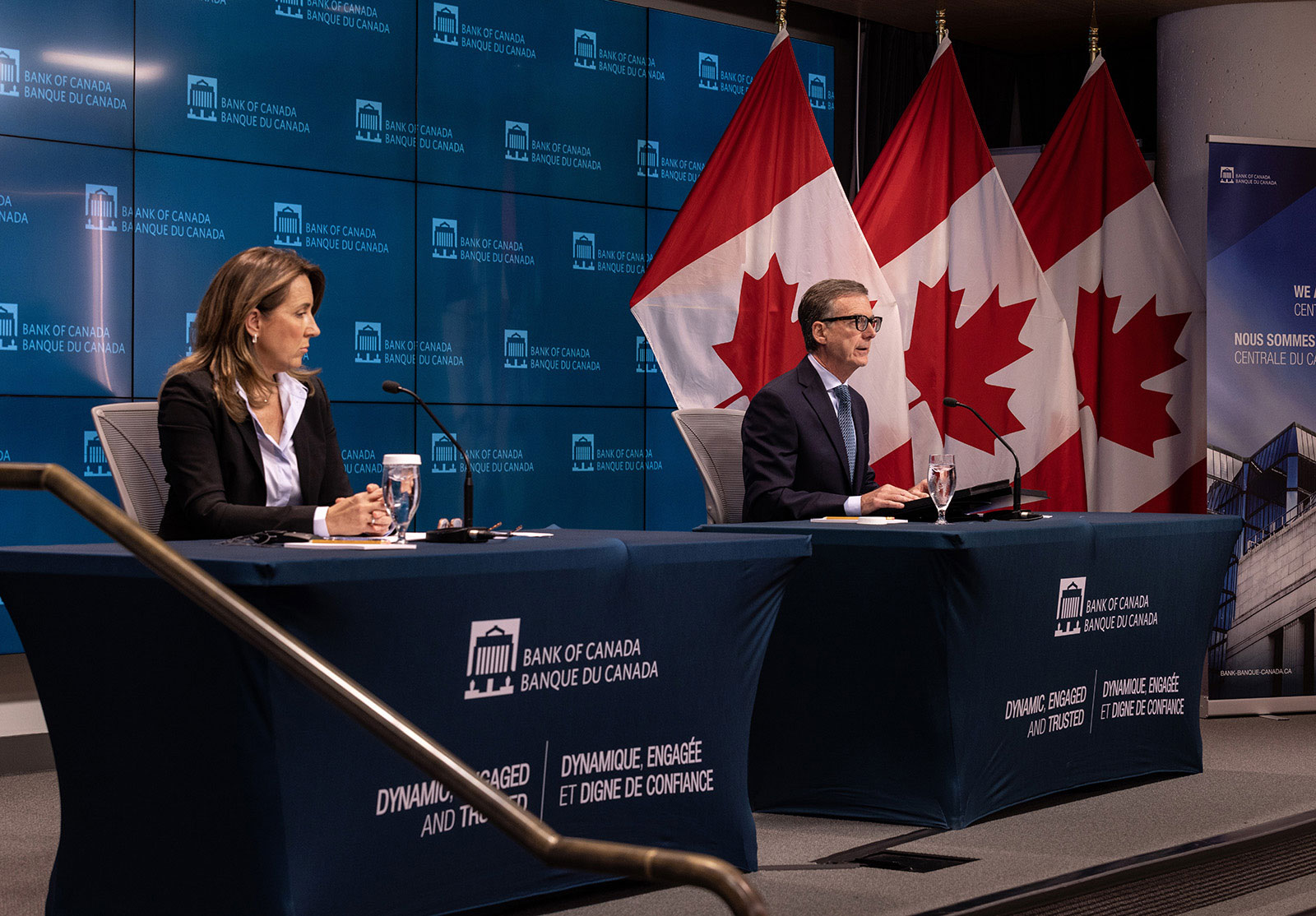
Market analysts observe that when the interest rate spread between the U.S. and Canada widens, the Canadian dollar frequently loses ground against its southern counterpart. The International Monetary Fund has noted that commodity-exporting nations often face heightened sensitivity to such policy gaps, as the currency is forced to absorb the shocks of both global commodity price volatility and domestic interest rate differentials. For Canadian importers, this depreciation increases the cost of goods denominated in U.S. dollars, which may further complicate the inflation outlook for the coming fiscal quarters.
Impact of Oil Market Volatility
Oil prices remain a critical variable for the Canadian economy, given that energy exports represent a significant portion of the nation’s trade balance. The recent decline in crude prices has provided a temporary reprieve from energy-led inflationary pressures, which had previously strained household budgets and corporate operating costs. However, this relief comes at the expense of currency strength, as the CAD typically correlates positively with oil price increases.
Geopolitical uncertainty surrounding the Strait of Hormuz—a vital maritime chokepoint for global oil transit—continues to cast a shadow over energy markets. While the current supply chains remain functional, any disruption in this region could cause sudden spikes in crude prices, potentially reversing the recent downward trend in inflation. The U.S. Energy Information Administration frequently updates data on these global supply risks, noting that even minor fluctuations in transit reliability can have outsized effects on global energy pricing, thereby directly impacting the valuation of commodity-linked currencies like the Canadian dollar.
What Lies Ahead for Investors
The next major checkpoint for market participants will be the upcoming policy announcements from both the Federal Reserve and the Bank of Canada. Investors are closely watching for any changes in forward guidance that might signal a shift in the current interest rate trajectory. The Bank of Canada’s scheduled interest rate decision dates serve as a benchmark for market expectations, and any deviation from the anticipated path could trigger significant volatility in the currency markets.

For those monitoring the CAD, the interplay between energy sector performance and central bank messaging will likely dictate near-term trends. As the global economy adjusts to these shifting conditions, maintaining a focus on official statements from these institutions remains the most reliable strategy for assessing future risks. We encourage our readers to share their perspectives on these developments in the comments section below and to stay tuned for further updates as new data becomes available.
Keep reading
- Beluga Whales Transferred from Marineland Canada to Chicago and San Antonio
- Russia and Ukraine Exchange Heavy Attacks Killing at Least 27 People
- 4 Things to Avoid After 6 P.M. for Better Blood Pressure (world-today-news.com)
- Mariano Navone Faces Valentin Vacherot in 2026 Canadian Open Second Round (time.news)