
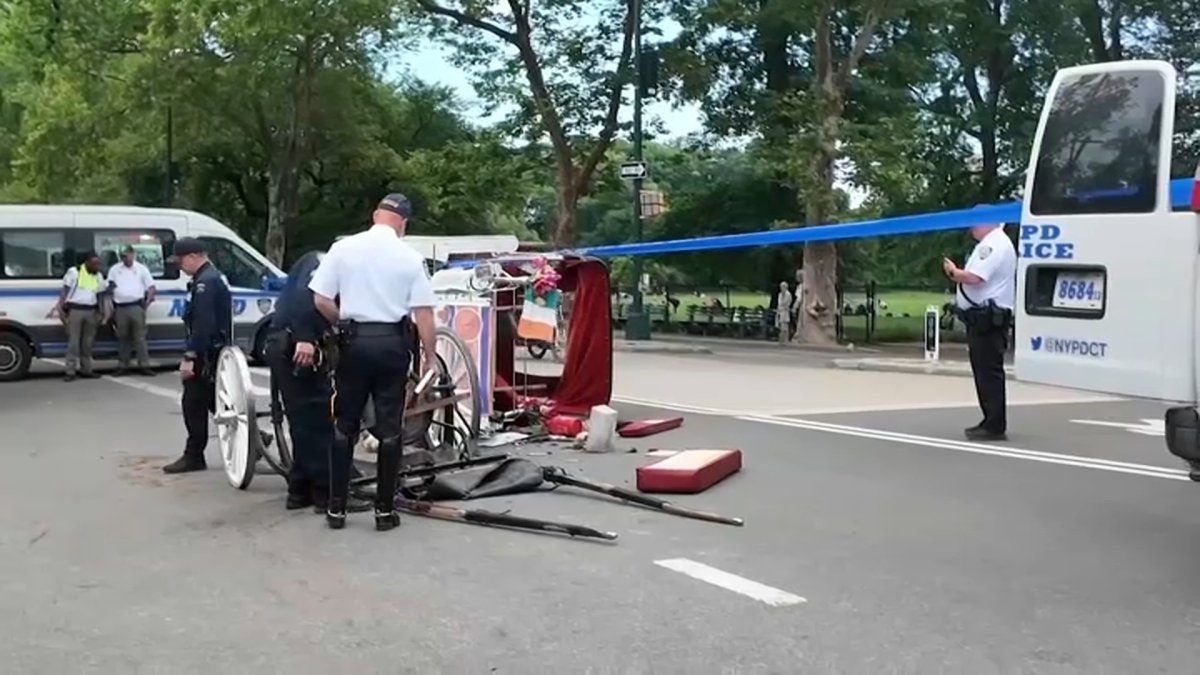
Central Park horse carriage operations have been suspended through the weekend following the death of 18-year-old tourist Romanch Mahajan, who suffered fatal injuries after jumping from a runaway carriage on June 17. The Transport Workers Union (TWU) Local 100, which represents the city’s carriage drivers, announced a “safety stand-down” to allow for internal reviews of operational protocols and horse-handling procedures. While the industry faces renewed pressure from city officials and animal welfare advocates to cease operations permanently, union representatives have stated that carriage services could potentially resume as early as next Tuesday, subject to ongoing safety assessments.
The incident occurred while the Mahajan family was visiting New York City to celebrate the teenager’s recent high school graduation. According to reports, the carriage driver dismounted from the vehicle to photograph the family near a park fountain when the horse suddenly bolted. In an attempt to assist his mother, who had fallen from the carriage, Romanch Mahajan exited the vehicle but struck his head on the ground. The teenager was transported for medical care but later died, marking what officials and industry representatives believe is the first human fatality involving a Central Park carriage in the industry’s 150-year history.
Regulatory Scrutiny and Legislative Pressure
The fatal accident has reignited long-standing political debates regarding the future of the horse-drawn carriage industry in Manhattan. New York City Council Speaker Julie Menin has confirmed that the legislative body plans to hold a hearing next month to address a bill aimed at phasing out horse-drawn carriages and assisting drivers with career transitions. This legislative push, often referred to as “Ryder’s Law,” gained formal support from the Central Park Conservancy in 2025, which manages the 843-acre park and has cited concerns over the safety of sharing narrow park roads with high volumes of cyclists, pedestrians, and motorized vehicles.
Mayor Zohran Mamdani has also publicly reiterated his commitment to ending the industry, stating his intent to collaborate with the City Council and labor stakeholders to develop a “just transition” for affected workers. Historical context shows that the issue has been a recurring point of contention for successive mayoral administrations. Former Mayor Bill de Blasio campaigned on a promise to eliminate the carriage trade upon taking office, while former Mayor Eric Adams also voiced opposition toward the end of his term. Despite these administrative stances, the industry has historically maintained significant support within the City Council, preventing an outright ban to date.
Industry Response and Safety Protocols
In response to the tragedy, the Transport Workers Union Local 100 has initiated a mandatory review of safety protocols for all licensed drivers. Union Vice President Alexander Kemp expressed the organization’s condolences, noting that the stables were closed immediately following the event to facilitate internal discussions on how to better “secure and maintain control of carriage horse[s] at all times.” The union confirmed that the driver involved in the June 17 incident has been suspended indefinitely, and the specific horse involved is slated for retirement from the carriage business.

Industry operators, such as carriage owner Onur Altintas, argue that the focus should remain on improved infrastructure rather than the total elimination of the trade. Altintas suggested that the installation of permanent hitching posts throughout Central Park would allow drivers to secure their horses safely during brief stops, preventing the types of runaways that have prompted recent criticism. Proponents of the industry emphasize that the carriage trade provides hundreds of jobs to drivers, farriers, and stable hands, and argue that the majority of safety incidents could be mitigated through better regulation of existing practices rather than an industry-wide shutdown.
Historical Context of Park Incidents
The debate is further complicated by the frequency of reported accidents. The Central Park Conservancy has reported eight horse-related incidents within the park over the previous 13-month period, fueling arguments from groups like New Yorkers for Clean, Livable, and Safe Streets that the environment is no longer suitable for large animals. Edita Birnkrant, the head of the advocacy group, has characterized the record of crashes and injuries as “undeniable,” calling for an immediate end to the practice to prevent further loss of human life.
Conversely, carriage owners maintain that the animals are well-cared for and that the industry is being unfairly targeted due to the nostalgic nature of the business. As the city prepares for the upcoming legislative hearings, the industry remains in a state of flux. While no passengers will be permitted during the remainder of the weekend or the subsequent training period, the future of the 150-year-old tradition rests on the outcome of the Council’s review and the ability of operators to demonstrate an enhanced capacity for public safety.
Updates regarding the status of carriage operations and the scheduling of City Council hearings will be available through official New York City government portals and legislative calendars. Readers are encouraged to share their perspectives on the balance between historical tourism and modern urban safety in the comments section below.