
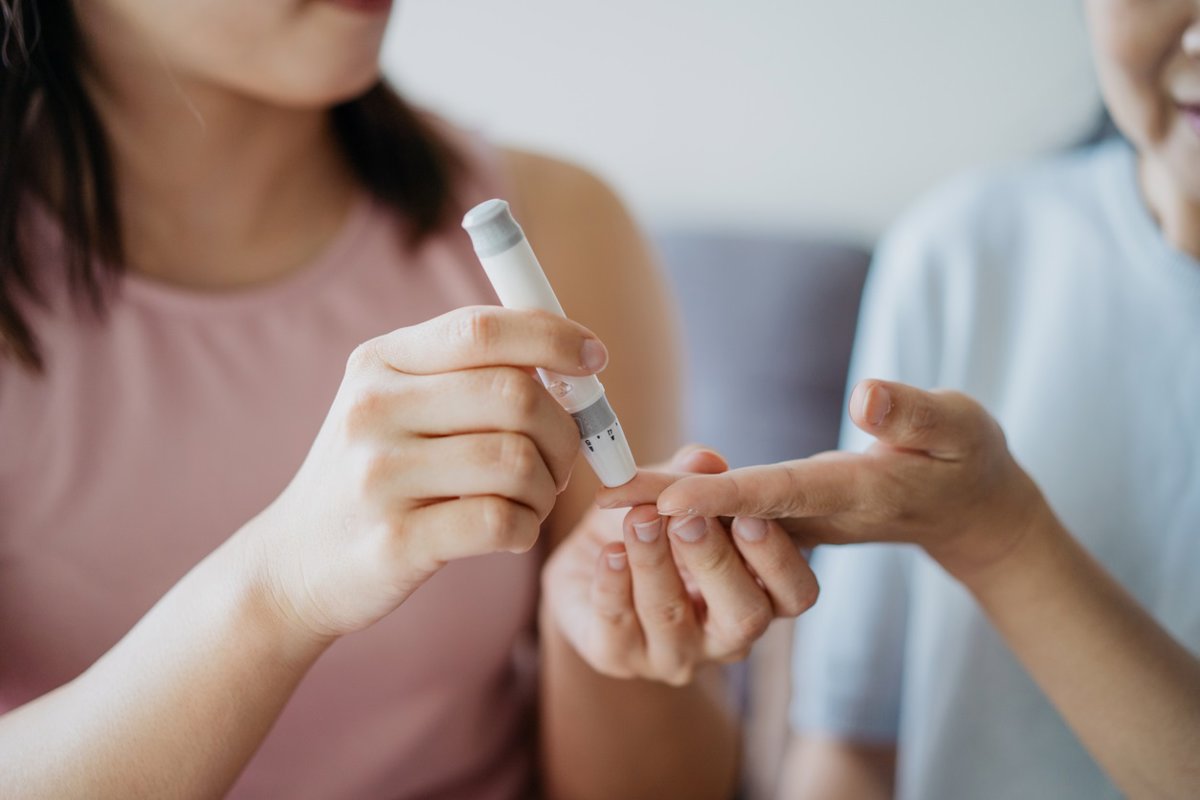
Beyond the Fingerstick: How Continuous Glucose Monitors Are Transforming Diabetes Care for Type 2 Patients
For decades, managing diabetes meant a daily ritual of fingersticks—tiny pricks to draw blood, test strips, and the constant guesswork of tracking glucose levels. But a quiet revolution is underway. Continuous glucose monitors (CGMs), once reserved for people with type 1 diabetes, are now proving to be a game-changer for those with type 2 diabetes, offering real-time insights into blood sugar fluctuations without the need for painful, repetitive testing. The technology is not just improving health outcomes; it’s reshaping how patients and clinicians approach diabetes management, particularly for those who rely on insulin or struggle with unstable glucose levels.
CGMs are small, wearable devices that measure glucose levels in the interstitial fluid—just beneath the skin—every few minutes. Unlike traditional fingerstick tests, which provide a single snapshot of blood sugar, CGMs offer a dynamic, 24/7 view of glucose trends, alerting users to dangerous highs or lows before they grow critical. For patients with type 2 diabetes, who often face challenges like insulin resistance, weight management, and cardiovascular risks, this continuous feedback can be life-altering. Studies show that CGM use is associated with better glycemic control, fewer hospitalizations, and even reductions in long-term complications like nerve damage and kidney disease. Yet, despite these benefits, access to the technology remains uneven, with disparities in coverage, cost, and awareness leaving many patients behind.

Dr. Elena Martínez, an endocrinologist at the Hospital Clínic de Barcelona, has seen firsthand how CGMs are changing the lives of her patients. “What we’re observing is not just an improvement in numbers on a chart, but a fundamental shift in how people engage with their health,” she says. “Patients who once felt overwhelmed by the demands of diabetes management are now empowered by data. They can see, in real time, how their food choices, exercise, and medication affect their glucose levels. It’s a level of insight that fingersticks simply can’t provide.” Martínez’s observations align with a growing body of research, including a 2023 study published in JAMA, which found that CGM use in type 2 diabetes patients led to a 0.4% reduction in HbA1c levels—a key marker of long-term glucose control—compared to traditional monitoring methods.
How CGMs Work: A Leap from Fingersticks to Real-Time Data
Traditional glucose monitoring relies on capillary blood samples, typically obtained by pricking a finger with a lancet. Although effective, this method has significant limitations. It provides only a momentary glimpse of glucose levels, often missing critical fluctuations that occur between tests. For example, a patient might test their blood sugar in the morning and find it within a normal range, only to experience a dangerous spike after lunch that goes undetected until the next test. CGMs, by contrast, eliminate this blind spot by continuously tracking glucose levels and transmitting data to a smartphone or dedicated receiver.
The technology behind CGMs has evolved rapidly over the past decade. Modern devices, such as the Dexcom G7 and Abbott’s FreeStyle Libre, consist of three main components: a tiny sensor inserted just under the skin (usually on the arm or abdomen), a transmitter that sends data wirelessly, and a receiver or smartphone app that displays glucose readings in real time. The latest models, like the Dexcom G7, are smaller, more accurate, and easier to use than their predecessors. They require no manual calibration, offer customizable alerts for high or low glucose levels, and can even predict dangerous trends—such as impending hypoglycemia—up to 20 minutes in advance.
For patients with type 2 diabetes, the benefits of CGMs extend beyond convenience. The National Institute of Diabetes and Digestive and Kidney Diseases (NIDDK) highlights several key advantages:
- Improved glycemic control: CGMs help patients maintain glucose levels within their target range more consistently, reducing the risk of both short-term crises (like hypoglycemia) and long-term complications (such as retinopathy or cardiovascular disease).
- Behavioral insights: By tracking how diet, exercise, and stress affect glucose levels, patients can develop more informed decisions about their daily habits. For example, a CGM might reveal that a seemingly healthy snack causes a sharp spike in blood sugar, prompting the user to adjust their choices.
- Reduced burden of self-management: The elimination of frequent fingersticks makes diabetes management less intrusive, particularly for patients who struggle with dexterity issues or needle phobia. This can lead to better adherence to monitoring routines.
- Enhanced clinical decision-making: Healthcare providers can use CGM data to tailor treatment plans more precisely, adjusting medication dosages or recommending lifestyle changes based on real-world glucose patterns rather than isolated test results.
Despite these advantages, CGMs are not without challenges. Some patients report skin irritation at the sensor site, while others find the constant stream of data overwhelming. The devices require regular replacement—typically every 7 to 14 days—which can add to the ongoing cost of diabetes care. However, for many, the benefits far outweigh these drawbacks. As Dr. Martínez notes, “The psychological impact of CGMs is profound. Patients who have spent years feeling like they’re fighting an invisible battle suddenly have a tool that makes their condition visible—and manageable.”
From Niche to Mainstream: Why Type 2 Diabetes Patients Are Adopting CGMs
Until recently, CGMs were primarily prescribed for people with type 1 diabetes, who rely on insulin to survive and are at higher risk of life-threatening glucose fluctuations. However, a growing body of evidence suggests that CGMs can too benefit people with type 2 diabetes, particularly those who use insulin or have difficulty achieving glycemic targets. A 2022 study published in The Lancet Diabetes & Endocrinology found that CGM use in type 2 diabetes patients led to significant improvements in time spent in the target glucose range, as well as reductions in HbA1c levels. The study, which included over 1,000 participants, also noted that patients using CGMs reported higher satisfaction with their diabetes management compared to those using traditional methods.

The shift toward CGMs for type 2 diabetes has been driven by several factors:
- Expanding clinical guidelines: Organizations like the American Diabetes Association (ADA) and the National Institute for Health and Care Excellence (NICE) in the UK have updated their recommendations to include CGMs as a viable option for certain type 2 diabetes patients, particularly those on intensive insulin therapy or with a history of hypoglycemia.
- Improved affordability and insurance coverage: While CGMs were once prohibitively expensive for many patients, the landscape is changing. In the U.S., Medicare now covers CGMs for beneficiaries with diabetes who meet certain criteria, and many private insurers are following suit. In Europe, countries like the UK and Spain have begun integrating CGMs into their public healthcare systems, though access varies by region.
- Technological advancements: The latest CGM models are more user-friendly, accurate, and discreet than earlier versions. Features like smartphone integration, predictive alerts, and compatibility with insulin pumps are making the technology more appealing to a broader range of patients.
- Growing awareness: As CGMs become more common, word-of-mouth and patient advocacy are playing a key role in driving adoption. Online communities, social media groups, and diabetes organizations are helping to educate patients about the benefits of CGMs and how to navigate insurance coverage.
One of the most compelling arguments for CGM use in type 2 diabetes is their potential to reduce healthcare costs in the long run. While the upfront cost of a CGM can be significant—ranging from $100 to $300 per month without insurance—studies suggest that the devices may pay for themselves by preventing costly complications. A 2021 analysis published in Diabetes Care estimated that CGM use in type 2 diabetes patients could lead to annual savings of $1,200 to $2,500 per patient by reducing hospitalizations, emergency room visits, and the need for additional medications.
The Access Gap: Who Gets Left Behind?
Despite the promise of CGMs, access to the technology remains uneven. A 2023 report from the American Diabetes Association highlighted significant disparities in CGM use among different demographic groups. The report found that patients who are older, lower-income, or from racial and ethnic minority backgrounds are less likely to use CGMs than their younger, wealthier, and white counterparts. These disparities are driven by a complex web of factors, including cost, insurance coverage, healthcare provider biases, and lack of awareness.
“The reality is that CGMs are still out of reach for many of the patients who need them most,” says Dr. Sophia Chen, a public health researcher at the University of California, San Francisco. “We see this particularly in communities of color and among Medicaid recipients, where coverage for CGMs is often limited or nonexistent. This isn’t just an issue of technology—it’s an issue of equity.” Chen’s research, published in Health Affairs, found that Black and Hispanic patients with diabetes are 30% to 50% less likely to use CGMs than white patients, even after adjusting for income and insurance status.
The access gap is not just a U.S. Problem. In Europe, where healthcare systems are often more centralized, CGM coverage varies widely by country. In the UK, for example, the National Institute for Health and Care Excellence (NICE) recommends CGMs for all type 1 diabetes patients but restricts their use for type 2 diabetes patients to those on intensive insulin therapy or with a history of severe hypoglycemia. In Spain, CGMs are available through the public healthcare system, but waiting lists can be long, and not all regions offer the same level of coverage. In Germany, where this article is being written, CGMs are covered by statutory health insurance for patients with type 1 diabetes and for certain type 2 diabetes patients who meet specific criteria, such as those with frequent hypoglycemia or poor glycemic control.
Cost is another major barrier. Even with insurance, patients may face high out-of-pocket expenses for CGMs. In the U.S., for example, Medicare covers CGMs for beneficiaries with diabetes who use insulin, but the coverage comes with strict requirements, such as the need for a prescription and regular follow-up with a healthcare provider. For patients without insurance or with high-deductible plans, the cost of CGMs can be prohibitive. A 2023 survey by the American Diabetes Association found that nearly 40% of patients who had been prescribed a CGM did not use it due to cost concerns.
Efforts to address these disparities are underway. Advocacy groups like the American Diabetes Association and JDRF (formerly the Juvenile Diabetes Research Foundation) are pushing for expanded insurance coverage and policies that ensure equitable access to CGMs. In the U.S., some states have passed laws requiring Medicaid to cover CGMs for eligible patients, and federal legislation has been introduced to expand Medicare coverage. Meanwhile, manufacturers are exploring ways to reduce costs, such as offering subscription-based models or partnering with nonprofit organizations to provide CGMs to low-income patients.
The Future of Diabetes Care: What’s Next for CGMs?
The rapid evolution of CGM technology shows no signs of slowing down. In the coming years, experts predict that CGMs will become even more integrated into diabetes care, with advancements in accuracy, affordability, and connectivity. Some of the most promising developments on the horizon include:
- Artificial pancreas systems: Also known as closed-loop systems, these devices combine CGMs with insulin pumps to automatically adjust insulin delivery based on real-time glucose readings. The U.S. Food and Drug Administration (FDA) has already approved several artificial pancreas systems for type 1 diabetes, and research is underway to expand their use to type 2 diabetes patients. A 2023 study published in The New England Journal of Medicine found that a closed-loop system improved glycemic control in type 2 diabetes patients, reducing the time spent in hyperglycemia by nearly 30% compared to traditional insulin therapy.
- Non-invasive CGMs: Researchers are exploring alternatives to the current sensor-based CGMs, which require a small needle to be inserted under the skin. Non-invasive options, such as optical sensors that measure glucose through the skin or contact lenses that monitor glucose levels in tears, could eliminate the need for skin punctures altogether. While these technologies are still in the early stages of development, they hold the potential to make CGMs even more accessible and comfortable for patients.
- Integration with digital health platforms: CGMs are increasingly being integrated with digital health tools, such as smartphone apps, fitness trackers, and telemedicine platforms. This integration allows patients to share their glucose data with healthcare providers in real time, enabling more personalized and proactive care. For example, the Dexcom G7 can connect directly to an Apple Watch, allowing users to view their glucose levels on their wrist without needing to check their phone.
- Expanded use in type 2 diabetes: As evidence continues to mount about the benefits of CGMs for type 2 diabetes patients, clinical guidelines are likely to expand their recommended use. This could lead to broader insurance coverage and greater adoption among patients who are not currently using insulin but still struggle with glycemic control.
For patients like Javier Rodríguez, a 58-year-old teacher from Madrid who was diagnosed with type 2 diabetes five years ago, the future of CGMs is already here. Rodríguez began using a CGM in 2023 after struggling with frequent hypoglycemic episodes that left him feeling dizzy and disoriented. “Before the CGM, I was constantly guessing,” he says. “I’d test my blood sugar, and it would be fine, but then an hour later, I’d feel terrible. Now, I can see the trends. I know when my glucose is dropping, and I can grab action before it becomes a problem. It’s given me back a sense of control over my health.”
Key Takeaways: What Patients and Providers Need to Know
- CGMs are transforming diabetes care: Continuous glucose monitors provide real-time data on glucose levels, helping patients and providers make more informed decisions about diet, exercise, and medication. For type 2 diabetes patients, CGMs can improve glycemic control, reduce the risk of complications, and enhance quality of life.
- Access remains a challenge: Despite their benefits, CGMs are not equally accessible to all patients. Disparities in coverage, cost, and awareness mean that many of those who could benefit from the technology are unable to use it. Advocacy efforts and policy changes are needed to address these gaps.
- Technology is evolving rapidly: The next generation of CGMs promises even greater accuracy, convenience, and integration with other digital health tools. Innovations like artificial pancreas systems and non-invasive sensors could further revolutionize diabetes care in the coming years.
- Patient education is critical: While CGMs are user-friendly, they require some training to use effectively. Patients should work with their healthcare providers to understand how to interpret their glucose data and make adjustments to their treatment plans as needed.
- Insurance coverage varies: Patients should check with their insurance providers to understand what CGM options are covered under their plan. In some cases, financial assistance programs or manufacturer discounts may be available to help offset the cost.
Looking Ahead: The Next Steps for CGM Adoption
As CGMs become more widely adopted, the focus will shift from proving their effectiveness to ensuring that all patients who could benefit from the technology have access to it. This will require a multi-faceted approach, involving policymakers, healthcare providers, insurers, and patient advocacy groups. Key priorities include:
- Expanding insurance coverage: Governments and insurers must work to ensure that CGMs are covered for all eligible patients, regardless of income or insurance status. This may involve updating clinical guidelines, passing legislation, and negotiating with manufacturers to reduce costs.
- Improving awareness and education: Many patients and providers are still unaware of the benefits of CGMs or how to use them effectively. Public health campaigns, provider training programs, and patient support groups can help bridge this gap.
- Addressing disparities: Efforts to improve access to CGMs must prioritize underserved communities, including racial and ethnic minorities, low-income patients, and older adults. This may involve targeted outreach, culturally competent education, and policies that address systemic barriers to care.
- Advancing research: Continued research is needed to explore the long-term benefits of CGMs, identify the patients who are most likely to benefit from the technology, and develop new innovations that make CGMs even more effective and accessible.
The next major milestone in CGM adoption will likely come in the form of updated clinical guidelines from organizations like the American Diabetes Association and NICE. These guidelines will play a critical role in shaping insurance coverage and provider recommendations, ultimately determining how widely CGMs are used in type 2 diabetes care. In the meantime, patients and providers can stay informed by following updates from diabetes advocacy organizations and government health agencies.
For now, the message is clear: CGMs are no longer just a tool for type 1 diabetes. They are a powerful resource for anyone living with diabetes, offering the promise of better health, greater freedom, and a brighter future. As Dr. Martínez puts it, “We’re not just talking about managing a chronic condition—we’re talking about giving people back their lives. And that’s something worth fighting for.”
Have you or someone you know used a continuous glucose monitor? Share your experience in the comments below, and don’t forget to share this article to help spread the word about this life-changing technology.