
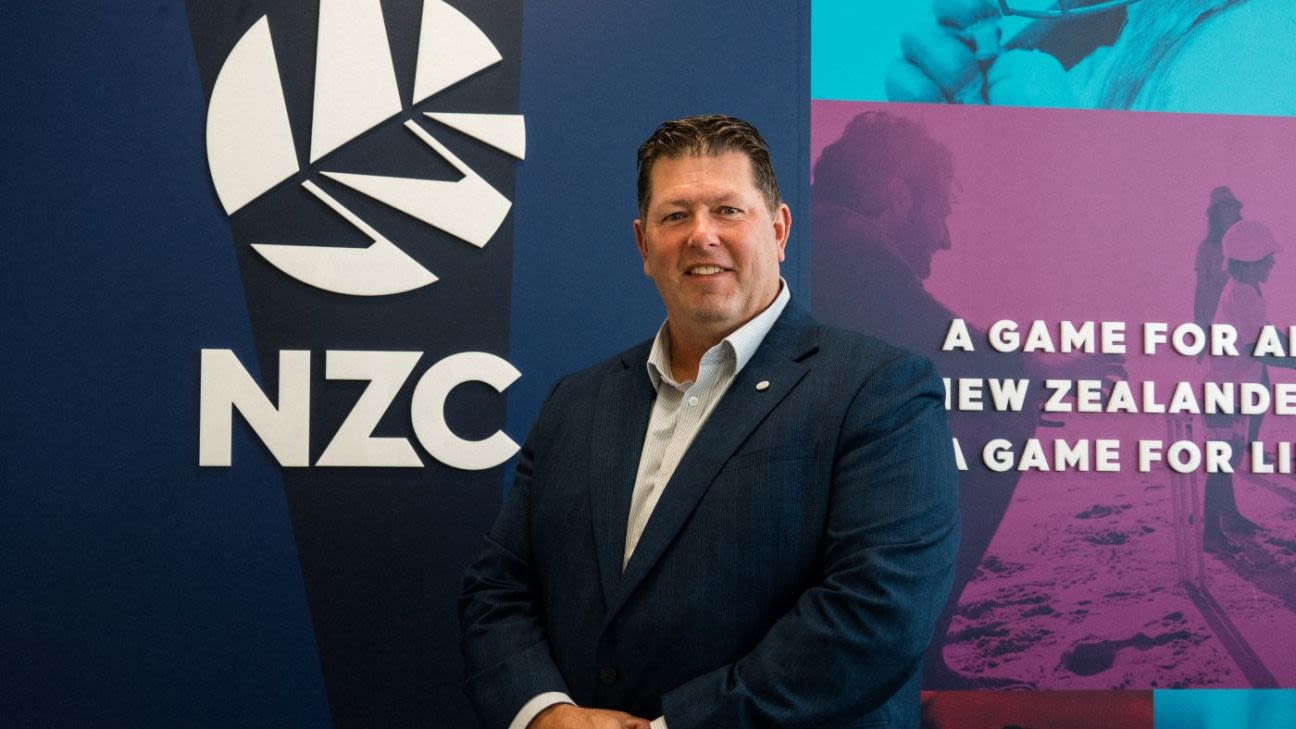
Former New Zealand Pacer Geoff Allott Appointed CEO of New Zealand Cricket
In a move aimed at stabilizing the sport’s governance after months of turmoil, New Zealand Cricket (NZC) has appointed former Black Caps prompt bowler Geoff Allott as its new chief executive. Allott, who played 10 Tests and 31 One-Day Internationals (ODIs) for New Zealand between 1996 and 2000, takes the helm following the resignation of Scott Weenink in December 2025. His appointment, announced on April 28, 2026, marks a return to NZC for Allott, who previously served as the organization’s General Manager of Cricket and later as a board director.
The leadership transition comes at a critical juncture for New Zealand Cricket, which has been grappling with internal divisions over the future direction of the game, particularly the role of T20 cricket in the country’s cricketing ecosystem. Allott’s deep institutional knowledge and playing experience are expected to bridge gaps between stakeholders, including the New Zealand Cricket Players’ Association (NZCPA), the six major provincial associations and commercial partners.
“Having worn the silver fern as a player, served as General Manager of Cricket, and contributed for over eight years as a board director, I have a deep connection to this organisation and our game,” Allott said in a statement released by NZC. “I look forward to working collaboratively with the board, players, staff, member associations, and our commercial partners to build strong relationships, foster a positive and constructive culture, and deliver outstanding results both on and off the field.”
From Player to Administrator: Allott’s Cricketing Journey
Geoff Allott’s cricketing career is best remembered for his left-arm seam bowling, which played a pivotal role in New Zealand’s historic Test series win over England in 1999. His performance at Lord’s, where he took 5 wickets in the second innings, remains one of the standout moments of his international career. After retiring from professional cricket in 2000, Allott transitioned into administration, leveraging his on-field experience to shape the sport’s future off it.
Allott’s administrative career began in 2002 when he became a founding board member of the New Zealand Cricket Players’ Association (NZCPA), an organization dedicated to advocating for players’ rights and welfare. His tenure on the Canterbury Cricket board (2011–2013) and later as a director on the NZC board (2013–2021) further solidified his reputation as a steady hand in cricket governance. In 2022, he was awarded NZC Life Membership in recognition of his contributions to the sport.
Between 2008 and 2010, Allott served as NZC’s General Manager of Cricket, overseeing domestic and international cricket operations. His return to the organization as CEO follows a period of significant upheaval, during which his predecessor, Scott Weenink, faced mounting pressure over strategic disagreements with key stakeholders.
The Weenink Era: A Leadership Crisis and Its Aftermath
Scott Weenink’s resignation in December 2025 capped a tumultuous tenure marked by escalating tensions over the future of New Zealand Cricket. Weenink, who had been appointed CEO in 2022, cited “fundamental differences” with member associations and the NZCPA over the long-term direction of the game, particularly the prioritization of T20 cricket. His departure was announced in advance, with his last day set for January 30, 2026, allowing NZC time to conduct a thorough search for his successor.
According to a statement released by NZC in December 2025, Weenink acknowledged that his vision for the organization no longer aligned with that of key stakeholders. “After careful consideration, it has become clear that I hold a different view from several Member Associations, and the NZCPA, on the future priorities for NZC, including the long-term direction of the game and the best role for T20 cricket in New Zealand,” he said. “Given these differences, I believe it is in the best interests of the organisation that new leadership takes NZC forward from here.”
The controversy surrounding Weenink’s leadership reached a boiling point in late 2025, when reports emerged that he had gone on leave ahead of mediation with the NZC board. While NZC initially denied that an employment process was underway, sources within the organization told Radio New Zealand (RNZ) that Weenink had been “fighting for his survival” since November 2025 amid a power struggle over the future of the domestic game. At the heart of the dispute was a proposal by a private consortium to establish a new T20 franchise competition, a bid supported by all six major associations and the NZCPA but allegedly opposed by Weenink.
Weenink’s resistance to the proposed T20 league became a flashpoint, but insiders suggested the crisis ran deeper, reflecting broader disagreements over resource allocation, scheduling, and the strategic focus of New Zealand Cricket in an era dominated by franchise-based T20 tournaments. The debate mirrored similar tensions in other cricketing nations, where the financial allure of T20 leagues has clashed with the traditional structures of international and domestic cricket.
Allott’s Challenges: Balancing Tradition and Innovation
As Allott steps into the CEO role, he inherits a sport at a crossroads. New Zealand Cricket, like many of its counterparts, faces the challenge of balancing the commercial appeal of T20 cricket with the preservation of traditional formats like Test and first-class cricket. The rise of global T20 leagues, such as the The Hundred in England and the Indian Premier League (IPL), has intensified the pressure on boards to adapt or risk losing players, fans, and revenue.
For New Zealand, a country with a relatively small player pool and market, the stakes are particularly high. The proposed T20 franchise competition, which Weenink reportedly opposed, was seen by its proponents as a way to inject much-needed investment into the domestic game and provide players with more lucrative opportunities. However, critics argued that such a league could further erode the already fragile financial viability of New Zealand’s domestic first-class competition, the Plunket Shield.
Allott’s immediate priorities will likely include:
- Mending relationships with stakeholders: Restoring trust between NZC, the six major associations, and the NZCPA will be critical. Allott’s history with these groups, particularly his role in founding the NZCPA, could prove invaluable in bridging divides.
- Clarifying the T20 strategy: While Allott has not yet publicly outlined his stance on the proposed T20 franchise competition, his ability to locate common ground between proponents and skeptics will be crucial. His experience as a board director during a period of significant change in New Zealand Cricket may provide a roadmap for compromise.
- Strengthening domestic cricket: The Plunket Shield and New Zealand’s domestic one-day competition have struggled with declining attendances and financial sustainability. Allott will need to explore ways to revitalize these formats while ensuring they remain a viable pathway for emerging talent.
- Enhancing commercial partnerships: With the Black Caps’ success on the global stage, including their runner-up finish in the 2025 ICC World Test Championship, NZC has an opportunity to leverage the team’s popularity to secure new sponsorships and broadcasting deals.
What’s Next for New Zealand Cricket?
Allott’s appointment has been met with cautious optimism from within the cricketing community. Diana Puketapu-Lyndon, the chairperson of NZC, praised Allott’s qualifications and experience, stating, “Geoff is well qualified for the role, bringing a unique blend of playing experience, governance expertise, and a deep understanding of the challenges and opportunities facing our game. His leadership will be instrumental in guiding NZC through this period of transition.”

For fans and stakeholders, the focus will now shift to Allott’s first major decisions as CEO. The proposed T20 franchise competition is expected to be a key topic of discussion in the coming months, with Allott likely to engage in consultations with associations, players, and commercial partners to determine the best path forward. The Black Caps’ upcoming international fixtures, including their tour of India later this year and their participation in the 2027 ICC T20 World Cup, will provide opportunities to showcase the team’s progress under the new leadership.
Allott’s tenure will also be closely watched by other cricket boards grappling with similar challenges. New Zealand’s ability to navigate the tensions between tradition and innovation could serve as a case study for how smaller cricketing nations can adapt to the evolving landscape of the sport.
Key Takeaways
- Geoff Allott’s appointment: The former Black Caps fast bowler and NZC board director takes over as CEO following Scott Weenink’s resignation in December 2025.
- Leadership turmoil: Weenink’s exit was driven by “fundamental differences” with member associations and the NZCPA over the future of T20 cricket and the domestic game’s direction.
- Allott’s experience: A former international player, Allott has held key administrative roles at NZC, including General Manager of Cricket and board director, giving him deep institutional knowledge.
- Challenges ahead: Allott will need to address stakeholder divisions, clarify NZC’s T20 strategy, and strengthen domestic cricket’s financial sustainability.
- Global relevance: New Zealand’s approach to balancing T20 and traditional cricket could influence how other boards navigate similar challenges.
Looking Ahead
Geoff Allott’s first 100 days as CEO will be critical in setting the tone for his tenure. Stakeholders will be watching closely to see how he addresses the lingering tensions from the Weenink era and whether he can unite the cricketing community behind a shared vision for the future. With the Black Caps’ next major international assignment on the horizon, Allott’s leadership will be tested both on and off the field.
For now, New Zealand Cricket appears to have found a steady hand in Allott, a leader with the experience and credibility to guide the organization through a period of significant change. As he steps into the role, his ability to listen, collaborate, and innovate will determine whether NZC can emerge stronger from its recent challenges.
What do you think of Geoff Allott’s appointment as NZC CEO? Will his background as a player and administrator help bridge the divides within New Zealand Cricket? Share your thoughts in the comments below and join the conversation on social media.