
Havana, Cuba — May 25, 2026
Cuba’s energy crisis has reached a breaking point, forcing millions of households to abandon modern cooking methods in favor of charcoal and wood fires as blackouts stretch for days at a time. The island’s already fragile economy—hit by decades of U.S. Sanctions and exacerbated by recent secondary sanctions targeting foreign entities—has left fuel reserves critically low, triggering repeated collapses of the national grid. Authorities describe the situation as the worst in decades, with no immediate relief in sight.
The shift to traditional cooking methods is not just a temporary inconvenience; it reflects a broader collapse of basic services. Hospitals struggle to maintain sterilization equipment, businesses face prolonged closures and families contend with rising food prices as supply chains falter. Experts warn that without urgent intervention, the crisis could deepen into a full-fledged humanitarian emergency.
This article examines the root causes of the energy crisis, its immediate impact on Cubans, and the geopolitical tensions fueling the breakdown—along with practical steps families are taking to survive.
Why Is Cuba’s Energy Grid Collapsing?
Cuba’s power outages are primarily driven by two interlocking factors: U.S. Sanctions and Venezuela’s political and economic instability. Since 2023, the U.S. Has expanded its embargo on Cuba, imposing secondary sanctions that penalize foreign companies doing business with the island. These measures restrict access to critical imports, including fuel and spare parts for power plants.
Historically, Cuba relied on Venezuela for discounted oil supplies under a bilateral agreement. However, Venezuela’s own economic crisis—marked by hyperinflation, currency devaluations, and political upheaval—has slashed its export capacity. By early 2026, Venezuela’s oil production had fallen to less than 700,000 barrels per day, down from over 3 million in 2018. Cuba’s imports from its neighbor plummeted by over 80% in the past year, according to U.S. Energy Information Administration data.
With no alternative suppliers due to sanctions, Cuba’s state-run energy company, Unión Eléctrica (UNE), has been forced to ration fuel reserves. The result? Rolling blackouts that now last 12–24 hours daily in some regions, according to official Cuban state media reports. In Havana, the capital, outages have become so frequent that residents joke about “the new normal.”
Charcoal and Wood Fires Become the New Norm
For most Cubans, the energy crisis means reverting to cooking methods last seen in the 1990s during the “Special Period” following the Soviet Union’s collapse. Charcoal and wood fires are now the primary way to prepare meals, but the switch comes with severe consequences:
- Health risks: Indoor air pollution from wood smoke has surged, contributing to respiratory illnesses. The World Health Organization (WHO) estimates that household air pollution causes 3.8 million premature deaths annually, primarily in low-income settings.
- Food safety concerns: Without refrigeration during prolonged outages, perishable foods spoil quickly. The Cuban government has warned of increased foodborne illnesses, particularly in rural areas.
- Economic strain: Charcoal and firewood are expensive in Cuba’s black-market economy. A single sack of charcoal now costs the equivalent of $10–$15 USD—a fortune for average families earning less than $20 per month.
“We used to have gas stoves, but now we’re back to cooking over open fires like our grandparents did,” said María Rodríguez, a 45-year-old mother of two in Santiago de Cuba, in a recent interview with BBC Mundo. “The blackouts don’t just affect cooking—they mean no fans, no lights, no way to charge phones. It’s exhausting.”
How Are Families Coping?
In the absence of government support, Cubans have turned to creative—and often dangerous—solutions:

- Community kitchens: Neighborhoods have organized rotating schedules to share limited fuel resources, with families taking turns using communal gas cylinders.
- Solar power workarounds: Some urban residents have installed small solar panels to charge phones and power LED lights, though these are rare due to high costs.
- Rural adaptations: In provinces like Guantánamo and Holguín, where agriculture dominates, families rely on traditional stoves fueled by agricultural waste.
- Black-market fuel: Illegal fuel trafficking has surged, with prices reaching three times the official rate. This has led to violent clashes between smugglers and police.
Despite these efforts, the crisis is pushing more Cubans to the brink. The United Nations has warned that Cuba’s poverty rate could rise to 30% by year’s end, up from 20% in 2024, as inflation erodes savings and wages.
What’s Next? The Geopolitical Standoff
The U.S. Government has defended its sanctions, arguing they pressure Cuba to democratize. However, critics—including the European Union and Latin American allies—have condemned the measures as collective punishment. In a May 10 statement, the EU’s foreign policy chief called for “humanitarian exemptions” to allow food and medical supplies to reach Cuba.
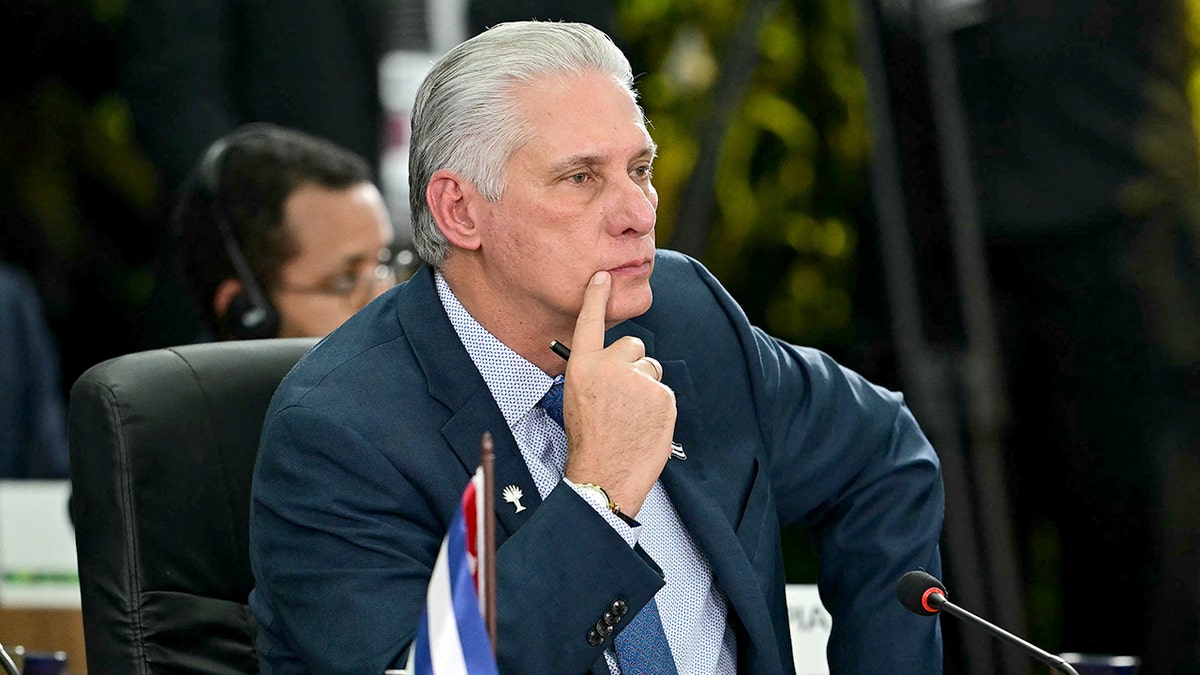
Cuba’s government, meanwhile, has accused the U.S. Of “economic warfare.” In a May 20 address, President Miguel Díaz-Canel reiterated calls for international solidarity, urging nations to “resist imperialist aggression”. Yet with no end to sanctions in sight, Cubans are left to endure.
Key Takeaways
- Root cause: U.S. Sanctions + Venezuela’s oil collapse = fuel shortages → grid failures → blackouts.
- Immediate impact: 90%+ of Cubans experience daily power cuts; charcoal/wood fires replace gas stoves.
- Health risks: WHO-linked respiratory illnesses rising due to indoor smoke exposure.
- Economic toll: Inflation outpaces wages; black-market fuel prices soar.
- Geopolitical deadlock: U.S. Insists sanctions will force regime change; EU pushes for humanitarian exemptions.
- No relief in sight: Cuba’s foreign reserves are depleted, and no major supplier is willing to risk U.S. Penalties.
Where to Find Official Updates
For the latest on Cuba’s energy situation, consult these verified sources:
- CubaDebate (Official Cuban News Portal)
- Unión Eléctrica (Cuba’s State Energy Company)
- OPEC Monthly Oil Market Report (for Venezuela’s production trends)
- UNDP Cuba – Humanitarian Updates
What Happens Next?
The next critical checkpoint is the June 1 U.S. Treasury Department review of secondary sanctions, where officials are expected to decide whether to tighten restrictions further or allow limited exemptions for humanitarian goods. Meanwhile, Cuba’s government has scheduled an emergency cabinet meeting on June 5 to assess domestic responses to the crisis.
In the short term, Cubans will continue adapting—though the long-term outlook remains grim without a diplomatic breakthrough. For now, the question is not if the energy crisis will worsen, but how much further families can endure.
We want to hear from you: Are you or someone you know in Cuba navigating this crisis? Share your story in the comments below, or reach out to us at [email protected]. Your experiences help shape our coverage.
Share this article to raise awareness about Cuba’s energy crisis—and consider donating to CARE International’s Cuba emergency fund, which supports vulnerable communities.
Keep reading
- Bulgarian Political Leaders Debate Presidential Candidates and Rumen Radev’s Influence Ahead of Elections
- Real-Time Trading Quotes for Dorado Gaming vs. Conviction in League of Legends on Jul. 30, 2026 | Predict Winner & Stats
- Govt Accelerates FBR Reforms and Cashless Economy Drive (newsdirectory3.com)