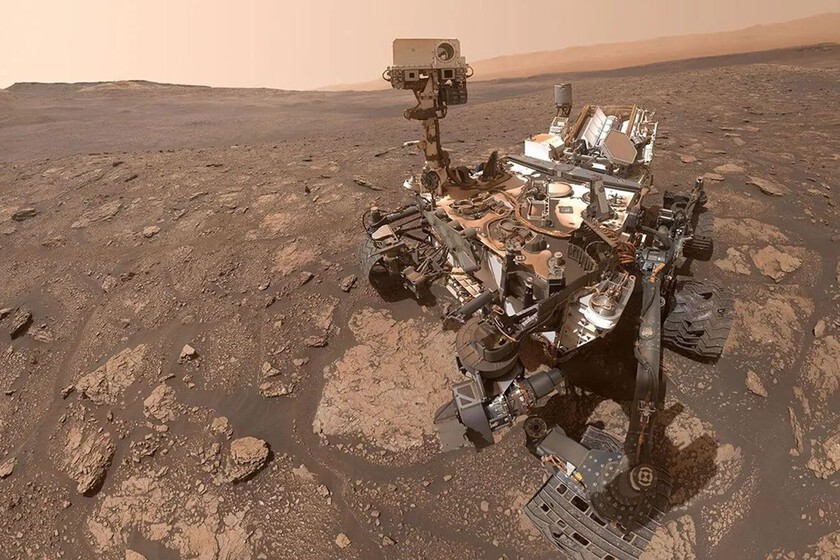
Recent discoveries on Mars have reignited scientific interest in the planet’s ancient potential to support life, though researchers caution against jumping to conclusions. While organic molecules—key building blocks associated with life—have been detected by NASA’s Curiosity rover, their presence alone does not confirm past or present biological activity. These findings contribute to a growing body of evidence suggesting Mars once hosted conditions far more favorable than its current barren state.
The detection of complex organic compounds in Martian rock samples marks a significant milestone in planetary exploration. According to verified reports, Curiosity’s Sample Analysis at Mars (SAM) instrument identified a diverse array of molecules, including benzoic acid, ammonia, and various hydrocarbons, some of which are considered precursors to more complex biochemical structures. These discoveries were made in sedimentary rocks from Gale Crater, a region believed to have once contained a lake environment billions of years ago.
Scientists emphasize that while these molecules are chemically linked to processes associated with life on Earth, they can also form through non-biological means. Abiotic chemical reactions, such as those driven by volcanic activity or interactions between water and minerals, are capable of producing similar organic signatures. As such, researchers stress the importance of distinguishing between potential biosignatures and geochemical artifacts before drawing conclusions about ancient Martian life.
One of the most notable aspects of the recent findings is the detection of organic molecules preserved in rocks estimated to be over 3.5 billion years old. This timeframe corresponds to a period when Mars is thought to have had a thicker atmosphere, liquid water on its surface, and potentially habitable conditions. The longevity of these compounds suggests they were protected within mineral matrices, shielding them from radiation and chemical degradation over vast timescales.
The discovery builds on years of incremental progress by the Curiosity mission, which has been exploring Gale Crater since its landing in 2012. Earlier detections of methane fluctuations and simpler organic compounds laid the groundwork for these more complex identifications. Advances in sample preparation techniques, including derivatization experiments that enhance the detectability of certain molecules, have allowed scientists to identify compounds that were previously obscured or missed.
While the presence of organics is encouraging, it does not equate to evidence of life. NASA scientists repeatedly clarify that the current goal is to understand the context and preservation of these molecules rather than to assert biological origins. Future missions, such as the Mars Sample Return campaign, aim to bring carefully selected samples back to Earth for analysis using laboratory instruments far more sophisticated than those available on robotic explorers.
External validation of these findings comes from multiple peer-reviewed studies and mission updates released through NASA’s official channels. Data from Curiosity’s SAM instrument have been cross-referenced with laboratory simulations and analog studies conducted in Mars-like environments on Earth. These efforts help refine interpretations of what the detected molecules might signify about the planet’s geochemical history.
The implications of these discoveries extend beyond astrobiology into broader questions about planetary evolution. Understanding how organic matter forms, persists, or degrades on Mars provides insights into the processes that shape rocky planets in our solar system and beyond. It also informs the search for life on exoplanets by highlighting the types of signatures that may be detectable—and the challenges of interpreting them accurately.
For now, the scientific consensus remains cautious: the detection of organic molecules is a necessary but not sufficient condition for inferring past life. As one researcher noted in a verified mission update, finding the ingredients for life is not the same as finding life itself. The next steps involve contextual analysis—examining the mineralogy, stratigraphy, and chemical surroundings of the samples—to better assess whether biological processes could have played a role.
Looking ahead, the Mars Sample Return mission, a collaboration between NASA and the European Space Agency (ESA), represents the next major milestone in Martian exploration. Scheduled for launch in the late 2020s, this multi-phase endeavor will retrieve samples collected by the Perseverance rover and return them to Earth for intensive study. Until then, Curiosity continues to analyze Martian terrain, slowly piecing together the planet’s complex environmental history.
As exploration continues, each new finding adds nuance to our understanding of Mars—not as a definitive answer to the question of life beyond Earth, but as a step toward a more complete picture of its past. The search remains ongoing, grounded in rigor, patience, and the relentless pursuit of evidence.
Worth a look