
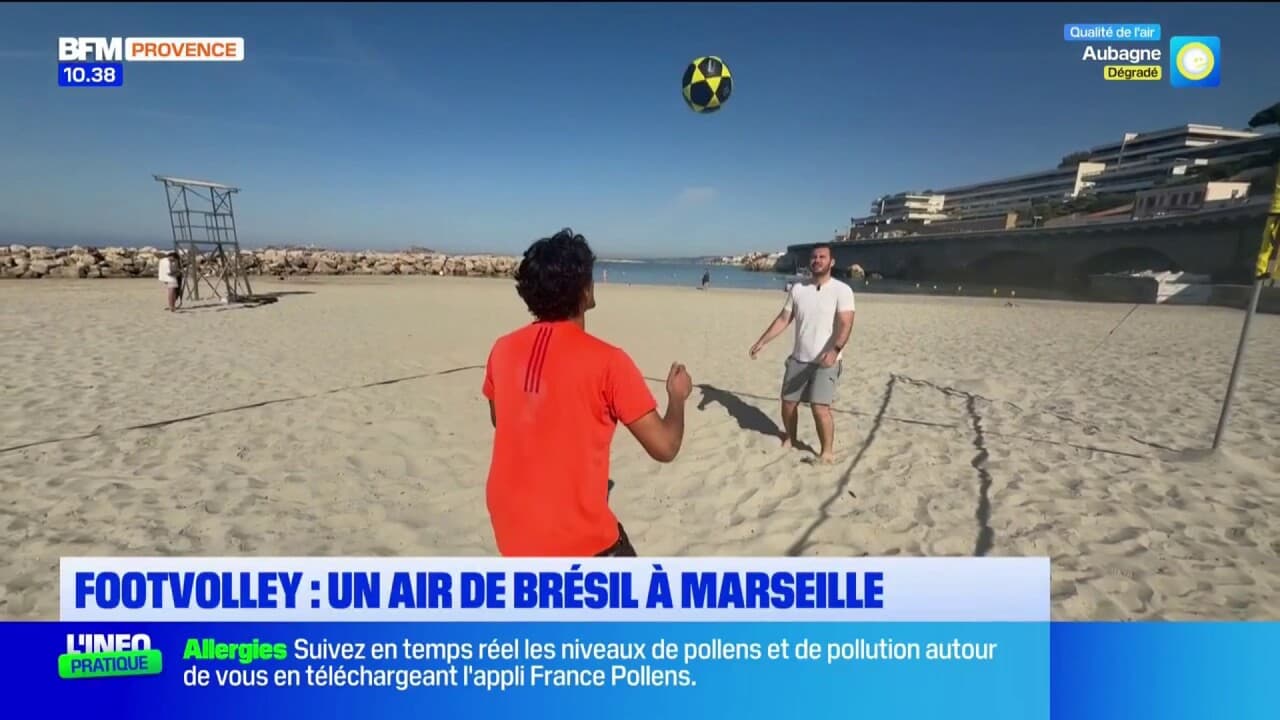
Along the sun-drenched coastline of southern France, a rhythmic blend of Brazilian passion and Mediterranean leisure is taking root. In the region surrounding Marseille, the traditional boundaries of sport are blurring as footvolley—a dynamic hybrid of soccer and beach volleyball—moves from casual seaside pastime to a structured athletic pursuit.
This transition is most visible in the nearby city of Martigues, where local sporting institutions are embracing the discipline to diversify their offerings. The arrival of footvolley represents more than just a new game; it is a cultural intersection where the technical precision of European football meets the acrobatic flair of Brazil’s beach culture, finding a natural home in the warm climate of the Provence-Alpes-Côte d’Azur region.
At the center of this movement is Martigues Sport Athlétisme, a club traditionally rooted in track and field that has expanded its horizons to include footvolley. By integrating this sand-based sport, the club is tapping into a growing desire for non-traditional athletic outlets that emphasize agility, balance, and community engagement over the rigid structures of professional league play.
The Brazilian Spirit on French Sands
Footvolley originated in Brazil during the 1960s, born from the spontaneous games played by soccer players on the beaches of Rio de Janeiro. The rules are deceptively simple: the game is played on a sand court, typically in pairs or trios, with the objective of grounding the ball on the opponent’s side. The critical constraint is the absolute prohibition of using hands or arms; players must rely on their feet, chest, and head to keep the ball airborne.
The sport requires a high degree of technical skill and aerobic endurance. Because the sand absorbs energy, players must exert significantly more effort to jump and move than they would on grass or hard courts. This makes footvolley an exceptional tool for athletic conditioning, blending the cardiovascular demands of soccer with the explosive power and spatial awareness of volleyball.
In France, the sport has found a foothold through the Fédération Française de Footvolley, which works to standardize rules and organize competitions across the country. The federation’s efforts have helped transition the activity from “street” or “beach” play into a recognized sport with a growing network of clubs and sanctioned tournaments.
Martigues Sport Athlétisme: A Model for Diversification
The decision by Martigues Sport Athlétisme to welcome footvolley into its fold highlights a broader trend in French amateur sports: the move toward multi-disciplinary clubs. While the club remains a bastion for athletics, the addition of footvolley allows it to attract a different demographic of athletes—particularly those who love the ball-control aspects of football but seek a lower-impact environment than traditional turf.
Integrating footvolley into an athletics club provides a symbiotic benefit. Track and field athletes gain a way to improve their proprioception and agility through the unpredictable surface of the sand, while footvolley players benefit from the professional coaching and structural support of an established athletic organization. This approach transforms the club from a specialized training center into a broader community hub for physical wellness.
For the residents of Martigues and the wider Marseille area, these facilities offer a rare opportunity to practice a sport that is often limited to vacation destinations. By providing dedicated spaces and organized sessions, the club is effectively “democratizing” the Brazilian beach experience, making it accessible to locals year-round.
Why Marseille and Provence are the Ideal Hubs
The rise of footvolley in the Marseille region is not accidental. Several geographic and cultural factors have converged to make the South of France a prime location for the sport’s expansion:
- Climate and Geography: The Mediterranean climate provides the necessary warmth and sunlight for outdoor sand sports for a significant portion of the year. The proximity to the coast naturally aligns the local lifestyle with beach-centric activities.
- Football Culture: Marseille is one of the most football-obsessed cities in the world. The deep-seated passion for the “beautiful game” provides a ready-made talent pool of players who already possess the foot-eye coordination required for footvolley.
- Cultural Openness: The region has a long history of integrating diverse Mediterranean and international influences, making the adoption of a Brazilian sport feel like a natural extension of the local culture.
the psychological appeal of footvolley lies in its social nature. Unlike the high-pressure environment of competitive 11-a-side football, footvolley is often played in a more relaxed, festive atmosphere. It emphasizes “jogo bonito” (the beautiful game)—the artistry and creativity of the movement—over raw aggression or tactical rigidity.
The Impact on Local Athleticism and Health
Beyond the cultural appeal, footvolley offers specific physiological advantages that appeal to modern athletes. Playing on sand reduces the impact on joints compared to hard surfaces, making it an attractive option for athletes recovering from injuries or those looking to maintain fitness without the wear and tear of asphalt or turf.
The sport also demands a unique type of core stability. Every movement on the sand is unstable, forcing the body to engage stabilizer muscles in the ankles, knees, and core that are often neglected in traditional sports. When managed by a club like Martigues Sport Athlétisme, these benefits are maximized through structured training and proper warm-up protocols.
Comparison: Footvolley vs. Traditional Beach Volleyball
| Feature | Footvolley | Beach Volleyball |
|---|---|---|
| Permitted Body Parts | Feet, Chest, Head (No hands/arms) | Hands, Arms, and rest of body |
| Core Skillset | Ball control, juggling, agility | Setting, spiking, blocking |
| Origin | Brazil (1960s) | USA/Global |
| Primary Goal | Ground the ball in opponent’s court | Ground the ball in opponent’s court |
Looking Ahead: The Future of the Sport in Europe
While still a niche activity compared to soccer or tennis, footvolley is seeing a steady increase in visibility across Europe. The growth is driven largely by social media, where the visually stunning nature of “bicycle kicks” and acrobatic saves on the sand creates viral content that attracts younger generations.
The challenge for the sport moving forward lies in infrastructure. Dedicated sand courts are expensive to build and maintain. However, the model seen in Martigues—where an existing sports club integrates the facility—provides a sustainable blueprint for other cities. As more clubs follow suit, the possibility of more frequent regional tournaments and a more robust competitive circuit becomes a reality.
As footvolley continues to grow, it serves as a reminder of how sport can act as a bridge between cultures. By bringing a piece of Brazil to the shores of Marseille, the community is not just adopting a new game, but embracing a philosophy of joy, athleticism, and inclusivity.
The next milestone for the local scene will be the coordination of inter-club tournaments within the Provence-Alpes-Côte d’Azur region, which are expected to further formalize the competitive landscape and increase the sport’s visibility among the general public.
Do you think footvolley could become a mainstream sport in Europe, or will it remain a coastal specialty? Share your thoughts in the comments below.