
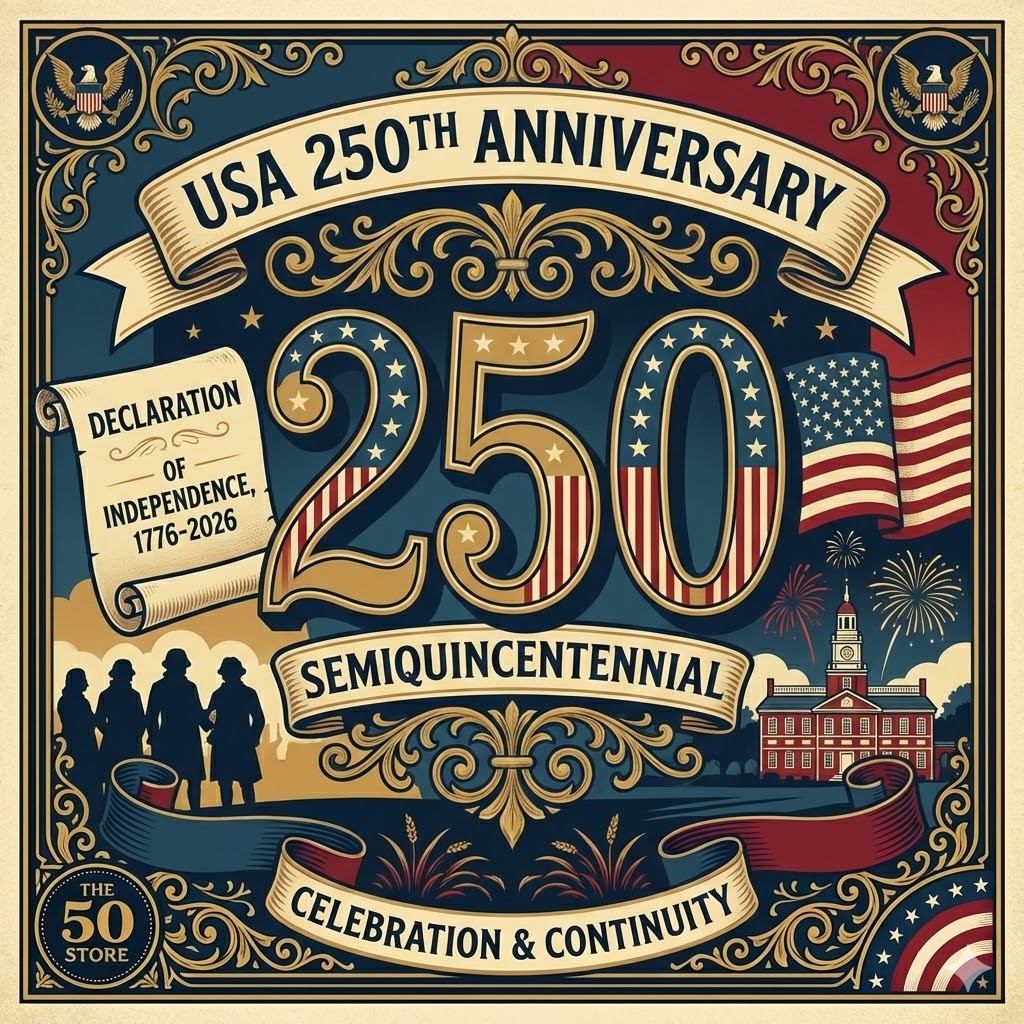
The United States has officially commenced the lead-up to its 250th anniversary, an milestone known as the Semiquincentennial, with national organizers and government officials beginning the coordination of commemorative projects across the country. While recent public remarks have highlighted the significance of the upcoming 2026 celebration, the federal U.S. Semiquincentennial Commission remains the primary body tasked with planning the official observances marking the signing of the Declaration of Independence.
The anniversary, which falls on July 4, 2026, serves as a focal point for national discourse regarding American history and civic identity. As preparations intensify, local and federal agencies are evaluating infrastructure projects, historical preservation efforts, and cultural exhibitions intended to engage the public throughout the calendar year of the anniversary.
National Planning for the 250th Anniversary
Federal efforts to organize the Semiquincentennial are managed by the U.S. Semiquincentennial Commission, established by Congress under the Semiquincentennial Commission Act of 2016. The commission is mandated to provide for the observance and commemoration of the 250th anniversary of the founding of the United States. Its work involves coordinating with state-level commissions, non-profit organizations, and private stakeholders to ensure that the commemoration reaches all 50 states and U.S. territories.
A central component of the planning involves the “America250” initiative, which focuses on three core themes: “Educate,” “Engage,” and “Unite.” According to the commission’s strategic framework, the goal is to create inclusive programming that reflects the diverse narratives of the American experience over the last two and a half centuries. The commission is currently soliciting project proposals that emphasize historical education and community service.
Historical Preservation and Infrastructure
Beyond ceremonial events, the 250th anniversary is driving a wave of interest in the restoration of national landmarks. The Statue of Liberty, which serves as a global symbol of American democratic values, remains a high-priority site for preservation. The National Park Service (NPS) continues to manage the ongoing maintenance of the monument, which was dedicated in 1886, nearly 110 years after the nation’s founding.

The preservation of such sites is often framed as a “living history” project. By preparing these landmarks for the 250th anniversary, the government aims to ensure that physical infrastructure matches the scale of the historical milestone. The National Park Service regularly updates the public on site access and restoration progress, particularly as visitor numbers are expected to surge during the anniversary year.
What the Semiquincentennial Means for Civic Engagement
For many historians and civic leaders, the 250th anniversary is viewed as a moment for reflection on the nation’s founding documents. The Declaration of Independence, signed in 1776, remains the bedrock of the celebration. Educational institutions are currently developing curricula and digital archives to make primary source documents more accessible to the public as the July 2026 date approaches.
The impact of these commemorations extends to the tourism and hospitality sectors, which anticipate increased activity in major hubs such as Philadelphia, Boston, and Washington, D.C. State governments are also launching their own committees to ensure that regional contributions to the American Revolution are highlighted alongside the national narrative.
Key Milestones and Timeline
- 2016: Congress passes the Semiquincentennial Commission Act, formalizing the planning process.
- 2024–2025: Expansion of state-level partnerships and the announcement of national signature projects.
- July 4, 2026: The official 250th anniversary of the signing of the Declaration of Independence.
As the planning phase continues, the commission is expected to release further details regarding signature events in late 2025. Citizens interested in participating in local events or contributing to commemorative projects can monitor updates through the official America250 portal. We invite our readers to share their thoughts on how their communities plan to mark this historic milestone in the comments section below.
Keep reading
- Libertarian Deputy Virginia Gallardo Distributes Toys at Garrahan Hospital Amid Government Conflict
- White House Pressures DOJ to Revive Reflecting Pool Case Against David Hearn
- Trump Media Reports $238m Loss Amid Crypto Declines (archyworldys.com)
- Federal Judge Blocks Trump Mail-In Voting Order Nationwide (world-today-news.com)