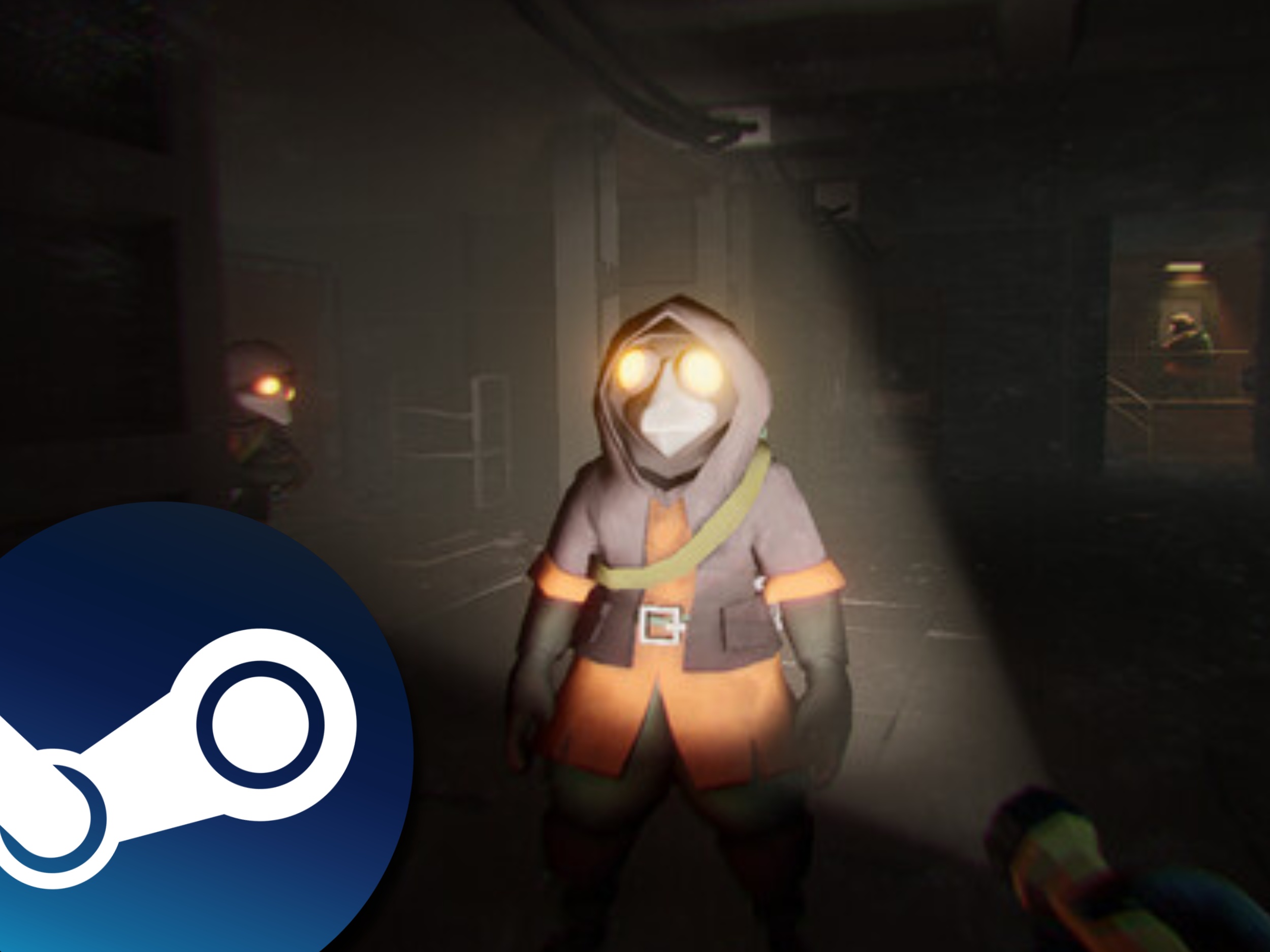
LINE Games has officially unveiled its new cooperative horror title, Quiet, known in Chinese as 噤下來, marking the studio’s latest effort in blending lighthearted aesthetics with tense survival mechanics. Announced on April 24, 2026, the game centers on players taking on the role of stranded alien ducks who must repair their damaged spaceship although evading a menacing grandmother figure patrolling the environment. The reveal, shared through GNN News Network, emphasizes the game’s unique fusion of cute character design and high-stakes stealth gameplay, where even minor actions like speaking or moving objects generate noise that can alert the pursuing antagonist.
According to the official announcement, Quiet supports up to four players in online cooperative mode, encouraging teamwork to overcome challenges that would be difficult to manage solo. Players must scavenge for ship parts scattered across the map, all while managing a noise-based detection system that increases the grandmother’s aggression as sound levels rise. The game’s design promotes communication and coordination, with success depending not only on individual stealth but also on the group’s ability to move large objects together, distract threats and revive fallen teammates during intense chase sequences.
A standout feature highlighted in the reveal is the integration of a physics engine grounded in real-world object properties. This system allows players to experience authentic resistance when pushing or pulling heavy items, such as furniture or machinery, based on their simulated weight and size. LINE Games stated that this mechanic enhances immersion by making environmental interaction feel tangible and consequential, particularly during moments requiring synchronized effort to clear paths or construct makeshift barriers against the pursuing threat.
The developers emphasized that the contrast between the game’s adorable alien duck avatars and the oppressive atmosphere created by the relentless grandmother boss is intentional. This juxtaposition aims to create a distinctive emotional tone—one where charm and tension coexist to produce a memorable cooperative experience. A representative from LINE Games noted that the goal is to deliver “a uniquely engaging blend of accessibility and suspense” through intuitive mechanics like noise management and physics-based interaction, which they believe will facilitate players naturally immerse themselves in the teamwork-driven gameplay.
LINE Games confirmed that a playable demo of Quiet will be released in the near future to gather player feedback before the full launch. The company plans to release the complete version of the game sometime within 2026, though an exact date has not yet been disclosed. This approach reflects a growing trend among developers to use early access phases for refining gameplay balance and technical performance, especially in multiplayer-focused titles where community input can significantly influence final design decisions.
While specific platforms have not been confirmed in the initial announcement, the mention of a PC single-player build in the original GNN report suggests that Windows compatibility is at least under consideration. Further details regarding supported systems, potential console releases, or language options are expected to be shared as the game progresses through its development cycle toward its anticipated 2026 release window.
Understanding the Noise-Based Stealth System in Quiet
The core tension in Quiet revolves around its innovative noise detection mechanic, which transforms routine player actions into potential risks. Every footstep, object interaction, or voice chat transmission contributes to a cumulative noise meter that, when filled, triggers heightened awareness and accelerated pursuit from the grandmother antagonist. This system draws inspiration from similar stealth-focused titles but distinguishes itself by tying audio output directly to cooperative gameplay—meaning that one player’s careless movement can endanger the entire team.

To counter this, the game encourages the use of silent communication tools, such as pre-set gestures or text-based commands, allowing squads to coordinate without raising their noise profile. Strategic timing becomes essential; players must learn to perform noisy actions like repairing equipment or moving large objects during moments when the antagonist is distracted or facing away. This design fosters a high level of situational awareness and rewards teams that develop synchronized routines, turning communication discipline into a core skill rather than just a convenience.
Experts in game design have noted that mechanics like this—where player behavior directly influences AI responsiveness—can significantly increase replay value by creating emergent scenarios. In Quiet, no two playthroughs may unfold identically due to variations in how teams manage noise, allocate roles, and respond to unexpected threats. This unpredictability, combined with the need for constant adaptation, positions the game as a potentially compelling entry in the cooperative horror genre, particularly for groups seeking a blend of humor, strategy, and adrenaline-fueled escapes.
Physics-Driven Interaction and Teamwork Mechanics
Beyond its audio-based tension system, Quiet places strong emphasis on physical interaction as a pillar of its cooperative identity. The game’s physics engine simulates real-world properties such as mass, friction, and inertia, requiring players to account for an object’s weight and size when attempting to move it. Light items like chairs or tools can be handled individually, but larger obstacles—such as sofas, cabinets, or debris blocking escape routes—necessitate coordinated effort from two or more players to shift effectively.
This design choice serves multiple purposes: it prevents solo players from easily bypassing environmental challenges, reinforces the importance of role specialization within teams, and creates natural opportunities for emergent gameplay. For instance, one player might act as a anchor to stabilize a wobbly object while another pulls, or teammates might form a human chain to transport a heavy part across a noisy zone. These interactions are not only functional but also contribute to the game’s sense of shared accomplishment when successfully executed under pressure.
LINE Games has stated that this focus on tangible, physics-based collaboration aims to differentiate Quiet from other cooperative titles that rely more heavily on abstracted or simplified interaction models. By grounding movement and manipulation in believable physical responses, the developers hope to create moments where players feel a genuine sense of weight and consequence—whether they’re barely nudging a shelf to peek around a corner or straining together to flip a heavy table into position as a makeshift barricade.
Development Timeline and Community Engagement Plans
As part of its rollout strategy, LINE Games has committed to releasing a public demo of Quiet before the end of 2026 to collect feedback from early players. This phase will allow the studio to assess gameplay balance, identify technical issues, and refine mechanics such as noise sensitivity scaling and physics responsiveness based on real-world usage. While the exact timing of the demo release has not been specified, the announcement confirms it will precede the full launch, which is still targeted for sometime within the 2026 calendar year.
This iterative approach aligns with industry best practices for multiplayer games, where post-launch patches alone may not suffice to address deep-rooted design flaws in systems as interconnected as Quiet’s noise and physics models. By engaging the community early, LINE Games aims to build trust and ensure that the final product reflects player expectations regarding difficulty, fairness, and fun—especially in a genre where tension and cooperation must be carefully balanced to avoid frustration.
No official statements have been made regarding post-launch content, such as additional maps, new antagonist variants, or cosmetic items for the alien duck characters. Still, the studio’s emphasis on gathering player feedback suggests that any future expansions or updates will likely be shaped by community demand and usage patterns observed during the demo and initial release phases.
For those interested in following the game’s progress, LINE Games has indicated that further updates will be shared through its official channels, though specific platforms or social media handles were not detailed in the initial announcement. Interested players are advised to monitor the company’s website and verified social media accounts for confirmed news regarding demo availability, release dates, and platform specifications.
As Quiet moves closer to its anticipated 2026 release, it represents an intriguing experiment in blending accessible visuals with hardcore cooperative survival mechanics. Its success may hinge on how well it balances whimsy with tension, and whether its innovative use of noise and physics can foster the kind of teamwork that feels both challenging and rewarding.
If you’ve played a demo of Quiet or have thoughts on what makes a cooperative horror game truly work, share your perspective in the comments below. Don’t forget to spread the word by sharing this article with friends who enjoy stealth-based team challenges or innovative indie developments.
Worth a look