
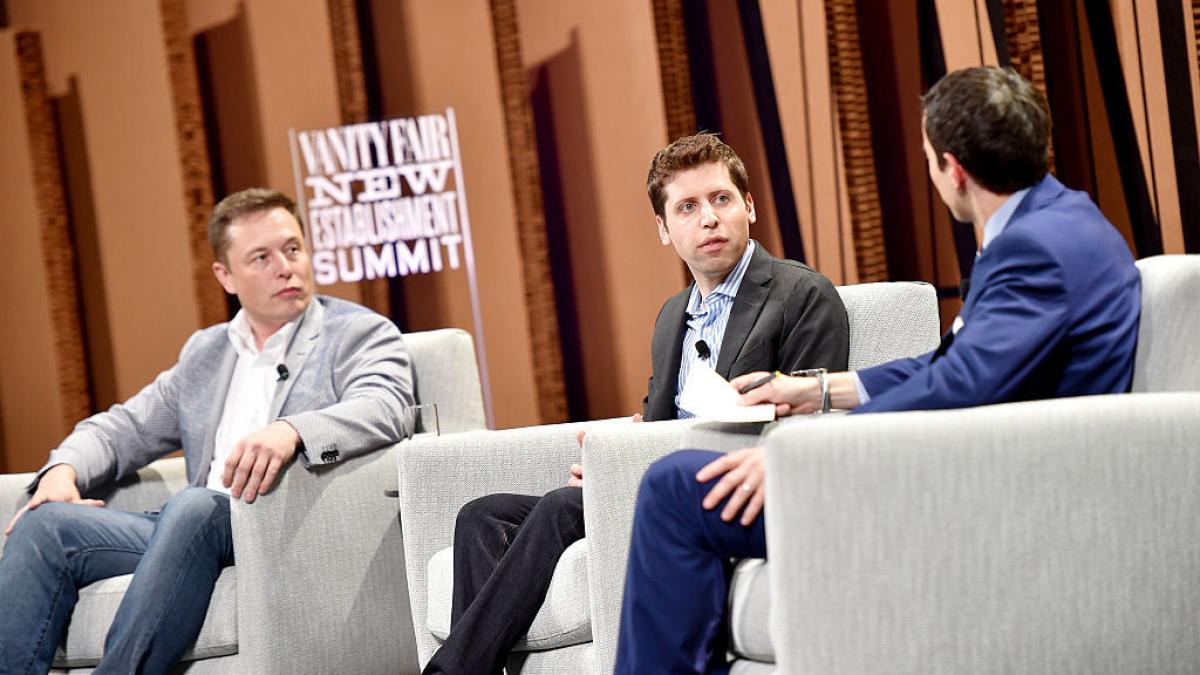
Elon Musk vs. OpenAI: The High-Stakes Legal Battle Over AI’s Future
On April 27, 2026, a courtroom in San Francisco became the stage for one of the most closely watched legal showdowns in the tech industry. Elon Musk, the billionaire entrepreneur behind Tesla and SpaceX, faced off against Sam Altman, CEO of OpenAI, in a lawsuit that has exposed deep rifts over the future of artificial intelligence. The case, which has dragged on for years, centers on allegations that OpenAI betrayed its founding mission—transforming from a nonprofit dedicated to open-source AI into a profit-driven entity with close ties to Microsoft. What began as a philosophical dispute has escalated into a legal battle with billions of dollars at stake, raising fundamental questions about transparency, corporate ethics and the direction of AI development.
Musk’s lawsuit, originally filed in 2023, accused OpenAI and its leadership—including Altman and co-founder Greg Brockman—of breaching contractual and fiduciary duties by prioritizing commercial interests over the public excellent. The case took a dramatic turn just days before the trial, when Musk dropped the most explosive allegations, including claims of fraud. Although the move narrowed the scope of the lawsuit, it left intact Musk’s core argument: that OpenAI’s shift toward a closed, for-profit model violates the principles upon which it was founded. The trial, which began this week, is expected to delve into internal emails, boardroom discussions, and the murky origins of OpenAI’s partnership with Microsoft—a deal that Musk claims was the turning point in the organization’s betrayal of its original mission.
The Origins of OpenAI: A Mission Born in Idealism
OpenAI was founded in December 2015 as a nonprofit research laboratory with a bold, almost utopian vision: to ensure that artificial general intelligence (AGI)—AI systems capable of outperforming humans at most economically valuable work—would benefit all of humanity. Musk, who had long warned about the existential risks of unchecked AI development, was a key backer, pledging $1 billion to the project alongside other tech luminaries like Peter Thiel and Reid Hoffman. The organization’s founding charter explicitly stated that its primary fiduciary duty was to humanity, not to shareholders or corporate partners.
At the time, Musk’s involvement was seen as a vote of confidence in OpenAI’s mission. His public statements emphasized the need for AI to be developed transparently and collaboratively, with safeguards to prevent misuse. In a 2015 interview with The Verge, he described OpenAI as a “counterweight” to the secretive, profit-driven AI research being conducted by companies like Google and Facebook. “The best way to ensure that AI is used for good is to craft it open and accessible,” he said. “If we don’t, we risk creating a future where a small number of corporations control the most powerful technology in history.”
Yet by 2018, Musk’s relationship with OpenAI had soured. He stepped down from the board, citing conflicts of interest with Tesla’s own AI efforts. In private communications later revealed in court filings, Musk expressed frustration with OpenAI’s pace of development and its reluctance to adopt a more aggressive commercial strategy. His departure marked the beginning of a gradual shift in OpenAI’s structure—one that would eventually lead to the legal battle now playing out in San Francisco.
The Microsoft Deal and the Birth of a For-Profit Model
The turning point came in 2019, when OpenAI announced a $1 billion investment from Microsoft—a partnership that would later expand into a multi-year, multi-billion-dollar collaboration. The deal included a provision for Microsoft to become OpenAI’s exclusive cloud provider, as well as plans to commercialize OpenAI’s cutting-edge models, including the GPT series. For Musk, the partnership was a betrayal of OpenAI’s founding principles. In a series of tweets in 2020, he accused OpenAI of becoming a “closed-source, maximum-profit company effectively controlled by Microsoft.”

OpenAI’s leadership, however, defended the move as a necessary step to fund the organization’s ambitious research. In a blog post announcing the partnership, Altman wrote that the deal would allow OpenAI to “scale our efforts to ensure AGI benefits everyone.” He emphasized that Microsoft’s investment would not compromise OpenAI’s independence, stating, “We will continue to operate as a nonprofit, and our mission remains unchanged.”
Yet the reality of OpenAI’s new structure told a different story. In 2020, the organization created a “capped-profit” subsidiary, OpenAI LP, which allowed it to attract outside investment while theoretically limiting returns to investors. Critics, including Musk, argued that the model was a legal fiction—a way to justify commercialization while maintaining the veneer of a nonprofit. The lawsuit alleges that OpenAI’s leadership misled donors, including Musk, about the organization’s true intentions, effectively turning it into a “de facto Microsoft subsidiary.”
The Legal Battle: What’s at Stake?
The trial, which is expected to last several weeks, will hinge on two key questions: Did OpenAI’s leadership breach its fiduciary duties by prioritizing commercial interests over its nonprofit mission? And did the organization’s shift toward a closed, for-profit model violate the terms of its founding agreements?
Musk’s legal team has focused on a series of internal emails and boardroom discussions that they claim show OpenAI’s leadership knew the Microsoft deal would fundamentally alter the organization’s trajectory. In one email cited in court filings, Altman allegedly wrote that the partnership would “change the game” for OpenAI, allowing it to “compete with Google and Facebook on their own terms.” Musk’s lawyers argue that such statements prove OpenAI’s leadership was more interested in commercial success than in fulfilling its original mission.
OpenAI, for its part, has denied any wrongdoing. In a statement released ahead of the trial, the organization defended its hybrid structure as a necessary innovation to fund its research. “Our mission has always been to ensure that AGI benefits all of humanity,” the statement read. “The capped-profit model allows us to attract the capital we need to achieve that goal while remaining true to our principles.”
The financial stakes of the case are enormous. While Musk’s original lawsuit sought damages of up to $180 billion—a figure based on OpenAI’s estimated valuation—the focus has since shifted to non-monetary relief, including a potential court order forcing OpenAI to return to its open-source roots. Legal experts, however, say such an outcome is unlikely. “Courts are generally reluctant to interfere in the internal governance of nonprofits, especially when the organization’s mission is as broad and subjective as OpenAI’s,” said Rebecca Tushnet, a professor of law at Harvard University. “Musk’s real goal may be to force a public reckoning over OpenAI’s direction, rather than to win a legal victory.”
The Broader Implications: AI, Ethics, and the Future of Open Research
Beyond the courtroom drama, the Musk-OpenAI trial has reignited a broader debate about the ethics of AI development. At its core, the case asks whether We see possible to balance the need for massive capital investment with the goal of ensuring AI remains a public good. OpenAI’s defenders argue that the organization’s hybrid model is a pragmatic solution to a difficult problem: How do you fund cutting-edge AI research without succumbing to the pressures of commercialization?
Critics, however, warn that OpenAI’s shift toward a closed, for-profit model sets a dangerous precedent. “If OpenAI can abandon its open-source principles in the name of commercial viability, what’s to stop other AI labs from doing the same?” asked Meredith Whittaker, president of the Signal Foundation and a prominent AI ethics advocate. “This case is about more than just one organization. It’s about whether we can trust the tech industry to self-regulate when it comes to AI.”

The trial has also highlighted the growing tensions between Silicon Valley’s most influential figures. Musk and Altman, once allies in the push for responsible AI, have become bitter rivals, with their public feud spilling over into personal attacks. In a 2023 interview with The New York Times, Musk accused Altman of being a “smooth-talking operator” who had “sold out” OpenAI’s mission. Altman, for his part, has dismissed Musk’s criticisms as sour grapes, telling The Wall Street Journal that “Elon’s vision for AI has always been more about control than about openness.”
What Happens Next?
The trial is expected to continue for at least another month, with testimony from key figures including Altman, Brockman, and former OpenAI board members. The outcome remains uncertain, but legal analysts say the case could have far-reaching implications for the tech industry. If Musk prevails, it could force OpenAI to adopt a more transparent, open-source approach to AI development. If OpenAI wins, it could embolden other AI labs to pursue similar hybrid models, further blurring the line between nonprofit and for-profit research.
For now, the tech world is watching closely. The case has already become a flashpoint in the broader debate over AI governance, with policymakers, researchers, and industry leaders weighing in on the implications. In a statement released by the White House on the eve of the trial, press secretary Karine Jean-Pierre called the case “a critical moment for the future of AI,” adding that “the administration is closely monitoring developments and remains committed to ensuring that AI is developed safely, responsibly, and in the public interest.”
As the trial unfolds, one thing is clear: The battle over OpenAI’s soul is far from over. Whether the outcome will reshape the future of AI—or merely deepen the divisions within Silicon Valley—remains to be seen. For now, the courtroom in San Francisco is the epicenter of a debate that will define the next chapter of the AI revolution.
Key Takeaways
- The Lawsuit: Elon Musk’s lawsuit against OpenAI and Sam Altman alleges that the organization betrayed its founding mission by shifting from a nonprofit, open-source model to a closed, for-profit entity with close ties to Microsoft.
- The Origins: OpenAI was founded in 2015 as a nonprofit with a mission to ensure AGI benefits all of humanity. Musk was a key backer but left the board in 2018 amid disagreements over the organization’s direction.
- The Microsoft Deal: In 2019, OpenAI announced a $1 billion investment from Microsoft, which later expanded into a multi-year partnership. Musk claims the deal transformed OpenAI into a “de facto Microsoft subsidiary.”
- The Legal Stakes: The trial will determine whether OpenAI’s leadership breached its fiduciary duties and whether its shift toward commercialization violated its founding agreements. The outcome could have major implications for AI governance.
- The Broader Debate: The case has reignited discussions about the ethics of AI development, the role of commercial interests in nonprofit research, and the future of open-source AI.
What do you think about the future of AI governance? Should organizations like OpenAI prioritize openness and transparency over commercial success? Share your thoughts in the comments below, and don’t forget to follow World Today Journal for the latest updates on this developing story.