
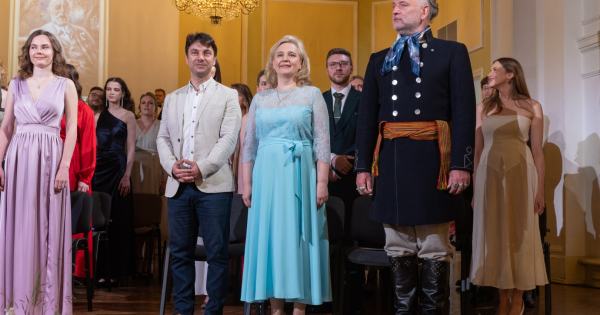
Latvia Celebrates Five-Year Milestone of Professional Doctorate in Arts Program
RIGA — Latvia’s cultural and academic communities are marking a significant achievement this spring: the five-year anniversary of the country’s first professional doctorate program in the arts. Since its launch in 2021, the joint initiative by three of Latvia’s leading arts academies has awarded 25 professional doctorates, known as Artium Doctor (Art. D.), to artists, musicians, designers, and performers from across the country and beyond. The milestone will be celebrated on May 6, 2026, with a conference and gala concert titled Gaismas vilinājums (“The Allure of Light”) at the Jāzeps Vītols Latvian Academy of Music (JVLMA).
The program, a collaboration between JVLMA, the Latvian Academy of Arts (LMA), and the Latvian Academy of Culture (LKA), represents a pioneering effort to bridge artistic practice with academic research. Unlike traditional PhD programs, which focus primarily on theoretical scholarship, Latvia’s professional doctorate in arts emphasizes creative work as a form of research, allowing artists to earn the highest academic degree through their artistic output. This approach aligns with trends in several European countries, where professional doctorates in creative fields are increasingly recognized as a way to elevate the status of artistic research and foster innovation in the arts.
“I am truly proud that in just five years, we have built such a strong, high-quality, and internationally recognized program that makes a valuable contribution to Latvian culture and arts research,” said Diāna Zandberga, director of the professional doctorate program and vice-rector for scientific and creative work at JVLMA. Her remarks, published in a statement from the academies, reflect the program’s ambition to position Latvia as a leader in artistic education and research in the Baltic region and beyond.
A Fresh Model for Artistic Education
The professional doctorate in arts was introduced in Latvia in 2021, following the approval of new regulations by the Latvian government in October 2019. The program was designed to address a gap in the country’s higher education system, where artists seeking advanced academic credentials previously had to pursue traditional PhD programs that often prioritized theoretical research over creative practice. By contrast, the Art. D. Program allows candidates to develop their doctoral work through a combination of artistic projects, performances, exhibitions, or designs, accompanied by a written thesis that contextualizes their creative output within broader artistic, cultural, or historical frameworks.

The program’s structure reflects a growing global movement to recognize artistic practice as a legitimate form of research. In Europe, similar professional doctorates in the arts have been established in countries such as the United Kingdom, Finland, and the Netherlands, where institutions like the University of the Arts London and the University of the Arts Helsinki have long offered practice-based doctoral programs. Latvia’s initiative is notable for its collaborative nature, bringing together three distinct academies to create a unified program that spans disciplines as diverse as music, visual arts, design, theater, film, and contemporary dance.
According to the Latvian Academy of Arts, the program was also designed to enhance the competitiveness of Latvian artists in the international arena. By offering a professional doctorate, Latvia’s arts academies can participate more fully in European higher education networks and collaborate with institutions across the continent to develop joint programs and research initiatives. The program’s international outlook is evident in its student body: of the 53 doctoral candidates currently enrolled, many come from outside Latvia, reflecting the program’s growing reputation among artists and scholars worldwide.
25 Graduates and Counting
In its first five years, the program has awarded 25 professional doctorates, with graduates representing a wide range of artistic disciplines. Among the most prominent names to earn the Art. D. Are conductor Kaspars Ādamsons, flutist Ilze Urbāne, and choreographers Jānis Purviņš and Ramona Galkina. Visual artists such as painters Ansis Rozentāls, Laura Veļa, and Sandra Strēle, as well as designer Martins Vizbulis and fashion artists Una Pūpola, Laima Jurča, and Agnese Narņicka, have also completed the program. Other graduates include theater director and playwright Ivo Briedis, metal artist Nils Jumītis, and sculptor Egons Peršēvics.

The diversity of the program’s graduates underscores its interdisciplinary nature. For example, Kaspars Ādamsons, who earned his doctorate in conducting, has been recognized internationally for his work with orchestras in Latvia and abroad. Similarly, Jānis Purviņš, a choreographer, has gained acclaim for his innovative approaches to contemporary dance, while Una Pūpola’s fashion designs have been featured in exhibitions across Europe. The program’s emphasis on creative practice as research has allowed these artists to push the boundaries of their fields while contributing to the academic discourse around artistic innovation.
“The professional doctorate in arts is not just about creating art; it’s about reflecting on the creative process and situating one’s work within a broader cultural and intellectual context,” said a spokesperson for the Latvian Academy of Arts. “Our graduates are not only accomplished artists but also thinkers who are shaping the future of their disciplines.”
Strengthening Latvia’s Cultural Landscape
The introduction of the professional doctorate in arts has had a ripple effect across Latvia’s cultural sector. For one, it has elevated the status of artistic research within the country’s academic institutions, encouraging more artists to pursue advanced degrees and engage with scholarly communities. The program has also fostered collaboration between Latvia’s arts academies, which had previously operated largely independently. By working together, JVLMA, LMA, and LKA have been able to pool resources, share expertise, and create a more robust educational environment for doctoral candidates.
In November 2025, the Latvian government took another step to strengthen the program by approving new regulations governing the qualifications of doctoral supervisors and the composition of examination committees. The new rules, developed in collaboration with the academies, aim to ensure that doctoral candidates receive high-quality guidance from internationally recognized experts in their fields. The regulations also standardize the evaluation process for doctoral work, ensuring that both the artistic and theoretical components of each project are assessed with rigor and consistency.
“These regulations are a testament to the program’s maturity and its growing importance within Latvia’s higher education system,” said a representative from the Latvian Ministry of Culture. “By setting clear standards for supervision and evaluation, we are ensuring that the Art. D. Remains a mark of excellence and that our graduates are well-prepared to make meaningful contributions to the arts.”
The program’s impact extends beyond academia. Many of its graduates have gone on to take leadership roles in Latvia’s cultural institutions, including theaters, museums, and arts organizations. Others have used their doctorates to launch international careers, participating in residencies, exhibitions, and performances abroad. The program has also attracted attention from funding bodies, including the European Union, which has supported several of its initiatives through grants and collaborative projects.
A Celebration of Artistic Achievement
The upcoming celebration on May 6, 2026, will showcase the program’s achievements through a combination of academic presentations and artistic performances. The conference portion of the event will feature discussions on the role of artistic research in contemporary culture, as well as presentations by current doctoral candidates and recent graduates. The highlight of the day will be the gala concert Gaismas vilinājums, which will feature performances by graduates of the program, including musicians, dancers, and theater artists.

The event is open to the public and is expected to draw attendees from Latvia’s academic, artistic, and political communities. It will also serve as an opportunity to reflect on the program’s future, including plans to expand its reach and deepen its international collaborations. Organizers hope that the celebration will not only honor the program’s first five years but also inspire a new generation of artists to pursue advanced degrees in the arts.
“This program is a game-changer for Latvia’s arts community,” said Ilona Meija, rector of JVLMA. “It has given our artists the tools they need to excel in their fields while also contributing to the global conversation about the role of art in society. We are excited to see what the next five years will bring.”
What’s Next for Latvia’s Artistic Doctorate Program?
As the program enters its sixth year, its leaders are focused on several key priorities. One is increasing the program’s international visibility, particularly within European higher education networks. The academies are also exploring opportunities to expand the program’s disciplinary scope, potentially adding new fields such as digital arts and interdisciplinary performance. There are plans to strengthen ties with industry partners, including theaters, galleries, and design firms, to provide doctoral candidates with more opportunities to apply their research in real-world settings.
Another priority is attracting more international students to the program. While the current cohort includes candidates from outside Latvia, the academies hope to increase this number by offering more courses in English and developing joint programs with institutions in other countries. Such collaborations could include exchange programs, joint research projects, and dual-degree initiatives, all of which would enhance the program’s global profile.
For now, the focus remains on celebrating the program’s achievements and building on its success. The five-year milestone is a testament to the hard work of the program’s faculty, students, and administrators, as well as the support of the Latvian government and the broader arts community. As Latvia continues to invest in its cultural sector, the professional doctorate in arts is poised to play a central role in shaping the future of artistic education and research in the country.
Key Takeaways
- Five-Year Milestone: Latvia’s professional doctorate in arts program has awarded 25 Art. D. Degrees since its launch in 2021, marking a significant achievement in the country’s higher education landscape.
- Interdisciplinary Collaboration: The program is a joint initiative by the Jāzeps Vītols Latvian Academy of Music, the Latvian Academy of Arts, and the Latvian Academy of Culture, spanning disciplines from music and visual arts to theater and design.
- Creative Practice as Research: Unlike traditional PhD programs, the Art. D. Emphasizes artistic output as a form of research, allowing candidates to earn their doctorates through creative projects, performances, or exhibitions.
- International Recognition: The program has attracted students from outside Latvia and has positioned the country’s arts academies as leaders in artistic research within Europe.
- Government Support: The Latvian government has played a key role in the program’s development, approving regulations to standardize supervision and evaluation processes and ensure the program’s long-term success.
- Celebration and Future Plans: The program’s five-year anniversary will be celebrated on May 6, 2026, with a conference and gala concert. Future plans include expanding the program’s international reach and disciplinary scope.
The next major event for the program is the Gaismas vilinājums conference and concert on May 6, 2026, at the Jāzeps Vītols Latvian Academy of Music in Riga. For more information about the program and its graduates, visit the Latvian Academy of Arts website.
What do you think about the role of artistic research in higher education? Share your thoughts in the comments below and join the conversation on social media using the hashtag #ArtisticResearch.