The Euro is facing renewed pressure as geopolitical tensions in the Middle East continue to escalate, coupled with growing concerns about persistent inflation and a potential slowdown in economic growth. A sharp decline in German economic sentiment, as indicated by the latest ZEW Economic Sentiment Index, has further dampened investor confidence, pushing the EUR/USD exchange rate lower. The situation is particularly challenging for central banks grappling with the delicate balance between controlling inflation and supporting economic activity.
The conflict in Iran and the broader Middle East region is a primary driver of market volatility. Iran’s blockade of the Strait of Hormuz, initiated on February 28, 2026, in response to U.S. And Israeli strikes, is significantly disrupting global oil supplies. This critical waterway is responsible for the transit of approximately 20% of the world’s oil and a substantial portion of liquefied natural gas. The potential for a prolonged disruption has fueled fears of a substantial increase in energy prices, exacerbating inflationary pressures worldwide. According to analysis from Pictet AM, a 10% increase in oil prices could lead to a 23 basis point increase in the U.S. Consumer Price Index.
ZEW Index Signals Worsening Economic Outlook
Adding to the concerns, the ZEW Economic Sentiment Index for Germany unexpectedly plummeted in March 2026, falling to -0.5, a significant drop from the previous reading of 58.3. This decline indicates a sharp deterioration in expectations for the German economy, Europe’s largest. The index’s fall was far steeper than anticipated by consensus forecasts, which predicted a decrease to 39 points. Professor Achim Wambach, president of the ZEW, attributed the decline to the escalating tensions in the Middle East, which are driving up energy prices and intensifying inflationary pressures.
The weakening German economy is particularly concerning given its importance to the Eurozone as a whole. The surge in energy costs and potential disruptions to supply chains pose a significant risk to the region’s economic recovery. This situation complicates the task for the European Central Bank (ECB), which is already facing pressure to address rising inflation while avoiding a recession. ECB President Christine Lagarde has stated the bank will “do whatever is necessary” to control inflation, echoing concerns from 2022, and 2023.
Central Bank Dilemma: Inflation vs. Growth
The Federal Reserve (Fed) and the Bank of England (BoE) are likewise facing similar challenges. The combination of rising energy prices and slowing economic growth creates a demanding trade-off for policymakers. Raising interest rates to combat inflation could further stifle economic activity, while maintaining low rates could allow inflation to become entrenched. Romane Ballin, a portfolio manager at Auris Gestion, suggests that central banks will likely proceed with caution this week, avoiding any hasty decisions until the geopolitical and economic situation becomes clearer.
The Fed’s Federal Open Market Committee (FOMC) is scheduled to conclude its meeting tomorrow, while the ECB’s Governing Council will meet on Thursday. Markets will be closely scrutinizing the statements released by these central banks for any clues about their future policy intentions. Specifically, investors will be looking for indications of how policymakers are assessing the risks of inflation and stagflation – a combination of high inflation and slow economic growth. The Fed’s meeting will also include an update to its economic projections for 2026, taking into account the current geopolitical tensions.
Escalating Conflict and Oil Supply Concerns
The situation in the Middle East remains highly volatile. Recent U.S. Strikes against Iranian targets, including the island of Kharg – a critical hub for Iranian oil exports, handling approximately 90% of the country’s crude oil shipments – have further heightened tensions. While former U.S. President Donald Trump has indicated a reluctance to directly target Iranian oil infrastructure, he has reserved the right to reconsider if Iran interferes with shipping through the Strait of Hormuz. This uncertainty continues to weigh on oil prices and contribute to market anxiety.
The ongoing disruption to oil supplies is having a particularly significant impact on Europe, which relied on the Middle East for approximately 30% of its diesel and gasoil imports before the outbreak of the conflict. This dependence makes the region particularly vulnerable to price shocks and supply disruptions. The Euro’s weakness reflects these concerns, as investors seek safe-haven assets like the U.S. Dollar.
EUR/USD Technical Outlook
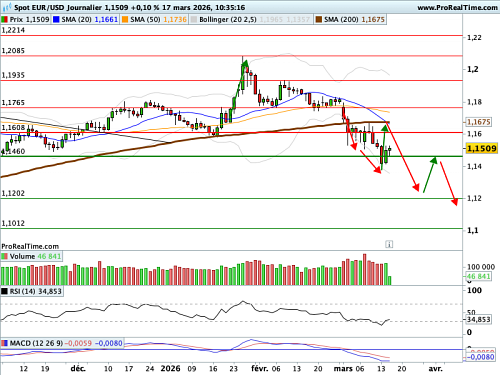
As of midday trading today, March 18, 2026, the EUR/USD exchange rate was trading around 1.1510. Technically, the pair has broken down from a period of consolidation, breaching a key 100-day moving average. This breakdown signals a negative outlook, with potential for further declines. Analysts suggest a possible target of 1.1013, with a stop-loss order recommended at 1.1621 to limit potential losses. The expected profitability of this strategy is 497 pips, with a risk of 111 pips.
The coming days will be crucial for the Euro. The outcomes of the Fed and ECB meetings, coupled with any further developments in the Middle East conflict, will likely determine the currency’s trajectory. Investors will be closely watching for any signs of de-escalation in the region, as well as any indications of a shift in central bank policy. The interplay between geopolitical risks, inflation concerns, and economic growth prospects will continue to shape the outlook for the EUR/USD exchange rate.
The next key event to watch is the release of U.S. Inflation data next month, which will provide further insight into the effectiveness of the Fed’s monetary policy. Stay tuned to World Today Journal for ongoing coverage of these developments and their impact on global markets.
What are your thoughts on the future of the Euro? Share your insights and analysis in the comments below.
Worth a look
- Tesla Sees Weak Sales in China in H1, but Export Volumes Rise
- Uhm Jung-hwa Reveals 20-Hour Fasting and Low-Sugar Diet Secrets for 56-Year-Old Figure
- Dukono Volcano Volcanic Ash Advisory: Latest 7,000 ft Ash Cloud Alert (archyworldys.com)
- Skin Cancer Warning: UV Risks in Ireland Rival Tropical Destinations (archynewsy.com)