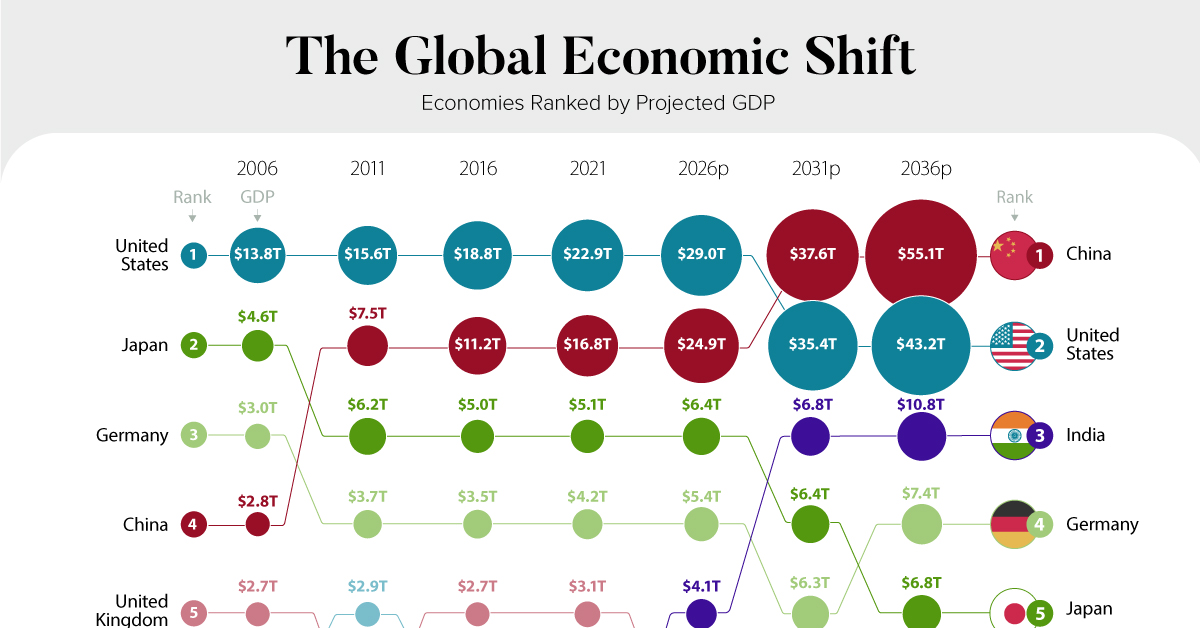
For centuries, Europe was the undisputed engine of the global economy. From the smoke-stacks of the Industrial Revolution to the far-reaching trade networks of the imperial era, the continent defined the parameters of wealth, production, and geopolitical power. But, the current economic landscape presents a starkly different reality, with France now emerging as a primary focal point of fiscal volatility and political deadlock.
The conversation surrounding France has shifted from one of cultural and diplomatic leadership to one of urgent financial survival. Whereas the mention of the International Monetary Fund (IMF) in relation to a G7 powerhouse often sounds like an alarmist hyperbole, the underlying fiscal metrics suggest a nation struggling to reconcile its social commitments with its mathematical realities. The anxiety is not merely about a single budget cycle; it is about a systemic failure to adapt to a new global economic order.
As Chief Editor of Business at World Today Journal, I have watched the trajectory of European markets for nearly two decades. The current instability in France is not an isolated incident but a symptom of a broader European malaise—a combination of energy insecurity, lagging technological innovation, and a rigid political structure that struggles to implement necessary structural reforms. When the second-largest economy in the Eurozone falters, the tremors are felt across the entire bloc.
The French Fiscal Precipice: Deficits and Deadlock
France is currently grappling with a budget deficit that has alarmed both domestic critics and international monitors. The central tension lies in the gap between the French state’s expansive social spending and its diminishing capacity to fund those services without incurring unsustainable debt. In 2024, France’s budget deficit was estimated to be significantly above the European Union’s 3% limit, with some reports placing the figure near 6% of GDP Eurostat.
This fiscal slippage has placed France in the crosshairs of the European Commission. Under the Stability and Growth Pact, EU member states are required to keep their deficits below 3% of GDP to ensure the stability of the common currency. France’s failure to meet these targets has led to an “excessive deficit procedure,” a formal warning that mandates the government to implement corrective measures to bring spending back in line.
The crisis is exacerbated by a paralyzed political environment. Following the snap elections of 2024, France has faced a fragmented parliament, making it nearly impossible for the government to pass a cohesive budget. The struggle to implement spending cuts or tax increases has created a vacuum of leadership, leaving the markets to speculate on how—or if—France will stabilize its finances. This political deadlock is what fuels the discourse regarding external intervention or the need for IMF-style austerity measures, as the internal mechanisms for correction appear broken.
The ‘IMF Shadow’ and Market Sentiment
The suggestion that France might need IMF assistance is less about an immediate request for a loan and more about a symbolic warning. For a country that helps fund the IMF, the mere mention of such a scenario indicates a profound loss of confidence in the state’s ability to manage its own house. The risk is not necessarily a sudden bankruptcy, but a “slow-motion crisis” where borrowing costs rise, forcing the government to spend more on interest payments and even less on public investment.
Investors closely monitor the “spread”—the difference in yield between French government bonds (OATs) and the safer German Bunds. When this spread widens, it signals that markets perceive higher risk in holding French debt. While France has not yet reached the crisis levels seen during the Greek debt crisis of the 2010s, the trend is worrying. The lack of a clear political path to fiscal consolidation makes French assets more volatile, increasing the cost of capital for French businesses and the state alike.
The danger of this “IMF shadow” is that it can turn into a self-fulfilling prophecy. As rating agencies like S&P Global and Moody’s scrutinize France’s ability to reduce its debt-to-GDP ratio, any potential downgrade can trigger a sell-off in bonds, further straining the budget and making the exceptionally austerity measures the government fears even more inevitable.
A Broader European Malaise: The Competitiveness Gap
France’s struggle is a mirror reflecting the wider decline of European economic competitiveness. For decades, Europe relied on a model of high social protections and regulated markets, which provided stability but often stifled the aggressive innovation seen in the United States and China. The continent is now facing a “competitiveness crisis” that transcends borders.
This systemic decline was highlighted in the 2024 report by former European Central Bank President Mario Draghi. The Draghi report warned that Europe is falling behind in the global race for AI, green technology, and semiconductor production. He argued that without a massive increase in investment—estimated at roughly €800 billion per year—Europe risks becoming an economic museum rather than a global player European Commission.
Several factors have contributed to this erosion of power:
- Energy Vulnerability: The loss of cheap Russian gas following the invasion of Ukraine has permanently raised energy costs for European industry, making energy-intensive manufacturing in France and Germany less competitive globally.
- The Innovation Gap: While Europe excels in luxury goods and traditional automotive engineering, it has largely missed the platform economy wave, with very few “sizeable tech” giants compared to the US or China.
- Demographic Drag: An aging population is shrinking the workforce and increasing the burden on healthcare and pension systems, creating a structural deficit that is difficult to solve through simple budget cuts.
What This Means for the Global Economy
The instability in France is not just a French problem; it is a Eurozone problem. Because the Euro is a shared currency, the fiscal health of its largest members is inextricably linked. If France were to face a genuine sovereign debt crisis, the contagion could quickly spread to other highly indebted nations like Italy, potentially destabilizing the entire currency union.
For the global investor, this represents a shift in risk profiles. The “safe haven” status of European government bonds is being questioned. As Europe struggles with internal instability, its ability to project economic influence through trade agreements and diplomatic pressure is diminished. We are witnessing a transition from a multipolar world where Europe was a primary pillar to one where the center of gravity has shifted decisively toward the Indo-Pacific.
The social impact within France is equally significant. The tension between the need for austerity to satisfy EU rules and the public’s demand for maintained social services has led to widespread unrest. This creates a vicious cycle: economic instability leads to political polarization, which in turn prevents the very reforms needed to fix the economy.
Comparative Outlook: Europe vs. Global Peers
| Metric | European Union (Avg) | United States | China |
|---|---|---|---|
| GDP Growth | Stagnant/Low | Moderate/Resilient | Slowing but High |
| Tech Innovation | Lagging in AI/Cloud | Market Leader | Leader in Hardware/EV |
| Energy Cost | High/Volatile | Low/Self-sufficient | Moderate/Import-reliant |
| Fiscal Flexibility | Constrained by EU Rules | High (Debt-financed) | State-led Investment |
The Path Forward: Reform or Decline?
To avoid the “shocking” scenarios currently being discussed, France and the broader EU must move beyond short-term political firefighting. The solution requires a dual approach: immediate fiscal discipline to regain market trust and long-term structural reform to restore competitiveness.

Immediate steps would include a credible budget plan that reduces the deficit without triggering a total collapse of public services—a delicate balancing act that the current French government has yet to master. Long-term, Europe must integrate its capital markets to allow for the massive investments suggested in the Draghi report. This means making it easier for companies to raise capital across borders and reducing the regulatory friction that currently hampers European startups.
If France can stabilize its finances and lead a renewed push for European competitiveness, it could serve as a blueprint for the rest of the continent. If it fails, it may become a cautionary tale of how a former superpower can be undone by the inability to adapt its social contract to the realities of the 21st century.
Next Milestone: Markets and analysts are now focusing on the next French budget submission and the subsequent review by the European Commission, which will determine if further sanctions or more stringent oversight will be imposed on Paris.
Do you believe Europe can reclaim its economic dominance, or is the shift toward the East and West permanent? Share your thoughts in the comments below or share this analysis with your network.
Keep reading