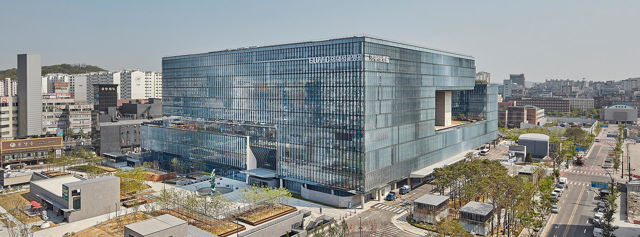
The landscape of oncology is shifting away from the traditional model of sequential consultations—where a patient moves from a surgeon to an oncologist and then to a radiologist in isolated appointments—toward a more integrated, multidisciplinary approach. In South Korea, a global leader in gastrointestinal (GI) cancer treatment, this evolution is epitomized by the Ewha Womans University Medical Center Gastric and Colorectal Center. By consolidating expertise into a collaborative framework, the center aims to reduce the time between diagnosis and treatment while enhancing the precision of personalized care plans.
For patients facing a diagnosis of gastric or colorectal cancer, the psychological and physical toll is often compounded by the complexity of the healthcare system. The Gastric and Colorectal Cancer Collaborative Center at Ewha Womans University Medical Center (EWUMC) addresses this by implementing a “one-stop” philosophy. This system integrates diagnostic imaging, pathology, and surgical consultation into a streamlined pathway, ensuring that the patient’s journey is guided by a consensus of experts rather than a series of disparate opinions.
As a physician and health journalist, I have observed that the efficacy of cancer treatment is often determined not just by the tool used—be it a scalpel or a chemotherapy drug—but by the speed and coordination of the clinical decision-making process. The collaborative model employed by EWUMC is designed to minimize diagnostic delays, which is critical in the early stages of GI cancers where surgical intervention can lead to curative outcomes.
The Multidisciplinary Team (MDT) Approach to GI Oncology
At the heart of the Gastric and Colorectal Cancer Collaborative Center is the Multidisciplinary Team (MDT). Unlike standard care, where a primary physician may consult others as needed, the MDT approach involves a scheduled, collective review of each patient’s case. This team typically includes gastrointestinal surgeons, medical oncologists, radiation oncologists, radiologists, and pathologists.
The primary objective of this collaboration is to determine the optimal sequence of treatment. For instance, in certain advanced gastric cancer cases, “neoadjuvant therapy” (chemotherapy or radiation administered before surgery) may be used to shrink a tumor, making the subsequent surgical resection more effective and less invasive. Decisions regarding these complexities are made through a consensus-based model, ensuring that the treatment plan is tailored to the patient’s specific tumor biology and overall health status.
This integrated system is distributed across the medical center’s two primary hubs. Ewha Womans University maintains a prestigious medical infrastructure that balances the long-standing clinical experience of Ewha Mokdong Hospital with the state-of-the-art, smart-hospital facilities of Ewha Seoul Hospital. Together, they provide a comprehensive continuum of care from early screening to post-operative rehabilitation.
Advancements in Minimally Invasive and Robotic Surgery
A defining feature of the center’s surgical capability is the emphasis on minimally invasive techniques. The transition from open surgery to laparoscopic and robotic-assisted surgery has significantly altered the recovery trajectory for gastric and colorectal cancer patients. By utilizing small incisions and high-definition 3D visualization, surgeons can perform complex dissections with greater precision and less trauma to surrounding tissues.
Robotic surgery, in particular, offers a level of dexterity and stability that exceeds human hand capabilities, which is especially advantageous in the narrow confines of the pelvic cavity during colorectal resections. The benefits for the patient are tangible: reduced intraoperative blood loss, a lower risk of surgical site infections, and a faster return to normal bowel function and daily activities.
The center emphasizes “precision surgery,” where the goal is not only the complete removal of the malignancy but also the preservation of as much healthy tissue and nerve function as possible. This focus on quality-of-life outcomes is a cornerstone of the center’s philosophy, recognizing that survivorship extends beyond the absence of disease to include the restoration of physical and emotional well-being.
The Critical Role of Early Detection and Endoscopic Intervention
While surgical excellence is vital, the center’s broader mission focuses heavily on the prevention and early detection of GI cancers. South Korea has some of the highest rates of gastric cancer globally, making routine screening a public health priority. The center utilizes advanced endoscopic technology to identify precancerous lesions and early-stage carcinomas that are often invisible on standard imaging.
One of the most significant contributions of the center is the application of Endoscopic Submucosal Dissection (ESD). This technique allows specialists to remove early-stage gastric or colorectal tumors through the endoscope without the need for an external incision. When performed successfully, ESD can be curative for early-stage cancers, sparing the patient from the morbidity associated with a major organ resection.
The synergy between the endoscopic specialists and the surgical team ensures that if a lesion is found to be too deep for ESD, the patient is transitioned seamlessly to a surgical pathway. This internal coordination prevents the “referral gap” that often occurs when patients must move between different clinics or hospitals for different stages of their care.
Comparative Overview of Care Pathways
| Feature | Traditional Care Model | EWUMC Collaborative Model |
|---|---|---|
| Decision Making | Sequential (one doctor after another) | Simultaneous (Multidisciplinary Team) |
| Patient Experience | Multiple appointments/locations | Integrated “one-stop” pathway |
| Treatment Timing | Potential delays between specialists | Accelerated transition to therapy |
| Surgical Focus | Standard resection | Robotic and minimally invasive precision |
Patient-Centered Support and Survivorship
Treatment for gastric and colorectal cancer does not end with the final chemotherapy session or the removal of surgical staples. The center integrates nutritional counseling and psychological support into its core offerings. GI cancers often lead to significant changes in diet and absorption (such as dumping syndrome after a gastrectomy), which can lead to malnutrition if not managed proactively.

The collaborative center employs specialized dietitians who work alongside the medical team to create personalized nutrition plans. This ensures that patients maintain the strength necessary to complete their treatments and recover more quickly. The center provides structured follow-up schedules to monitor for recurrence, utilizing a combination of blood markers, imaging, and endoscopic surveillance.
For international patients or those navigating the complex Korean healthcare system, the center provides clear points of contact. Ewha Mokdong Hospital can be reached via its representative number at 1666-5000, while Ewha Seoul Hospital operates through 1522-7000, facilitating streamlined access to appointments and medical records.
Key Takeaways for Patients and Caregivers
- Integrated Care: The center uses a Multidisciplinary Team (MDT) to ensure that surgeons, oncologists, and radiologists agree on the best treatment plan before it begins.
- Technological Edge: High utilization of robotic and laparoscopic surgery reduces recovery time and minimizes scarring compared to traditional open surgery.
- Early Intervention: Advanced endoscopic techniques like ESD can treat early-stage cancers without the need for major surgery.
- Holistic Recovery: Support extends beyond surgery to include specialized nutritional guidance and long-term survivorship monitoring.
The integration of high-tech surgical tools with a high-touch collaborative human framework is what defines modern oncology. By breaking down the silos between medical specialties, the Ewha Womans University Medical Center Gastric and Colorectal Center provides a blueprint for how complex cancers should be managed in the 21st century—with precision, speed, and a relentless focus on the patient’s overall quality of life.
Patients seeking further information or those due for routine GI screening are encouraged to contact the medical center directly to schedule a comprehensive evaluation. As medical protocols evolve, the center continues to update its guidelines in accordance with international oncology standards.
Do you have questions about the benefits of robotic surgery or the importance of GI screening? Share your thoughts in the comments below or share this article with someone who may benefit from integrated cancer care.