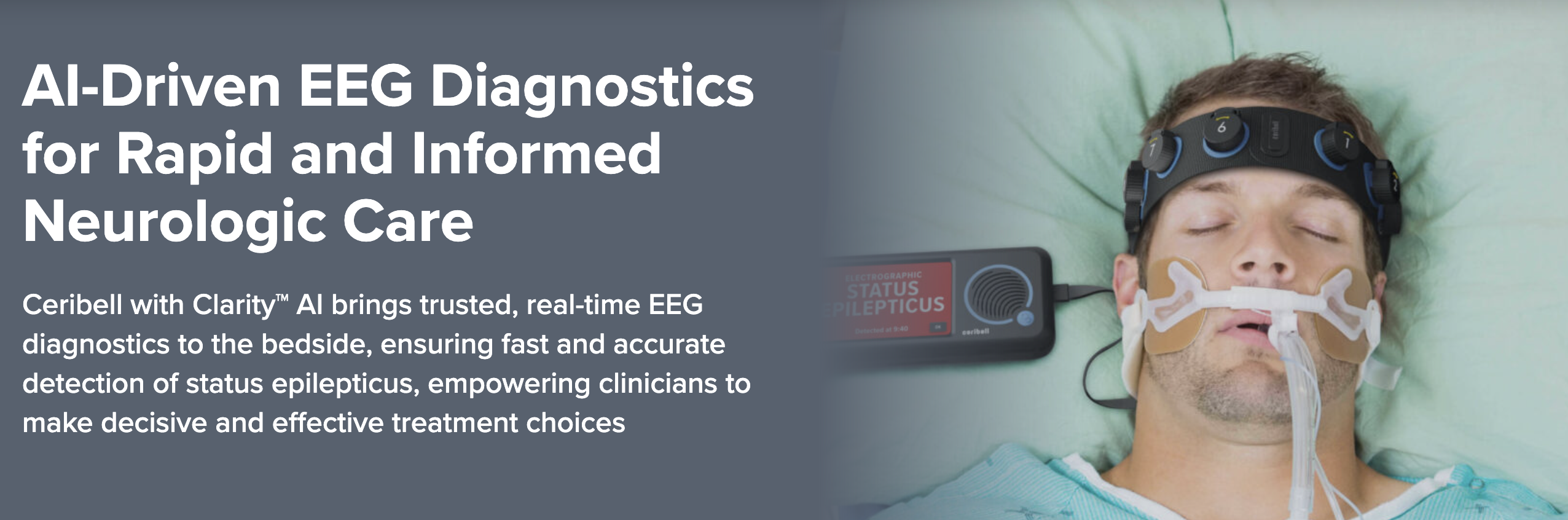
Revolutionizing Seizure Detection: FDA Clears Ceribell’s Clarity® Algorithm for All Ages – From Newborns to Adults
Are you a healthcare professional grappling with the challenges of accurately and rapidly diagnosing seizures, particularly in vulnerable populations like newborns? Or perhaps a parent seeking to understand the latest advancements in seizure detection technology? The landscape of neurological monitoring has just been dramatically altered. Ceribell, Inc. has announced a landmark FDA 510(k) clearance for its next-generation Clarity® algorithm, marking a pivotal moment in point-of-care electroencephalography (EEG). This isn’t just an incremental improvement; it’s a paradigm shift, offering the first and only AI-powered EEG technology capable of detecting electrographic seizures across the entire age spectrum – from premature infants to adults.
Keywords: seizure detection, neonatal seizures, point-of-care EEG, continuous EEG monitoring, electrographic seizures, AI in healthcare, neonatal intensive care
The Silent Epidemic of Undetected neonatal Seizures
For years, the diagnosis of seizures in newborns has been a notable clinical challenge. Neonatal seizures, the most common neurological emergency in newborns, often manifest subtly – or not at all visibly. Alarmingly, research indicates that as many as 90% of neonatal seizures go undetected without continuous EEG monitoring. [1] This underdiagnosis isn’t merely a statistical concern; it has profound implications for patient outcomes.
Why is this happening? Several factors contribute to this diagnostic gap. Limited access to timely EEG management, the logistical hurdles of continuous monitoring in busy NICUs, and the difficulty in recognizing non-convulsive seizures all play a role. The consequences of delayed diagnosis are severe. Studies demonstrate that high-risk newborns experiencing seizures lasting longer than 13 minutes per hour face an eight-fold increased risk of poor outcomes,including mortality and long-term neurological disabilities. [2] This highlights a critical unmet need in neonatal care – a need Ceribell’s Clarity® algorithm directly addresses.
Clarity®: Bridging the Gap with AI-Powered Precision
The FDA clearance of the Clarity® algorithm isn’t just about expanding the age range of an existing technology; it’s about fundamentally changing how seizures are detected. Ceribell’s system distinguishes itself as the first and only AI-powered, point-of-care EEG solution cleared for use across all ages. This means clinicians can now leverage the power of artificial intelligence to identify electrographic seizures in real-time, directly at the patient’s bedside.
This breakthrough was validated by an unprecedented dataset – the largest ever used for a neonatal seizure detection system, encompassing EEG data from over 700 patients. The algorithm’s accuracy stems from a unique combination of proprietary algorithms and purpose-built hardware, including a specialized headcap designed specifically for the delicate needs of neonates.
How does it work? The Ceribell System streamlines the EEG process. Its user-friendly design allows for rapid application by trained staff, minimizing disruption to patient care. The AI then analyzes the EEG data in real-time, alerting clinicians to the presence of electrographic seizures – even those that don’t present with obvious clinical signs. This rapid detection facilitates prompt intervention, perhaps mitigating the risk of brain injury and improving long-term neurological outcomes.
Beyond Neonatal Care: The Broad Implications of Point-of-Care EEG
While the impact on neonatal care is particularly significant, the FDA clearance of Clarity® extends far beyond the NICU. The ability to perform rapid, accurate seizure detection at the point of care has implications for a wide range of clinical settings, including:
* Emergency Departments: Quickly identifying seizures in patients presenting with altered mental status.
* Stroke Units: Detecting non-convulsive status epilepticus (NCSE) following stroke, a condition often missed with standard monitoring.
* ICUs: Monitoring patients at risk for seizures due to traumatic brain injury,infection,or other critical illnesses.
* General Neurology Practices: Facilitating more efficient and accurate diagnosis of seizure disorders.
the shift towards point-of-care EEG, powered by AI, represents a move away from traditional, time-consuming EEG interpretation by specialists. This democratization of EEG access can significantly reduce diagnostic delays and improve patient care across the board.
Practical Considerations & Implementation
Implementing a point-of-care EEG system like Ceribell requires careful consideration. Here are some practical steps:
- Training: Ensure adequate training for all staff involved
Keep reading