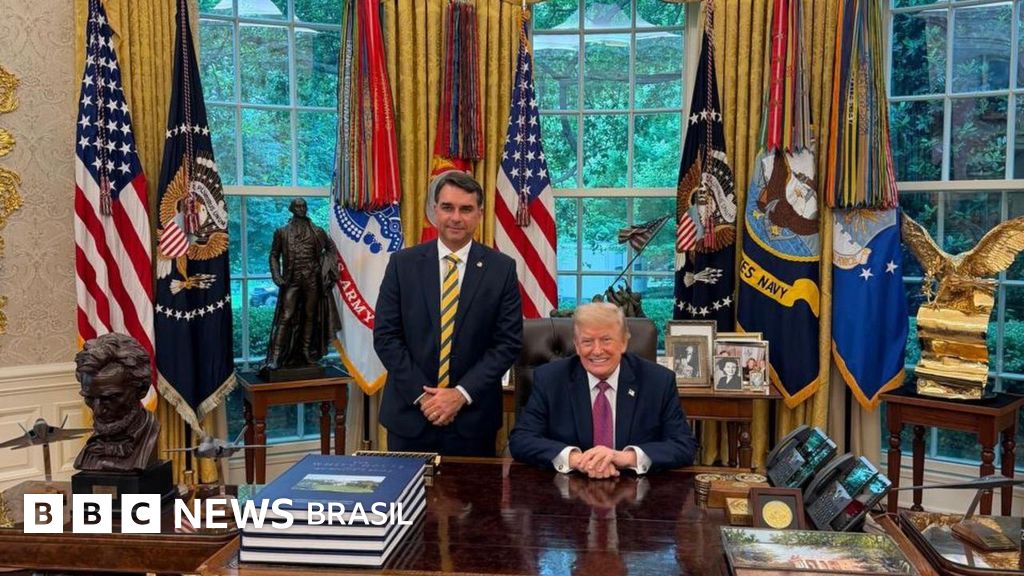
Senator Flávio Bolsonaro, a prominent figure in Brazilian politics and son of former President Jair Bolsonaro, recently drew significant attention after sharing a photograph of himself with Donald Trump at the White House. The image, which circulated widely across social media platforms, served as a focal point for discussions regarding the senator’s diplomatic efforts and the ongoing political discourse surrounding his family’s alignment with American conservative movements.
The meeting, which took place amid a climate of intense scrutiny regarding the senator’s international engagements, highlights the strategic importance that members of the Bolsonaro family place on maintaining ties with the United States Republican leadership. For observers of Brazilian foreign policy, the event underscores a persistent effort by the former president’s political camp to cultivate an “active political” presence abroad, often as a mechanism to influence domestic narratives in Brazil.
The Context of the Washington Engagement
The photograph, which shows the senator alongside the former U.S. President, was released following a period of public speculation regarding whether such a high-level meeting would materialize. For the senator, the image acts as a potent piece of political currency, intended to solidify his standing among his core base back home. However, the move has not been without its critics. Opponents of the former administration have characterized the event as a calculated distraction, suggesting that the focus on international optics is an attempt to divert public attention away from domestic political pressures and ongoing legal challenges facing the Bolsonaro family.
The visit to Washington also touched upon broader policy debates, including discussions regarding the classification of certain armed groups in Brazil as terrorist organizations. The senator has been vocal in his advocacy for stricter international designations, a position that contrasts with the current administration’s stance. According to reporting from the Brazilian news portal G1, the current government has expressed reservations about such classifications, citing concerns over the diplomatic and security implications of such a shift in policy.
Diplomatic Friction and Policy Hurdles
Beyond the photo itself, the senator’s trip has been marked by his public criticism of the Brazilian Embassy in Washington. Reports indicate that Flávio Bolsonaro expressed dissatisfaction with the embassy’s perceived lack of support or coordination regarding his itinerary and political agenda in the United States. This public airing of grievances highlights a wider tension between the current administration’s diplomatic representatives and the opposition, who often view the state’s diplomatic apparatus as being at odds with their specific ideological objectives.
The debate over how Brazil labels criminal factions—and whether those definitions should align with international anti-terrorism frameworks—remains a sensitive topic. As noted by analysts, the Brazilian government maintains that its current approach to internal security, which emphasizes domestic law enforcement and judicial oversight, is the most appropriate method for handling domestic criminal factions. The push by the senator to reframe these groups as “terrorists” on an international stage is seen by many analysts as a bid to secure stronger U.S. Intervention or alignment in Brazil’s internal security debates.
Political Implications and Public Discourse
The reception of the meeting in Brazil has been deeply polarized. Supporters of the Bolsonaro family view the encounter as proof of their continued relevance and influence on the global stage. Conversely, political analysts often point to the “Dark Horse” nature of such diplomatic maneuvers, arguing that while they provide short-term social media traction, they do little to address the structural issues facing the country’s economy or its international reputation.
The presence of other individuals in the periphery of these political circles has also generated its own share of intrigue. Commentary from various observers has suggested that the influence of private actors—sometimes referred to as the “hidden subjects” in the political theater—continues to shape the agenda of high-profile meetings. This sentiment reflects a broader public frustration with the opaque nature of political lobbying and the way in which private interests may intersect with public policy.
Key Takeaways
- Strategic Optics: The meeting serves primarily as a domestic political tool for the senator to maintain relevance among his core supporters.
- Diplomatic Tension: The public criticism of the Brazilian Embassy reflects the ongoing friction between the current government and the former administration’s allies.
- Policy Divergence: There is a clear disagreement between the senator’s advocacy for “terrorist” designations for criminal factions and the current government’s established security policy.
- Domestic Focus: Critics argue that such international trips are designed to act as a diversion from domestic challenges and legal scrutiny.
As the senator continues his political activities, observers will be watching to see if these international engagements yield any tangible changes in policy or if they remain purely symbolic. For now, the focus remains on the domestic implications of these high-stakes meetings in Washington. Future updates regarding the senator’s legislative agenda or any subsequent diplomatic missions are expected to be addressed by his office through official communications. We invite our readers to share their perspectives on these developments in the comments section below.

Keep reading