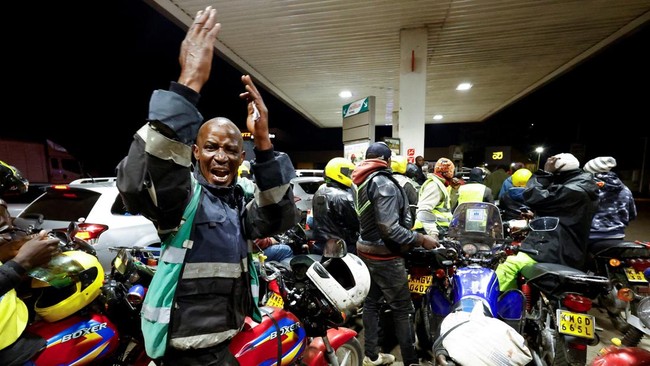
Fuel stations across Indonesia are facing significant disruptions as waves of fuel panic buying in Indonesia trigger massive queues and localized shortages. From the urban centers of East Java to the remote regions of Central Kalimantan, motorists are flocking to stations to fill their tanks far beyond their immediate needs, driven by a volatile mix of geopolitical anxiety and communication breakdowns.
The current instability is most evident in Palangka Raya, where long lines of vehicles have become a common sight at fuel stations (SPBU). While local authorities insist that reserves remain stable, the psychological momentum of the crowd has created a self-fulfilling prophecy: the fear of a shortage is actively creating the scarcity that residents dread.
As a financial journalist who has spent nearly two decades analyzing how economic policy intersects with human behavior, I have seen this pattern before. Panic buying is rarely about the actual availability of a resource; rather, it is a reaction to the perception of risk. In the Indonesian context, this risk is being amplified by a combination of external global tensions and internal administrative friction.
The situation has reached a critical point in Central Kalimantan, where the provincial government is now fighting a battle against misinformation. On April 13, 2026, the Governor of Central Kalimantan, Agustiar Sabran, explicitly urged the public to avoid panic buying, warning that such behavior increases the potential for illegal hoarding according to reports from Palangka Raya. Despite these assurances that fuel stocks are safe, the queues have persisted, reflecting a deep-seated distrust in official narratives during times of uncertainty.
The Anatomy of a Crisis: Communication and Logistics
The chaos in Central Kalimantan is not merely a result of mass hysteria but is tied to specific systemic failures. Siti Nafsiah, the Chair of Commission II of the Central Kalimantan Provincial DPRD, noted on April 15, 2026, that the current shortages and long queues are heavily influenced by a lack of socialization from relevant government agencies as reported by Radar Kalteng.

According to Nafsiah, the panic was triggered by circulating rumors regarding potential price hikes and new restrictions on subsidized fuel. This uncertainty led citizens to fill their tanks even when they had sufficient fuel, simply to hedge against future costs or unavailability. The situation was further exacerbated by government circulars intended to manage traffic at fuel stations; instead of reducing congestion, these mandates were misinterpreted by the public as signs of an impending shortage, which only accelerated the rush to the pumps.
Beyond the psychological triggers, structural logistics are playing a role in the regional instability. Nafsiah highlighted several critical distribution bottlenecks that hinder the steady flow of fuel to the public:
- Fleet Limitations: A shortage of available tank trucks to transport fuel.
- Infrastructure Decay: Poor road conditions that unhurried down delivery times.
- Geographic Barriers: The vast distances between distribution hubs and remote regional stations.
The Psychological Drivers of Fuel Panic
This is not the first time Indonesia has grappled with this phenomenon in 2026. In East Java, specifically in Jember, fuel stations were swarmed by residents on March 7, 2026 according to reports from detikJatim. That particular wave of panic was closely linked to heightened geopolitical tensions in the Middle East, which led many to fear that domestic fuel supplies would be compromised.
From an economic and psychological perspective, these events are driven by three primary cognitive biases. First is the scarcity heuristic, a mental shortcut where the human brain assigns higher value to an item simply because it is perceived as rare. When people believe fuel is running low, the perceived importance of securing it outweighs rational calculations of actual need.
Second is social proof. When a driver sees a long line at an SPBU, they assume those in line possess information they do not. The act of queuing becomes a signal that “something is wrong,” prompting others to join the line regardless of whether they have heard an official warning.
Finally, the bandwagon effect takes over. This occurs when the desire to follow the crowd overrides individual judgment. In both the East Java and Central Kalimantan incidents, the visual of “everyone else buying” acted as a catalyst, turning a few concerned individuals into a mass movement of panic buyers.
What This Means for the Indonesian Economy
While the government claims that national stocks are secure, the ripple effects of fuel panic buying in Indonesia extend beyond the gas station. When fuel is hoarded, it creates artificial scarcity, which can lead to temporary price spikes in the informal market and disrupt the transport of other essential goods, such as food and medicine.

The disconnect between official government statements and public perception suggests a significant “trust gap.” When Governor Sabran asks the public not to panic, but the public sees queues growing, the official word is often dismissed as an attempt to prevent unrest rather than a reflection of reality. This makes the role of clear, transparent, and timely socialization—as emphasized by Siti Nafsiah—absolutely critical to stabilizing the market.
Key Takeaways from the 2026 Fuel Disruptions
| Region | Primary Trigger | Contributing Factors | Date of Peak Event |
|---|---|---|---|
| East Java (Jember) | Middle East Geopolitical Tensions | Scarcity Heuristic, Social Proof | March 7, 2026 |
| Central Kalimantan | Policy Misunderstanding & Rumors | Logistics Failures, Poor Socialization | April 13–15, 2026 |
For the average consumer, the most effective way to navigate these periods is to rely on verified official data rather than social media rumors. Monitoring official government bulletins regarding fuel subsidies and distribution schedules can support avoid the stress and time loss associated with these artificial shortages.
The immediate focus now turns to the provincial governments’ ability to improve the “last mile” of fuel distribution. Until the logistics of tank truck availability and road infrastructure are addressed in regions like Central Kalimantan, the system will remain fragile and susceptible to the next wave of public anxiety.
The next critical checkpoint will be the implementation of the improved socialization strategies suggested by the DPRD to clarify fuel subsidy policies and prevent further misinterpretation of government circulars.
Do you believe government communication is the primary cause of these shortages, or is it a deeper infrastructure issue? Share your thoughts in the comments below.