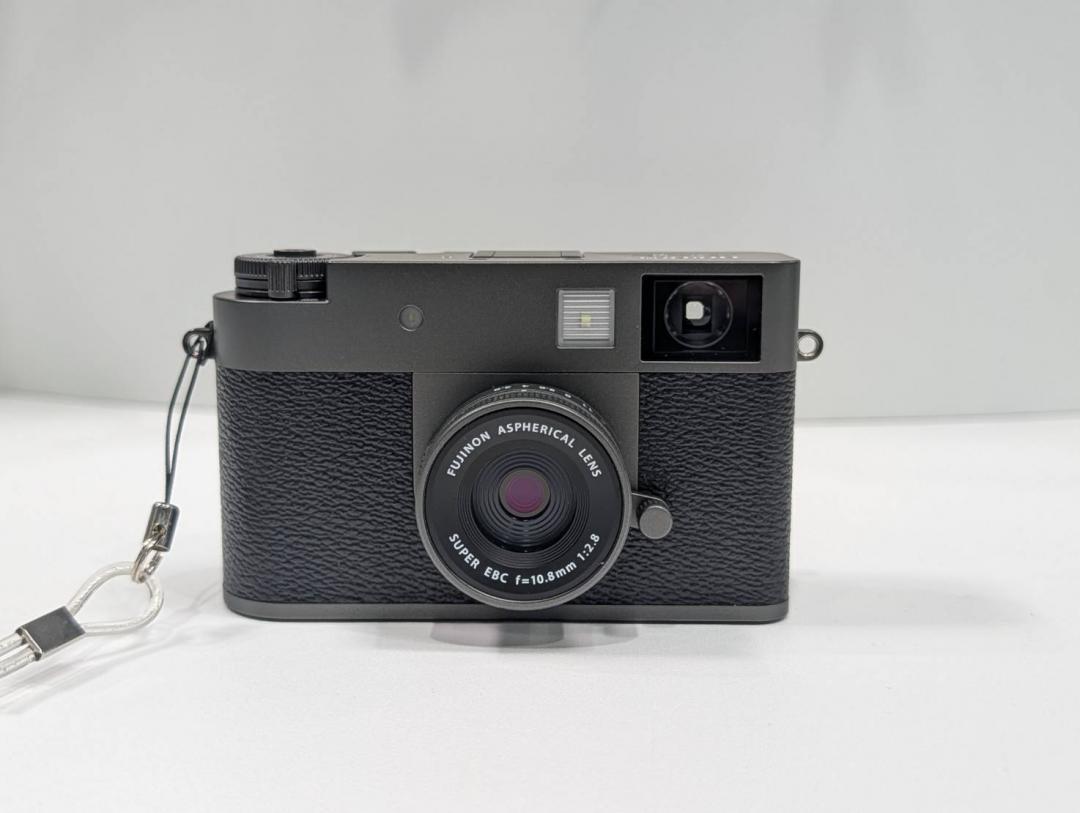
San Francisco, CA – Fujifilm is hinting at a broader strategy for compact cameras, potentially expanding beyond the highly acclaimed X100VI. This comes as the X100VI continues to garner praise for its blend of classic design and modern technology, and as the company acknowledges a desire to offer even more portable options for photography enthusiasts. The news, initially reported by Freedom 3C Technology, suggests Fujifilm is actively considering a range of smaller, more accessible cameras to complement its existing lineup.
The X100 series has long been celebrated for its unique approach to digital photography, prioritizing a tactile, dial-based experience reminiscent of film cameras. The X100VI, released in March 2024, builds on this legacy with the addition of in-body image stabilization (IBIS) and a hybrid viewfinder, further enhancing its appeal to both seasoned photographers and newcomers alike. The camera quickly became a sought-after item, with demand often exceeding supply. According to Kakaku.com, the X100VI currently retails for around ¥319,800 (approximately $2,100 USD as of March 16, 2026), with limited edition versions fetching slightly higher prices.
Fujifilm’s Commitment to Compact Cameras
While Fujifilm has seen success with its larger, interchangeable-lens X Series cameras, the company recognizes the enduring appeal of compact, high-quality cameras. The X100 series, in particular, has cultivated a dedicated following, drawn to its retro aesthetics and exceptional image quality. Fujifilm’s willingness to explore even smaller form factors suggests a commitment to catering to a wider range of photographers who prioritize portability and ease of use. The company’s 90th anniversary, celebrated with a limited edition X100VI, underscores its long history in the imaging industry and its dedication to innovation.
The initial report indicates that Fujifilm is responding to a demand for cameras even more compact than the X100VI. This suggests a potential move towards models that prioritize extreme portability without sacrificing image quality or the enjoyable shooting experience that defines the X100 series. The development of IBIS in the X100VI, as highlighted by Fujifilm’s official US website, demonstrates the company’s ability to integrate advanced features into a relatively small body, paving the way for even more compact designs.
The Appeal of the X100VI and its Impact
The X100VI’s success is rooted in its ability to deliver a premium photographic experience in a compact package. The camera’s aluminum exterior, tactile dials, and hybrid viewfinder contribute to a sense of craftsmanship and engagement that is often lacking in modern digital cameras. Fujifilm emphasizes the “indulgent, tactile image-making experience” offered by the X100VI, as stated on their official product page. This focus on the user experience has resonated with photographers who appreciate the artistry of photography and seek a more deliberate, hands-on approach.
The inclusion of IBIS in the X100VI was a significant upgrade, addressing a common criticism of previous models. The five-axis IBIS system provides up to 6.0 stops of compensation, allowing photographers to shoot at slower shutter speeds without sacrificing image sharpness. This feature, combined with the camera’s 40.2-megapixel sensor, makes the X100VI a versatile tool for a wide range of photographic applications. The flat two-way tilting LCD, as described on Fujifilm’s website, further enhances usability, particularly for low-angle and high-angle shooting.
What Might Future Compact Cameras Look Like?
While Fujifilm has not yet revealed specific details about its plans for future compact cameras, several possibilities emerge. One potential direction is a further reduction in size and weight, perhaps through the use of more advanced materials and miniaturization techniques. Another possibility is the development of cameras with different sensor sizes or lens options, catering to specific photographic needs. It’s also conceivable that Fujifilm could explore new features, such as enhanced video capabilities or improved connectivity.
The company’s Japanese website, Fujifilm X Series & GFX, highlights the importance of the shooting experience, emphasizing the “joy of taking pictures” and the “unique shooting experience” offered by the X100 series. This suggests that any future compact cameras will likely prioritize usability and engagement, rather than simply focusing on technical specifications. Fujifilm’s commitment to a dial-based design, as seen in the X100VI, is also likely to continue, providing a tactile and intuitive interface for photographers.
Potential Features and Specifications
Given the success of the X100VI, future compact cameras from Fujifilm could incorporate several key features. A high-resolution sensor, similar to the 40.2-megapixel sensor in the X100VI, would be a logical choice, ensuring exceptional image quality. IBIS would likely be included as well, providing stability and versatility. A hybrid viewfinder, offering both optical and electronic viewing options, could also be carried over, allowing photographers to choose the viewing method that best suits their needs.
However, Fujifilm may also explore new features to differentiate its future compact cameras. Enhanced video capabilities, such as 4K or even 6K video recording, could appeal to videographers. Improved connectivity, including Wi-Fi and Bluetooth, would facilitate easy image transfer and remote control. And, of course, a continued focus on design and build quality would be essential to maintaining the premium feel of the X100 series.
The price point of any future compact cameras will also be a key consideration. The X100VI currently retails for around $2,100, placing it in the premium segment of the market. Fujifilm may choose to offer more affordable options to appeal to a wider range of consumers, potentially by using less expensive materials or reducing the number of features.
Key Takeaways:
- Fujifilm is actively exploring the development of additional compact cameras beyond the X100VI.
- The company aims to offer even more portable options for photography enthusiasts.
- Future cameras will likely prioritize usability, image quality, and a tactile shooting experience.
- The success of the X100VI demonstrates the enduring appeal of compact, high-quality cameras.
The next step for Fujifilm will be to refine its plans and announce specific details about its future compact camera lineup. Photographers and enthusiasts will be eagerly awaiting further information, as the company’s commitment to this segment of the market promises to deliver exciting new options for capturing and sharing their vision. Preserve an eye on Fujifilm’s official website and social media channels for updates.
What are your thoughts on Fujifilm’s potential expansion into more compact cameras? Share your opinions in the comments below!
Keep reading