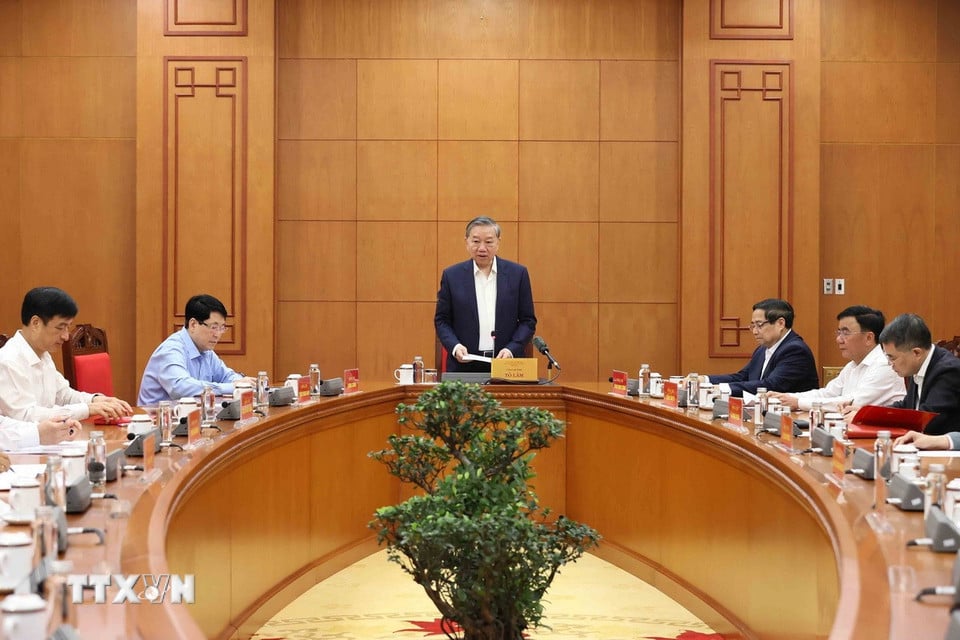
To Lam has emphasized that Vietnam’s foreign policy and international integration must be strictly aligned with the principle of “strategic autonomy.” Chairing the inaugural meeting of the Central Steering Committee for External Relations and International Integration, Lam underscored that the nation’s diplomatic efforts should serve as a practical foundation for safeguarding national interests in an increasingly complex global landscape.
The meeting marked the formal commencement of the committee’s mandate to streamline Vietnam’s external strategies. According to official government reporting, the committee is tasked with ensuring that economic, political, and defense integration policies remain cohesive and responsive to the country’s long-term development goals. By prioritizing strategic autonomy, the leadership aims to maintain Vietnam’s independent decision-making capacity while expanding its footprint in global trade and multilateral frameworks.
Defining Strategic Autonomy in Vietnam’s Foreign Policy
Strategic autonomy, as articulated by the leadership, involves balancing deep international integration with the preservation of national sovereignty. This approach is not a move toward isolationism but rather a mechanism to ensure that Vietnam’s participation in global trade agreements—such as the Comprehensive and Progressive Agreement for Trans-Pacific Partnership (CPTPP) and various free trade agreements with the European Union—does not compromise its domestic economic and political priorities. The Ministry of Foreign Affairs of Vietnam notes that the current diplomatic trajectory focuses on “bamboo diplomacy,” a term popularized by the late Nguyen Phu Trong, which emphasizes flexibility and resilience while remaining firmly rooted in national core interests.

The newly formed committee is designed to act as a centralized oversight body. By consolidating decision-making, the government intends to reduce bureaucratic friction between agencies handling economic diplomacy and those managing defense and security affairs. This structural change is expected to provide a more unified voice for Vietnam on the international stage, particularly as the country navigates intensifying competition between major global powers.
The Role of Economic Integration and Global Trade
Economic integration remains a primary pillar of Vietnam’s foreign policy, yet it is now explicitly linked to the requirement for domestic industrial growth and technological self-reliance. As reported by the General Statistics Office of Vietnam, the nation’s export-oriented economy has seen significant growth in high-tech manufacturing, yet reliance on foreign supply chains remains a point of vulnerability. The committee’s directive suggests that future international partnerships will be vetted more rigorously for their potential to foster technology transfers and sustainable long-term investment.

This shift reflects a broader regional trend among Southeast Asian nations to re-evaluate trade dependencies. By focusing on “strategic service,” the leadership is signaling that trade agreements will be measured not just by volume, but by how effectively they contribute to Vietnam’s industrialization goals. This includes attracting high-quality foreign direct investment (FDI) that aligns with the government’s green energy and digital transformation objectives.
Institutional Oversight and Future Implementation
The establishment of the Central Steering Committee for External Relations and International Integration serves as a mechanism for institutional accountability. By bringing together senior party and state officials, the committee ensures that diplomatic actions are consistent with the directives set forth at the 13th National Party Congress. The Communist Party of Vietnam maintains that this oversight is essential for navigating the volatility of the global economy while maintaining internal stability.
For international investors and foreign governments, the directive serves as a signal of continuity. While the emphasis on “strategic autonomy” may imply a more cautious approach to new multilateral security commitments, it also highlights Vietnam’s commitment to maintaining an open, stable environment for business. The committee is expected to meet periodically to assess the progress of ongoing diplomatic initiatives and adjust strategies to address emerging global risks, such as supply chain disruptions and geopolitical shifts in the Indo-Pacific region.
Next Steps for the Steering Committee
The committee’s next phase involves conducting detailed reviews of ongoing international integration projects and aligning them with the specific directives issued by To Lam. Future updates regarding the committee’s policy recommendations will be released through official state channels, including the Government Portal of the Socialist Republic of Vietnam. Stakeholders are encouraged to monitor these official announcements for further clarity on how these strategic priorities will influence upcoming bilateral and multilateral trade negotiations.