
German government support for Chinese-made electric vehicles has emerged as a contentious topic in European automotive policy discussions, reflecting broader tensions between climate goals, industrial competitiveness, and international trade dynamics. Recent reports indicate that certain subsidy mechanisms originally designed to promote domestic e-mobility adoption in Germany are indirectly benefiting Chinese electric vehicle manufacturers, particularly through purchase incentives available to consumers regardless of vehicle origin. This development has sparked debate among policymakers, industry leaders, and trade analysts about the effectiveness and unintended consequences of current EV incentive structures.
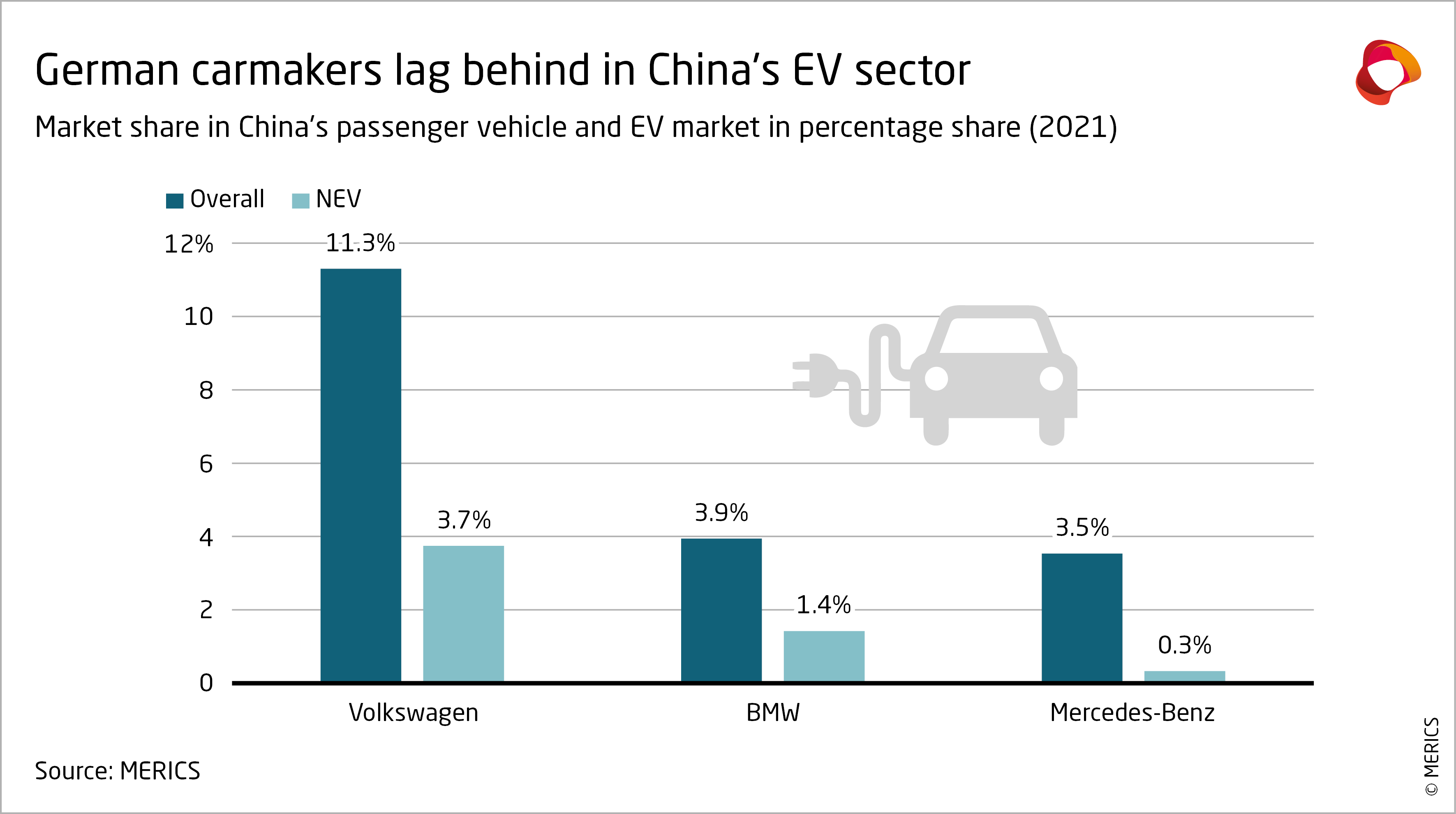
The situation underscores mounting pressure on traditional German automakers as they navigate a rapidly shifting global landscape. Chinese EV manufacturers like BYD and Xiaomi-backed brands have gained significant traction in key markets through aggressive pricing, advanced software integration, and rapid iteration cycles—factors highlighted in recent analyses showing how software-centric approaches allow recent entrants to outpace legacy automakers in innovation speed. Meanwhile, established players including Porsche, BMW, and Daimler continue to emphasize their technological heritage and engineering excellence while advocating for policy adjustments that would better support domestic production and innovation ecosystems.
At the heart of the discussion lies a fundamental question: how can governments balance the urgent need to decarbonize transportation with the imperative to maintain competitive domestic industries? The answer requires careful examination of existing subsidy frameworks, their actual impact on consumer behavior and market dynamics, and potential refinements that could strengthen both environmental outcomes and industrial resilience.
Understanding Germany’s EV Incentive Framework
Germany’s environmental bonus scheme, officially known as the Innovationsprämie, has been a cornerstone of the country’s strategy to accelerate electric vehicle adoption since its introduction in 2016. The program provides direct purchase subsidies to consumers buying qualifying electric or plug-in hybrid vehicles, with funding shared equally between the federal government and automobile manufacturers. Initially structured to support domestic automakers during their transition to electromobility, the incentive has evolved alongside market developments.
As of late 2023 and throughout 2024, the base subsidy for pure battery electric vehicles (BEVs) stood at up to €4,500, with an additional €1,500 available for vehicles priced below €40,000 under a special innovation component. Plug-in hybrid electric vehicles (PHEVs) received lower support levels, reflecting their partial reliance on internal combustion engines. These incentives were available to all consumers purchasing eligible vehicles in Germany, regardless of the manufacturer’s nationality or the vehicle’s country of origin—a design feature intended to maximize market transformation speed.
Official data from the Federal Office for Economic Affairs and Export Control (BAFA), which administers the program, shows that cumulative applications exceeded 2.5 million vehicles by mid-2024, representing over €6 billion in total subsidy disbursements since inception. The scheme underwent several modifications in response to fiscal pressures and changing market conditions, including a significant reduction in funding levels and eventual termination of new applications effective December 17, 2023, with a final deadline for existing submissions set for June 30, 2024.
The BAFA explicitly states on its website that eligibility depends solely on technical vehicle specifications—such as minimum electric range, battery capacity, and emissions thresholds—not on manufacturer origin. This neutral criterion means that any vehicle meeting the defined technical standards qualifies for support, whether produced by Volkswagen in Wolfsburg, BMW in Munich, or BYD in Shenzhen. The agency publishes quarterly reports detailing approved applications by develop and model, providing transparency about which vehicles receive support.
Chinese EV Growth in Germany and Europe
Chinese electric vehicle manufacturers have steadily increased their presence in the German market over recent years, though their overall share remains modest compared to domestic and other international competitors. BYD, China’s largest EV producer by volume, began official sales in Germany in mid-2022 with the launch of the ATTO 3 SUV, followed by the introduction of the Han sedan and Tang SUV in subsequent months. The company established its European headquarters in Munich and has invested in developing a pan-European dealer network.
Other Chinese entrants include MG Motor, which has maintained a longer European presence under SAIC Motor ownership and offers models like the MG4 Electric and MG ZS EV; NIO, which entered select European markets including Germany with its premium ET7 sedan and ES7 SUV; and XPeng, which has pursued a more cautious rollout strategy. Technology-focused brands such as Xiaomi-backed SU7 have attracted attention for their advanced software capabilities and integration with consumer electronics ecosystems.
According to data from the German Federal Motor Transport Authority (Kraftfahrt-Bundesamt or KBA), newly registered Chinese-made electric vehicles accounted for approximately 1.8% of all BEV registrations in Germany during the first quarter of 2024—a figure that represents gradual growth from negligible levels just two years prior but still remains far behind market leaders such as Tesla, Volkswagen, and BMW. The KBA publishes monthly registration statistics that allow for precise tracking of market share developments by manufacturer and country of origin.
Industry analysts note that Chinese EVs often compete aggressively on price, leveraging lower production costs and government support in their home market to offer competitive pricing in Europe. For example, the BYD ATTO 3 has frequently been listed below €40,000 in Germany, making it eligible for the full innovation component of the former environmental bonus. This pricing strategy aligns with broader observations that in many emerging and price-sensitive markets, purchase decisions are increasingly driven by affordability and total cost of ownership rather than brand heritage or historical reputation—a trend documented in multiple market research studies.
Impact on Domestic Automakers and Policy Debates
The growing visibility of Chinese EVs in Germany coincides with significant challenges faced by traditional German automakers in transitioning to electromobility. Volkswagen, despite massive investments in its ID. Series and software platforms, has encountered delays and quality issues in its early EV launches. BMW and Mercedes-Benz have maintained strong performance in luxury segments but face pressure to accelerate innovation cycles and reduce development costs. Porsche, while continuing to report strong demand for its Taycan and upcoming Macan EV, has joined calls for policy reforms that better support domestic value creation.
These challenges have fueled ongoing debates about whether current incentive structures adequately serve their intended purpose. Critics argue that untargeted subsidies may inadvertently accelerate market share losses for domestic manufacturers without delivering proportional gains in overall EV adoption or climate benefits. Some economists and industry representatives have suggested alternatives such as targeting bonuses toward vehicles with high domestic value-added content, implementing graduated support based on local production percentages, or shifting focus toward charging infrastructure and battery supply chain development.
Conversely, proponents of the existing approach emphasize that the primary goal of purchase incentives is to maximize EV adoption speed to meet climate targets, and that restricting support based on origin could slow the transition and increase costs for consumers. They point to the success of similar approaches in other European countries and note that domestic automakers remain free to compete on quality, performance, and brand appeal. The German government has maintained that its climate and industrial policies are designed to be complementary, with separate instruments addressing each objective—such as research and development funding, tax incentives for industrial investment, and trade policy measures.
Broader European and Global Context
Germany’s experience is part of a wider European conversation about managing the influx of Chinese EVs amid concerns over fair competition, overcapacity, and strategic autonomy. The European Commission launched an anti-subsidy investigation into Chinese electric vehicles in October 2023, examining whether benefits conferred by Chinese state support distort competition within the EU single market. This investigation, which could lead to the imposition of countervailing duties, remains ongoing as of mid-2024, with provisional findings expected later in the year.
Several EU member states have taken unilateral steps in response to market concerns. France, for instance, has discussed modifying its ecological bonus system to include environmental and social criteria that could disadvantage vehicles produced under certain conditions. Italy has explored similar adjustments, while Spain has focused on strengthening requirements for access to its MOVES III incentive program. These national approaches reflect varying balances between climate ambition, industrial protection, and consumer interests.
Globally, the rise of Chinese EVs represents one of the most significant shifts in the automotive industry in recent decades. Chinese manufacturers now account for over half of global electric vehicle sales, driven by massive domestic demand, integrated supply chains, and aggressive international expansion. Their success stems from a combination of factors including sustained government support for new energy vehicles, rapid advancements in battery technology and software development, and manufacturing scale that enables continuous cost reduction.
For German consumers, the availability of competitively priced Chinese EVs expands choice in the growing electric vehicle segment, particularly in the compact and mid-size categories where many legacy automakers have historically offered fewer options. However, concerns persist about long-term service networks, residual value retention, and data privacy considerations associated with vehicles incorporating extensive connectivity features—topics that continue to be evaluated by consumer protection organizations and automotive reviewers.
Looking Ahead: Policy Evolution and Market Dynamics
With the conclusion of the federal environmental bonus scheme for new applications at the end of 2023, Germany’s approach to supporting electromobility is entering a new phase. The government has indicated that future support will focus more heavily on non-purchase incentives, including company car taxation reforms, expanded charging infrastructure investment, and targeted support for commercial fleets and public transportation. The continuation of preferential tax treatment for electric company cars remains a significant indirect incentive affecting purchasing decisions.
Industry stakeholders continue to engage in dialogue about how best to structure policies that advance decarbonization while preserving economic competitiveness. Key considerations include the timing and design of any potential EU-level measures resulting from the ongoing anti-subsidy investigation, the evolution of CO2 fleet regulations that drive manufacturer investment in low-emission vehicles, and the development of battery recycling and second-life applications that could enhance the sustainability profile of all EVs regardless of origin.
As the market matures, competition is increasingly shifting beyond purchase price to encompass software capabilities, charging speed, battery longevity, and overall user experience—areas where both established automakers and new entrants are investing heavily. The ability to deliver over-the-air updates, integrate seamlessly with digital ecosystems, and provide reliable long-term service will likely become decisive factors in consumer choice, complementing traditional considerations of design, performance, and brand trust.
The ongoing evolution of Germany’s automotive landscape reflects broader transformations occurring worldwide as the industry confronts the dual imperatives of technological innovation and environmental responsibility. While the role of purchase subsidies in shaping market dynamics remains a subject of active debate, there is broad consensus that achieving meaningful progress will require coordinated efforts across government, industry, and consumers—guided by transparent data, rigorous analysis, and a shared commitment to sustainable mobility solutions.
For the most current information on vehicle eligibility criteria, registration statistics, and policy developments, interested parties can consult the official websites of the Federal Office for Economic Affairs and Export Control (BAFA), the German Federal Motor Transport Authority (KBA), and the Federal Ministry for Economic Affairs and Climate Action. These sources provide authoritative, regularly updated data essential for understanding the fast-moving intersection of automotive technology, environmental policy, and market dynamics in Germany and beyond.