
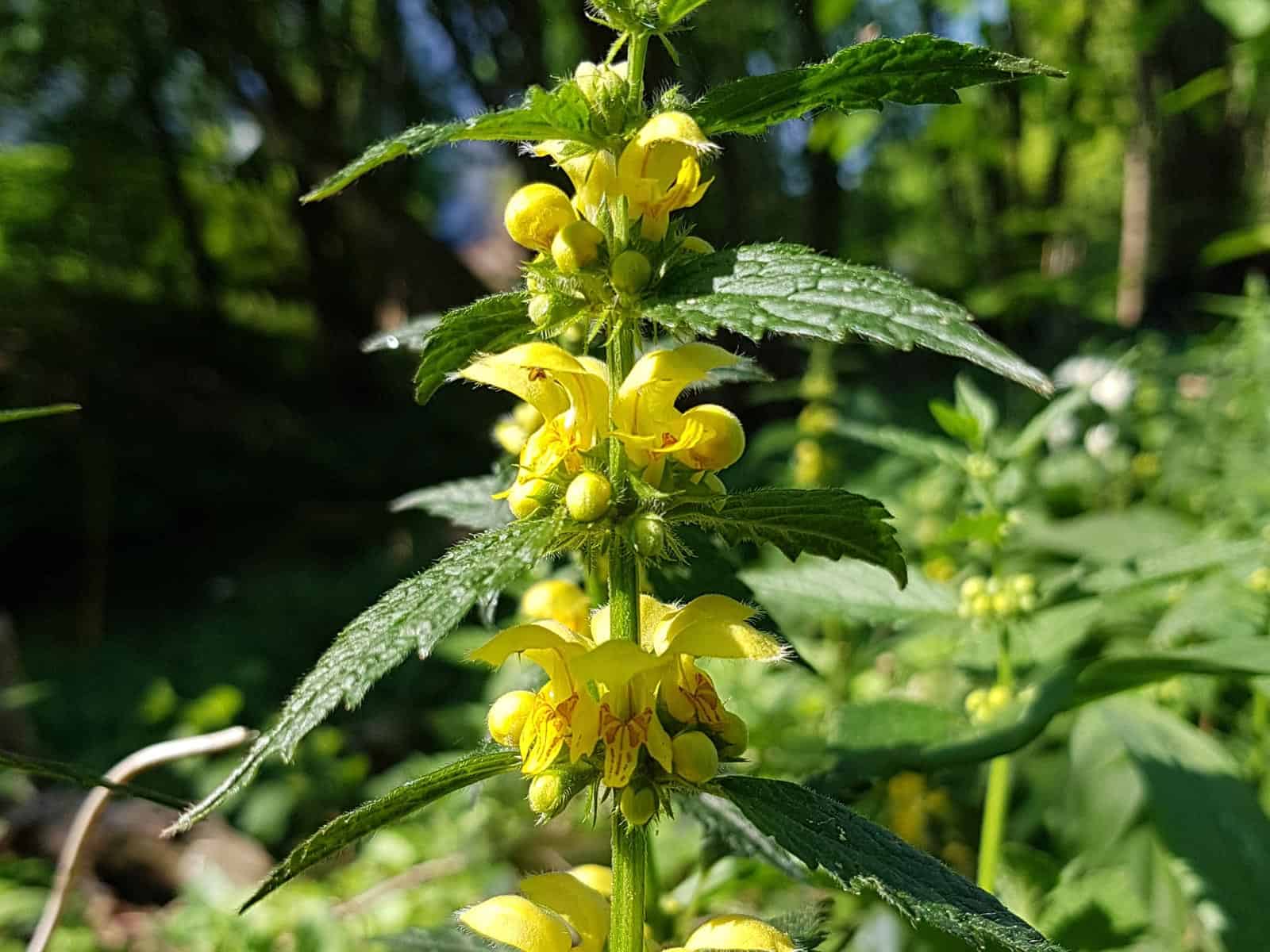
Foraging for wild edibles has seen a quiet resurgence among home cooks and sustainability advocates, with increasing interest in plants long overlooked in modern diets. One such plant gaining attention is the golden dead-nettle, known in German as Goldnessel or Gelbe Taubnessel. Its vibrant yellow flowers and honey-sweet nectar have made it a favorite not only of bees but likewise of those exploring traditional herbal preparations. Among its many uses, the plant is increasingly featured in recipes for infused vinegars, valued for both flavor and purported nutritional qualities.
The golden variety of dead-nettle (Lamium galeobdolon) is distinguishable from its more common white or purple relatives by its striking golden-yellow blooms and often silvery-marked leaves. Though it resembles the stinging nettle in leaf shape, it lacks the irritating hairs, making it safe and easy to harvest for culinary use. This characteristic has contributed to its popularity in wild herb circles, particularly among those practicing self-sufficiency or seeking to incorporate foraged ingredients into daily meals.
To prepare a simple herbal vinegar using golden dead-nettle, fresh blossoms and young leaves are typically packed into a clean glass jar and covered with apple cider vinegar or white wine vinegar. The mixture is then sealed and left to steep in a cool, dark place for two to four weeks, shaken gently every few days. After straining, the resulting infusion carries a subtle floral note and can be used in salad dressings, marinades, or as a tonic. Some foragers recommend combining it with other spring herbs like garlic mustard or dandelion for added complexity.
Whereas anecdotal reports suggest that dead-nettle contains beneficial compounds such as flavonoids, tannins, and minerals, scientific analysis of its specific nutritional profile remains limited. No major food safety authorities have issued guidelines on its consumption, and it is not cultivated commercially in most regions. As with any wild plant, proper identification is essential to avoid confusion with potentially harmful look-alikes. Foragers are advised to consult reliable field guides or join experienced harvesting groups before consuming unfamiliar species.
Ecologically, golden dead-nettle serves as an important early-season nectar source for pollinators, particularly bumblebees and honeybees. Its spreading habit allows it to form dense ground cover in woodland edges and hedgerows, though in some areas it is considered an introduced species. In parts of North America, where it has been planted ornamentally, it occasionally escapes cultivation and establishes in shaded, moist environments. Conservationists note that while it supports insect life, its impact on native plant communities should be monitored in non-native ranges.
The practice of making herb-infused vinegars at home aligns with broader trends in food preservation and seasonal eating. Vinegar’s acidity helps extract and preserve volatile compounds from botanicals, extending the usability of short-lived spring greens beyond their harvest window. This method requires minimal equipment—just a jar, vinegar, and time—making it accessible to beginners. Unlike alcohol-based tinctures, vinegar preparations are suitable for all ages and can be incorporated directly into food without further processing.
Interest in wild food preparation has grown alongside movements toward regenerative agriculture and local resilience. Workshops on identifying edible weeds, fermenting foraged greens, and preserving seasonal abundance are increasingly offered by urban farms, botanical gardens, and sustainability networks. These gatherings often emphasize ethical harvesting—taking only what is needed and leaving plenty for wildlife and plant regeneration.
As spring progresses across temperate zones, the golden carpets of dead-nettle blooming along roadsides and forest floors offer a reminder of the edible richness present in overlooked spaces. Whether used in a simple vinegar infusion or enjoyed fresh for its nectar, the plant represents a small but meaningful reconnection with seasonal cycles and wild flavors. For those curious to try, the process begins not with a recipe, but with a pause—to look closely, identify correctly, and harvest with care.