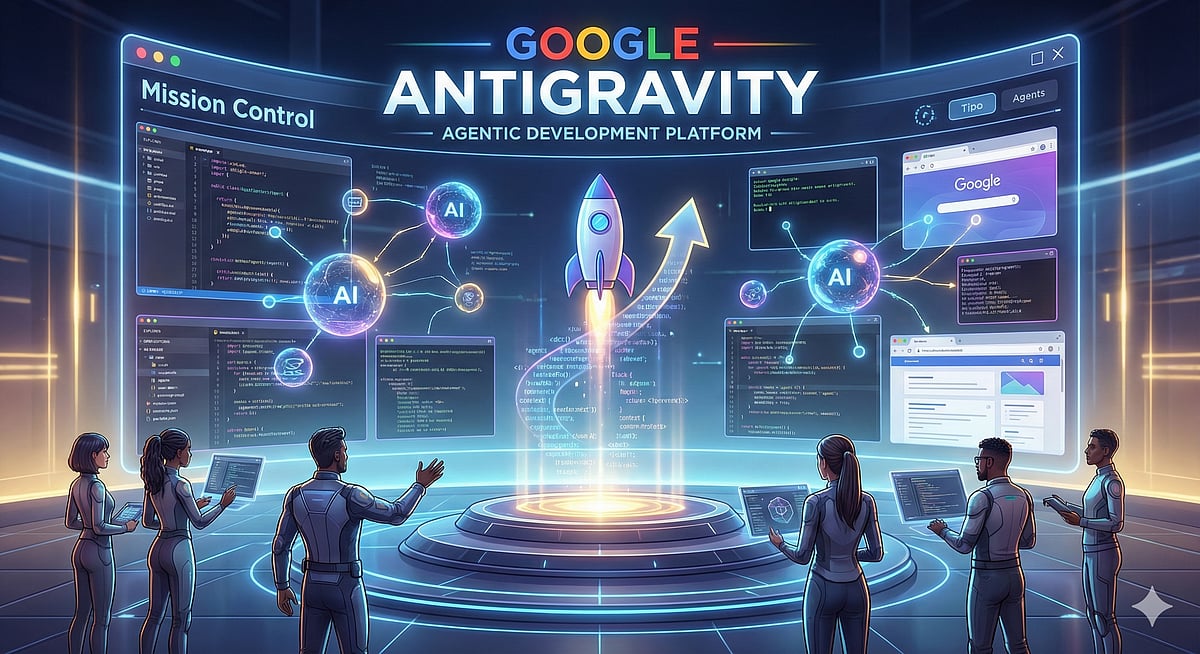
Google is reportedly consolidating its artificial intelligence-powered coding tools under the banner of Project Astra, a strategic initiative previously known within the company as “Antigravity.” This move aims to unify disparate AI-assisted programming experiences into a cohesive ecosystem designed to compete directly with emerging rivals like Anthropic’s Claude Code and OpenAI’s Codex. The consolidation reflects Google’s broader effort to strengthen its position in the rapidly evolving AI-assisted software development landscape, where seamless integration across the full development lifecycle has become a key differentiator.
According to internal communications and product roadmaps reviewed by industry analysts, the Antigravity initiative seeks to bring together tools such as Gemini Code Assist, AI-powered features in Android Studio and experimental capabilities from Google AI Studio under a single, unified brand and technical framework. The goal is to eliminate fragmentation in Google’s current offerings, where developers must navigate multiple interfaces and authentication systems to access different AI coding functionalities. By streamlining these tools, Google hopes to deliver a more intuitive and powerful experience that rivals the agentic capabilities demonstrated by competitors.
The timing of this consolidation coincides with growing industry interest in “agentic” AI systems—tools that can autonomously perform complex tasks beyond simple code completion. Recent demonstrations by Anthropic and OpenAI have shown AI agents capable of understanding high-level programming goals, generating multi-file applications, debugging code, and even deploying software with minimal human intervention. Google’s Antigravity project appears designed to match this level of autonomy even as leveraging the company’s deep expertise in search, cloud infrastructure, and large-scale AI model training.
Industry observers note that Google’s approach may differ from competitors by emphasizing deep integration with its cloud platform and developer services. Rather than offering a standalone coding agent, Antigravity may function as an intelligent layer across Google Cloud’s suite of development tools, including Cloud Build, Artifact Registry, and Kubernetes Engine. This could provide enterprise customers with a compelling value proposition: AI-assisted development that natively respects existing security protocols, access controls, and deployment pipelines.
While Google has not officially confirmed the rebranding or full scope of the Antigravity initiative, multiple sources indicate that internal testing has already begun with select teams within the company. Employees involved in early trials have reported improved contextual awareness when switching between frontend and backend development tasks, suggesting the unified system maintains a persistent understanding of project goals across different coding environments. These internal validations are seen as a prerequisite to any public announcement or beta release.
The competitive landscape for AI coding assistants has intensified significantly over the past year. Anthropic’s Claude Code, launched in early 2024, gained attention for its ability to interpret natural language specifications and generate production-ready code across multiple programming languages. Shortly after, OpenAI enhanced its Codex model with improved reasoning capabilities, enabling it to handle more complex software engineering tasks. In response, Google has accelerated its own efforts, with recent updates to Gemini Code Assist showing improved performance in code generation benchmarks.
For developers, the potential unification of Google’s AI coding tools could reduce cognitive load and improve workflow efficiency. Currently, users seeking AI assistance might need to switch between Gemini Code Assist for real-time suggestions, AI Studio for experimental prompts, and platform-specific integrations for mobile or cloud development. A unified system under Antigravity would ideally allow seamless transitions between these contexts while maintaining consistent behavior and contextual awareness—a feature particularly valuable in large-scale, multi-team software projects.
Enterprise adoption considerations may also shape Google’s strategy. Large organizations often prioritize security, compliance, and integration with existing DevOps toolchains when evaluating new AI coding assistants. By anchoring Antigravity within Google Cloud’s enterprise-grade infrastructure, the company may address concerns about data privacy and intellectual property protection that have slowed adoption of some third-party AI coding tools. This approach could make the platform especially attractive to industries with strict regulatory requirements, such as finance and healthcare.
As of now, Google has not announced a public timeline for the release of Antigravity-branded tools or detailed how existing products will be transitioned. The company typically follows a pattern of internal testing followed by limited developer previews before broader availability, suggesting any public unveiling would likely occur after several months of refinement. Industry analysts anticipate that more information may emerge during Google’s annual I/O developer conference, traditionally held in the spring, where the company often showcases advancements in AI and developer tools.
Until official details are confirmed, developers interested in Google’s evolving AI coding capabilities are encouraged to monitor the Google AI Blog and the Google Cloud release notes for updates on Gemini Code Assist and related services. Participation in Google’s trusted tester programs may also provide early access to new features as they become available. For ongoing coverage of AI-assisted software development trends, readers can follow the Technology section of www.world-today-journal.com, where we continue to track how major tech companies are reshaping the future of programming.
Worth a look