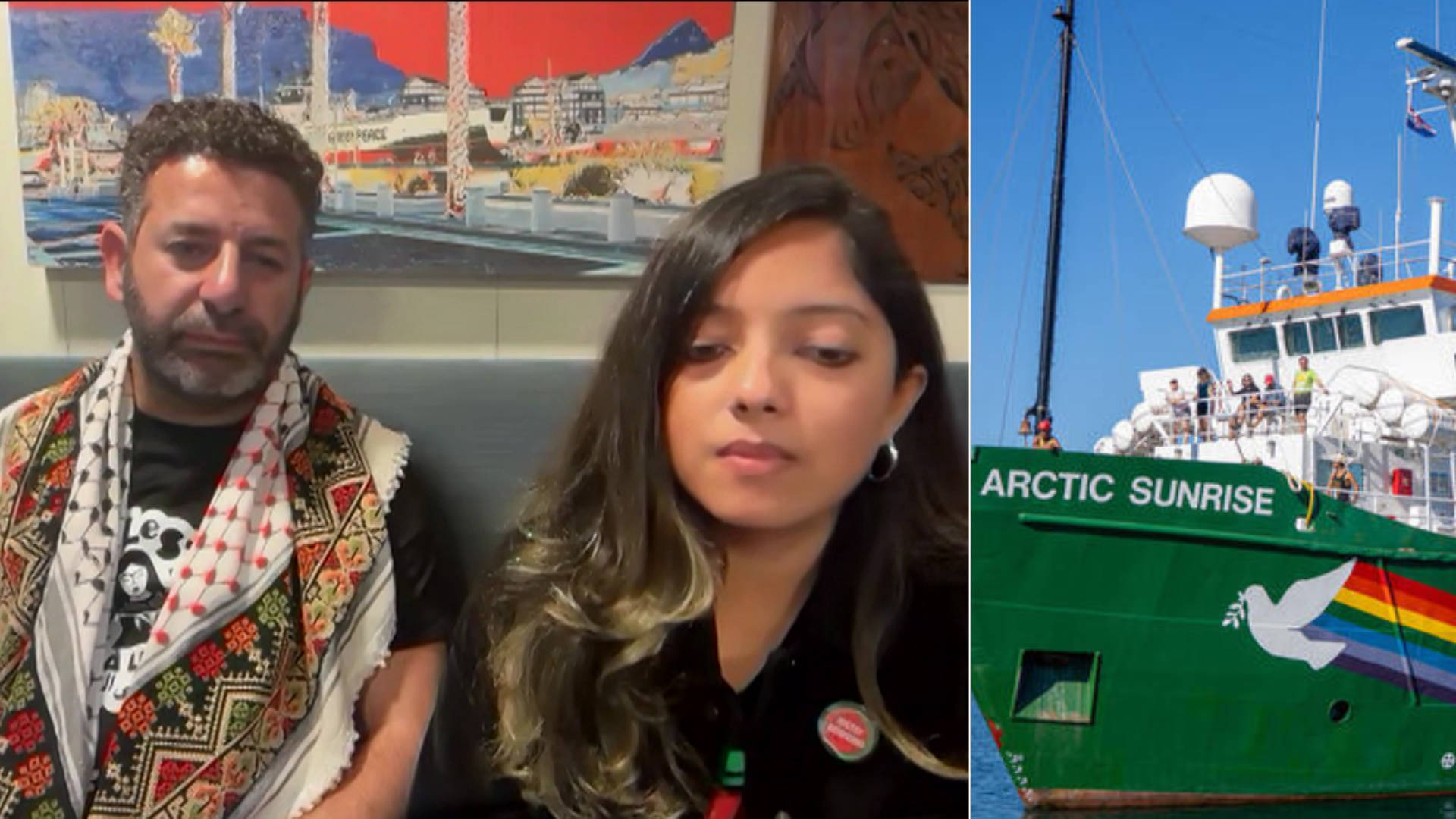
More than 70 vessels and over 1,000 participants from around the world have joined the second Global Sumud Flotilla en route to Gaza, according to reports from Democracy Now! on April 22, 2026. The initiative aims to challenge Israel’s ongoing maritime blockade of aid to the Gaza Strip. Among the participating ships is the Greenpeace vessel Arctic Sunrise, which is providing technical support and accompanying the flotilla for part of the voyage as an act of solidarity.
The flotilla’s organizers describe the mission as a civil society-led effort to break the blockade and deliver humanitarian assistance. Palestinian activist Saif Abukeshek, a member of the steering committee for the Global Sumud Flotilla, stated during an interview aboard the Arctic Sunrise that “when the system fails, civil society needs to step in,” citing a history of nonviolent direct action within the Palestinian national struggle.
Pujarini Sen, project lead for the Arctic Sunrise, explained Greenpeace’s involvement as consistent with the organization’s broader mission to hold corporations accountable for environmental and social harms. Sen noted that fossil fuel companies profit from both climate change and armed conflict, stating, “We don’t view these issues as separate.” This perspective aligns with Greenpeace’s longstanding advocacy linking environmental justice to human rights and peace initiatives.
During the voyage, participants reported that over a dozen vessels from the flotilla encircled and disrupted the MSC Maya, one of the world’s largest cargo ships, for several hours. Activists allege the MSC Maya was transporting raw materials intended for weapons production destined for Israel. They said the action drew inspiration from recent dockworker protests targeting military supply chains.
The Global Sumud Flotilla initiative builds on previous attempts to challenge the Gaza blockade through maritime humanitarian missions. According to historical records referenced in Wikipedia, the current flotilla follows earlier efforts such as the June 2025 Soumoud Convoy and forms part of a broader pattern of civil society organizing dating back to the original Gaza Freedom Flotilla in 2010. The movement operates under the principle of sumud, an Arabic term meaning steadfastness, reflecting the Palestinian concept of resilience in the face of occupation.
Greenpeace has maintained a consistent presence in solidarity actions related to Gaza, deploying the Arctic Sunrise on multiple occasions to monitor and support humanitarian efforts. The vessel, known for its ice-strengthened hull and history of environmental campaigns, has previously been used in Arctic conservation work and anti-whaling operations before being repurposed for solidarity missions in conflict-affected regions.
The flotilla’s activities occur amid ongoing international concern over humanitarian conditions in Gaza, where access to essential goods including food, medicine, and fuel remains restricted due to the blockade. United Nations agencies have repeatedly warned of deteriorating living conditions and the risk of famine, particularly following the escalation of hostilities in recent years.
As of the latest reports, the flotilla continues its journey toward Gaza, with participants maintaining a nonviolent approach despite reported naval interceptions in previous similar missions. Organizers emphasize that the mission remains focused on delivering aid and highlighting what they describe as the illegality of the blockade under international law.
For ongoing updates on the Global Sumud Flotilla’s progress and related humanitarian efforts in Gaza, readers can refer to official tracking systems maintained by United Nations humanitarian agencies or follow verified reports from international news organizations with established bureaus in the region.
What are your thoughts on the role of civil society initiatives in addressing humanitarian crises? Share your perspective in the comments below and help spread awareness by sharing this article with your network.
Keep reading